How To
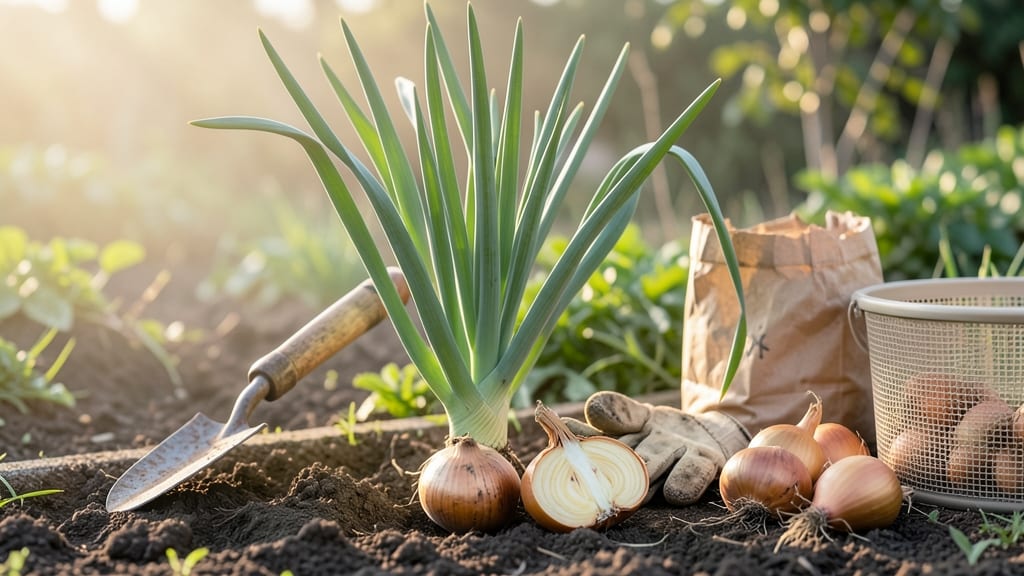
How to know when onions are ready to pick can mean the difference between a bountiful harvest and wasted effort. If you've ever pulled onions too early—only to find small, pithy bulbs—or left them too long and ended up with tough, flavorless ones, you're not alone.
Timing is everything when it comes to harvesting onions, and the key lies in watching for specific visual cues. Whether you're growing storage onions or green onions, these signs will help you determine the perfect moment to pull them from the soil without sacrificing quality.
In this guide, I'll walk you through the three most reliable signs that your onions are ready for harvest, including how to test maturity without digging and what to do if you miss the window. Let's make sure you get the best possible yield from your garden.
By the end, you'll know exactly when to harvest for maximum flavor, size, and storage potential—so you can enjoy homegrown onions all season long.


3 Visual signs your onions are ready to pick (with photos for reference)
Knowing when to harvest onions can feel like guessing—until you spot these three key visual cues. Whether you're growing yellow, red, or white onions, these signs ensure you pick them at peak flavor and size.
Miss these clues, and you might end up with small, pungent, or hollow bulbs that won’t store well.
First, pay attention to the top of the onion plant. When the leaves turn straw-colored or yellow and begin to flop over, it’s a clear signal that the bulb below has matured.
This usually happens 80–120 days after planting, depending on the variety. For example, short-day onions (like Texas Sweet) mature faster than long-day onions (like Yellowstone).
Next, check the neck of the onion. The area where the bulb meets the leaves should shrink and become papery. This is your onion’s way of telling you it’s ready to be pulled.
If the neck stays thick and green, the bulb isn’t fully developed yet. Pro tip: Gently squeeze the bulb—if it feels firm and dry, it’s harvest-ready.
Finally, examine the skin of the onion. Mature onions develop a dry, papery outer layer that’s no longer green or rubbery. This skin protects the bulb during storage, so it’s a critical sign. If the skin is still slick or green, give your onions 2–4 more weeks to mature.
🟡 Tops Turn Yellow
Leaves dry out and flop over—ideal for storage onions.
📏 Neck Shrinks
Papery and tight—bulb is fully formed below.
✅ Skin is Papery
Dry and protective—ready for long-term storage.
For green onions (scallions), the rules change slightly. Harvest these when the leaves reach 6–12 inches tall and the bulbs are small but firm. You can snip them just above the soil line and let them regrow for multiple harvests.
This method works best in cool weather, as heat causes green onions to bolt (flower) prematurely.
If you’re growing shallots or multiplier onions, watch for clusters of bulbs forming. These are ready when the tops yellow and the individual bulbs feel plump and dry.
Gently loosen the soil around them before pulling to avoid damaging the clusters. Store them in a dry, well-ventilated place for up to 6 months.
Climate plays a role too. In hot, dry summers, onions may mature faster and need harvesting earlier. Conversely, cool, wet springs can delay maturity. If your onions are taking longer than expected, consider thinning the plants to reduce competition for nutrients and water.
One common mistake is waiting too long. Overripe onions split open or develop soft, mushy centers—a sign they’ve been left in the ground past their prime. If this happens, use them immediately in cooking rather than storing.
For the best results, harvest in the morning after dew has dried to ensure clean, dry bulbs.
Pro tip: Keep a harvest journal to track when your onions mature each year. Note the variety, planting date, and weather conditions. Over time, you’ll predict harvest timing like a pro. And remember, smaller bulbs often have the best flavor, so don’t assume bigger is always better!
How to test onion maturity without digging (3 non-destructive methods)
Harvesting onions too early or too late can ruin your crop, but you don’t always need to dig up your plants to check their readiness. These 3 non-destructive methods let you test maturity without damaging your onions—perfect for gardeners who want to avoid unnecessary disturbance.
Try the pull test, leaf thickness gauge, or soil exposure method for foolproof results.
For green onions, maturity is different—harvest when the tops reach 3-4 inches and the bulbs are pencil-sized. But for storage onions, you’ll need these tricks to avoid guessing. I’ve used these methods for years, and they’ve saved me from harvesting too soon (and wasting flavorful bulbs!).
Avoid testing maturity after heavy rain—soil can be misleadingly loose, making bulbs seem ready when they’re not. Wait for dry weather to get accurate results.
Start with the pull test: Gently grasp an outer leaf near the base and tug upward. If the bulb resists slightly and the leaf doesn’t snap, your onion is likely ready.
This works best on yellow and white onions, which develop firmer bulbs. For red onions, the test is trickier because their skins are thinner, but the principle stays the same.
Next, use the leaf thickness gauge. Mature onions have thick, papery leaves that feel dry to the touch. Run your thumb along the leaf’s edge—if it’s less than 1/8-inch thick and crisp, your onion needs more time.
But if the leaf feels thick and leathery, it’s a sign the bulb is nearly ready. This method is especially useful for short-day varieties, which mature faster.
Finally, the soil exposure method reveals bulbs without digging. Use a trowel to gently scrape away 1-2 inches of soil around the onion’s base. If the bulb is already 2+ inches wide and the skin is dry and papery, it’s harvest time.
This method is great for bulb onions but skip it if your soil is sandy—it can dry out bulbs prematurely.
For green onions, none of these methods apply—just snip the outer leaves when they reach 6-8 inches tall. The bulb will keep growing as long as you leave the roots intact. This cut-and-come-again approach gives you fresh greens all season without waiting for full maturity.