
Pests
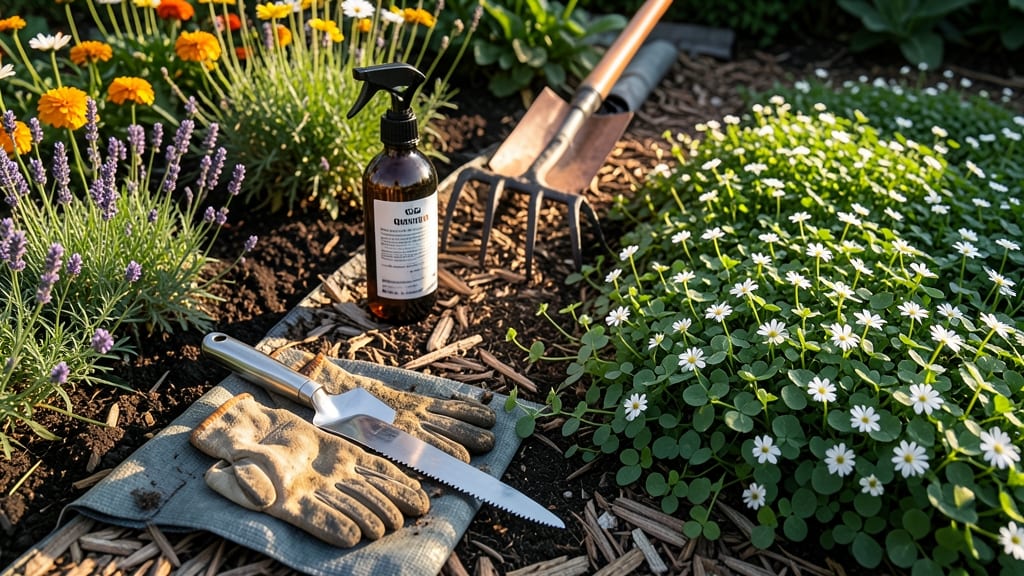
Here’s how to get rid of chickweed in flower beds without the endless digging or chemical warfare—just a simple, fast, and effective trick that works in hours.
This tangled green nuisance can turn your beds into a chaotic mess, but I’ve found a boiling water and vinegar combo that kills it dead in one go. No harsh residues, no digging forever—just a quick, satisfying solution that actually delivers results.
The secret is timing and technique: hit chickweed when it's actively growing, use 2 cups white vinegar + 1 gallon boiling water (let it cool slightly first), and apply it on a dry, sunny day.
The vinegar breaks down the plant's protective layer while the heat cooks the roots. I've pulled chickweed by the handful after just one treatment—no regrowth in sight.
You'll end up with flower beds that look neat, healthy, and weed-free in under an hour. The best part? This method won't harm your perennials or beneficial insects if done carefully. Just avoid spraying desirable plants, and you're golden.
For stubborn patches, repeat every 3-5 days until the area is clear. Then, smother future growth with 2-3 inches of mulch or plant competitive ground covers like creeping thyme. Prevention is easier than cleanup—and your flowers will thank you.
Root Causes of Chickweed Invasion
Chickweed (Stellaria media) isn’t just an annoying weed—it’s a highly opportunistic annual that thrives in conditions most gardeners overlook. Understanding why it invades your flower beds is the first step to stopping it before it spreads.
Below, we break down the key triggers—backed by science—and how they create the perfect storm for chickweed to take over.
Chickweed is a soil opportunist, meaning it exploits weak or imbalanced growing conditions that other plants can’t tolerate. Here’s how it happens:
- Low Organic Matter: Chickweed flourishes in soil with minimal compost or decomposed material. Unlike deep-rooted perennials, it thrives in topsoil layers where organic matter is scarce.
A study from Weed Science (2018) found that chickweed germinates 50% faster in soil with less than 2% organic content. - Compacted or Poorly Drained Soil: Its shallow, fibrous roots struggle in dense, clay-heavy soil, but it loves the moisture retention of compacted areas.
If your flower beds have poor aeration, chickweed fills the gaps where other plants can’t. - Over-Fertilized with Nitrogen: While it needs nitrogen to grow, excessive synthetic fertilizers (especially high-nitrogen ones) create a monoculture-like environment where chickweed dominates.
It outcompetes slower-growing perennials by germinating in massive batches when nitrogen spikes.
Actionable Insight: Test your soil’s organic matter and pH (ideal range: 6.0–7.0). Amend with compost or well-rotted manure to crowd out chickweed’s shallow roots.
Chickweed is a succulent weed, meaning it stores water in its leaves—making it drought-tolerant once established, but it needs consistent moisture to germinate. Here’s how water and shade play into its takeover:
- Overwatering or Poor Drainage: Chickweed seeds require moisture to break dormancy, and once sprouted, it thrives in damp conditions.
If your flower beds stay wet for prolonged periods (e.g., after rain or overwatering), chickweed germinates in waves. - Partial Shade Conditions: While it can handle full sun, chickweed prefers partial shade (30–50% sunlight).
Dappled shade from trees or tall perennials creates microclimates where it outcompetes sun-loving flowers like pansies or impatiens. - Mulch That Traps Moisture: Thick layers of plastic mulch or dense bark mulch (over 3 inches) can smother soil and create a high-humidity zone—perfect for chickweed.
Unlike straw, which allows airflow, these materials lock in moisture and heat.
Actionable Insight: Improve drainage with gypsum or sand if your soil is clay-heavy. Use straw or shredded leaves for mulch (max 2 inches thick) to allow airflow while suppressing weeds.
Chickweed is a pioneer weed, meaning it colonizes disturbed or bare areas before other plants can establish. Here’s how human (and animal) activity invites it in:
- Recent Gardening Activity: Digging, tilling, or removing plants exposes fresh soil, which chickweed seeds latch onto immediately.
A single chickweed plant can produce up to 15,000 seeds per season, and disturbed soil gives them direct access to sunlight and moisture. - Thin or Sparse Plantings: If your flower beds have bare patches (e.g., from dead plants or slow starters), chickweed fills the gaps faster than most annuals.
It germinates in as little as 5 days under ideal conditions. - Animal Activity: Birds, squirrels, and even earthworms can bury chickweed seeds in their search for food, creating new germination hotspots. If your garden has high wildlife traffic, seeds spread effortlessly.
Actionable Insight: Mulch bare soil immediately with cardboard + straw or use living mulches (like clover) to block light and prevent germination.
Chickweed isn’t picky about seasons—it’s a cool-season weed that stays active year-round in mild climates. Here’s how weather works in its favor:
- Cool, Wet Springs: Chickweed peaks in early spring when temperatures hover between 50–70°F (10–21°C). If your area has prolonged cool, damp springs, expect explosive germination. - Mild Winters: In regions with freeze-thaw cycles, chickweed dies back but resurges as soon as soil warms.
If winters are too mild, it overwinters as a rosette and blooms again in early spring. - Humid Summers: While it slows in intense heat, chickweed persists in shaded or moist areas during summer, making it a year-round nuisance in humid climates.
Actionable Insight: Monitor germination peaks (early spring and fall) and pre-treat bare soil with corn gluten meal (a natural pre-emergent) before seeds sprout.
Chickweed is a weak competitor—it can’t outmuscle healthy perennials or deep-rooted plants. But when your flower beds are underperforming, it moves in like a squatter:
- Weak or Stressed Plants: If your flowers are nutrient-deficient, diseased, or overcrowded, chickweed fills the ecological niche left behind.
It absorbs water and nutrients that should go to your desired plants. - Monoculture Plantings: Gardens with only one type of plant (e.g., all marigolds or all petunias) create uniform conditions that chickweed exploits. Diverse plantings disrupt its dominance. - Slow Starter Flowers: If you plant cool-season annuals (like snapdragons) in late spring, chickweed germinates first and chokes them out before they get established.
Actionable Insight: Plant densely with fast-growing ground covers (like creeping thyme or ajuga) to smother chickweed before it takes hold.
Chickweed follows a 3-phase invasion pattern:
- Germination Spurt (early spring/fall) → Seeds exploit moist, disturbed soil.
- Rapid Growth (cool weather) → It spreads via stolons (runners) and self-seeding.
- Seed Bank Buildup → Every plant drops thousands of seeds, ensuring next year’s takeover.
Break the cycle by removing it before it flowers (preventing seed spread) and improving soil health to make your flowers more competitive.
Tactical Ways to Tame Chickweed
Now that you understand why chickweed invades your flower beds, let’s tackle it head-on with practical, fast-acting solutions tailored to the root causes. Whether it’s overcrowding, poor soil, or seasonal growth spurts, these methods will help you reclaim your garden—without harsh chemicals.
Best for: Small patches, young plants, or when chickweed is the only weed present.
- 👩🌾 Timing is everything Pull chickweed when the soil is moist but not soggy (after rain or early morning). Dry soil makes roots brittle, so they snap easier.
- 🌱 Grab the whole plant Chickweed has a long taproot, so dig deep—at least 2–3 inches—to avoid regrowth. Use a weeding fork or your fingers for stubborn roots.
- 🧹 Dispose of it properly
- Compost bin? Only if you’re sure it’s weed-free (chickweed seeds can survive).
- Better options: Toss in the trash, use as mulch in non-garden areas, or bury it deep in a trash bag.
💡 Pro Tip: If pulling feels tedious, try wearing gloves and working in short bursts—your hands will thank you!
Best for: Established patches, walkways, or when you need instant results (works in hours).
- 🔥 Boiling water method
- Heat 1–2 gallons of water to a rolling boil.
- Pour directly over chickweed, ensuring the entire plant is saturated.
- Repeat in 2–3 days for stubborn spots (chickweed’s shallow roots die quickly).
- 🍶 Vinegar solution (stronger kill) Mix:
- 1 gallon white vinegar (20% acetic acid)
- 1 cup salt (optional, boosts effectiveness)
- 1 tbsp dish soap (helps stick to leaves)
- Pour on a sunny day (vinegar works best with direct sunlight).
- Wait 24–48 hours—the plant will wilt and die.
⚠️ Warning: Avoid spraying near desired plants—vinegar can harm them too!
Best for: Long-term suppression, especially in well-established flower beds.
- 🌿 Choose the right mulch
- Cardboard or newspaper (wet it down first!) – Blocks light, suffocating chickweed.
- Straw or wood chips – Adds organic matter while preventing seeds from germinating.
- Black plastic sheeting (for extreme cases) – Lets you solarize the area (bakes weeds in 4–6 weeks).
- 📏 Apply correctly
- Spread mulch at least 3–4 inches thick over the bed.
- Keep it 2–3 inches away from plant stems to avoid rotting.
🌡️ Pro Tip: Mulch right after pulling weeds—this stops new seeds from taking hold!
Best for: Large areas where manual removal isn’t feasible.
- 🌿 Natural sprays (safe for most gardens)
- Corn gluten meal (pre-emergent) – Sprinkle 1 lb per 100 sq ft in early spring.
- Hydrogen peroxide (3%) – Spray full-strength on leaves (breaks down into water and oxygen).
- 🧪 Selective herbicides (use cautiously)
- Glyphosate-free options like vinegar + soap (above) or clove oil spray (1 tsp oil + 1 cup water).
- Spot-treat only chickweed—avoid broad applications.
✨ Pro Tip: Reapply sprays every 5–7 days until chickweed is gone—consistency is key!
Now that your flower bed is chickweed-free, keep it that way with these low-maintenance strategies:
| Cause | Prevention Fix | How Often |
|---|---|---|
| Poor soil drainage | Amend with compost + sand (for sandy soil) | Once per season |
| Overcrowded plants | Thin out overgrown flowers, add mulch | Every 2–3 months |
| Excess moisture | Improve drainage with gravel or raised beds | Before planting season |
| Seed spread | Remove weeds before they seed | Weekly checks |
| Lawn clippings | Use a weed-free mulch alternative | After mowing |
🎯 Final Tip: Healthy plants = fewer weeds! Chickweed thrives where flowers are weak. Fertilize in early spring, water deeply but less often, and rotate crops if growing veggies nearby.
By combining manual removal, natural sprays, and smart mulching, you’ll eliminate chickweed fast and keep it from coming back. Happy gardening! 🌸🔨
Frequently asked questions
Why does chickweed keep coming back after I pull it?
Chickweed spreads through thousands of tiny seeds that can lie dormant in soil for years. Even small root fragments left behind will regrow. The solution? Pull it when soil is moist (roots come out easier), and mulch heavily afterward to block light from new seeds. For stubborn patches, use boiling water or vinegar to kill roots completely.
Is vinegar safe to use around my flowers?
Vinegar is selective—it kills chickweed but can harm delicate flowers if sprayed directly. Always apply only to chickweed on calm days, and avoid spraying when flowers are in bloom. For extra safety, use a spray shield (like a piece of cardboard) to protect nearby plants while treating weeds.
How long does it take for boiling water to kill chickweed?
Boiling water works instantly on contact, but chickweed’s shallow roots may need 2–3 days to fully die. Reapply if any green remains. For best results, use water just off boil (to avoid scorching soil) and treat on a sunny day—the heat accelerates the kill.
Can I use corn gluten meal to prevent chickweed?
Yes! Corn gluten meal is a natural pre-emergent that stops chickweed seeds from germinating. Apply 1 lb per 100 sq ft in early spring before chickweed sprouts. It also adds nitrogen to soil, helping your flowers grow stronger—naturally outcompeting weeds.
What’s the best mulch to stop chickweed from returning?
Use cardboard + straw (wet the cardboard first) for a light-blocking barrier, or opt for 3–4 inches of wood chips. Avoid thick plastic mulch—it traps moisture, which chickweed loves. For long-term control, plant ground covers like creeping thyme to crowd out weeds naturally.