
Watering
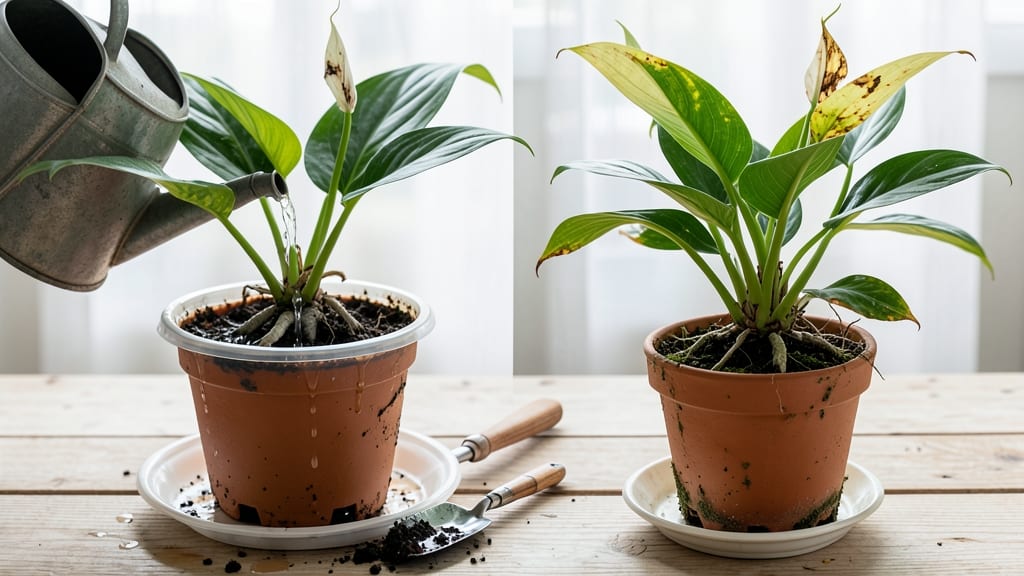
How to fix an overwatered peace lily—your drooping leaves and yellowing stems aren’t a death sentence, just a cry for help. ✨ I’ve nursed back more overwatered plants than I’d like to admit, and these roots can bounce back faster than you think with the right moves in 48 hours. The key? Stopping the water first, then giving roots a chance to breathe before they rot.
First, check the soil: if it smells sour or feels squishy, you’ve got root rot brewing. Gently remove the plant, trim any black, mushy roots with clean scissors, and repot it in fresh, well-draining mix.
No fancy tools needed—just a pot with drainage holes and a little patience. Most plants show signs of recovery within 3-5 days if the roots still have some firm, white sections.
You’ll know it’s working when new growth appears at the base of the stems and the leaves perk up again. The real game-changer? Adjusting your watering routine—wait until the top inch of soil feels dry before adding more water, and always use a pot with drainage.
Trust me, your peace lily will thank you with glossy, happy leaves for months.
Between you and me, this is where most gardeners slip up—overwatering feels safer than underwatering, but roots need air too. Once you’ve got the hang of it, you’ll spot the signs before they become a crisis. Let’s get that plant back to thriving!
Root Causes of Overwatering
Overwatering your peace lily (Spathiphyllum) isn’t just a gardening mistake—it’s a silent killer that suffocates roots and starves leaves of oxygen. Understanding the why behind it helps you avoid repeating the same errors.
Let’s break down the science and habits that turn your lily’s soil into a soggy swamp.
Peace lilies thrive in well-draining soil, but many pots—especially decorative or plastic ones—lack proper drainage holes. Without escape routes for excess water, moisture pools at the bottom, creating anaerobic (oxygen-free) conditions in the soil.
- Why it’s deadly: Roots need oxygen to respire (breathe). When submerged in water, they switch to fermentation, producing ethanol (like beer!) and lactic acid, which are toxic.
Within 24–48 hours, root cells start dying from hypoxia (oxygen starvation). - Actionable clue: Check for yellowing leaves with brown edges—a classic sign of root rot. If you press the soil and it feels like a sponge (not crumbly), drainage is the culprit.
Peace lilies are tropical plants, but their roots hate soggy conditions. Many owners water on a strict schedule (e.g., every 3–4 days) without checking soil moisture, assuming consistency is key.
- The science: Soil moisture should mimic the ephemeral wet-dry cycles of their native rainforest floor.
Overwatering disrupts this balance: - Excess water triggers fungal pathogens like Phytophthora or Pythium, which feast on rotting roots. - Salinity buildup: Tap water contains minerals (chlorides, sulfates) that accumulate in saturated soil, burning root tips and reducing nutrient uptake. - Pro tip: Stick your finger 1–2 inches deep into the soil.
If it’s damp, wait. If it’s bone-dry, you’ve been underwatering (yes, it’s a real thing!).
Not all potting mixes are created equal. Peace lilies need airy, chunky soil that mimics their humid but well-aerated habitat. Heavy soils (like garden dirt or pure peat) compact easily, trapping water like a sponge.
- The breakdown: - Pure peat/coir: Holds water too well, especially in cool climates where it decomposes slowly. - Clay or loam: Becomes waterlogged when saturated, cutting off oxygen. - Lack of perlite/pumice: These additives create air pockets—without them, roots drown. - Fix it fast: Amend your soil with 20–30% perlite or orchid bark to improve aeration.
For repotting, use a well-balanced mix (e.g., 50% peat, 30% perlite, 20% compost).
Peace lilies love 60–80% humidity, but many homes (especially in winter) drop to 20–30%. When you overwater in dry air, the evaporation rate skyrockets, leaving roots in a permanent damp state—like wearing wet socks all day.
- The vicious cycle: 1. You water to compensate for dry air. 2. Soil stays wet longer due to low transpiration (plant “sweating”).
- Bacterial growth accelerates in warm, stagnant water. - Signs to watch: Black, mushy stems at the base (not just roots) or leaves wilting despite wet soil (a red flag for fungal infection).
Peace lilies grow slowly in winter (like most tropical plants) but are often watered just as frequently as in summer. This is a major misstep.
- Seasonal science: - Spring/Fall: Active growth = water when the top 1–2 inches of soil dry out. - Winter: Growth nearly halts. Cut watering by 50%—roots need to rest, not rot. - Winter warning: If your home is below 65°F (18°C), reduce watering further.
Cold temps + wet soil = root rot express.
Plastic pots retain moisture longer than terracotta or fabric pots because they don’t breathe. Add overwatering, and you’ve created a greenhouse effect where humidity builds up around the roots.
- The trap:
- Plastic insulates moisture, slowing evaporation.
- Condensation on the pot’s sides can drip back into the soil, keeping it perpetually damp.
- Quick test: Run your hand around the pot’s exterior. If it’s condensed or clammy, your lily is suffocating.
Not all water is equal. Hard water (high in minerals) or cold tap water can worsen overwatering damage.
- Mineral buildup: Over time, calcium and magnesium in hard water create a crust around roots, blocking oxygen and nutrients. - Cold shock: Peace lilies prefer room-temperature water (65–75°F).
Cold water slows root activity, making them more vulnerable to rot. - Solution: Use filtered, rainwater, or distilled water if your tap water is hard. Always let tap water sit 24 hours before using to off-gas chlorine.
Overwatering isn’t just about how much you water—it’s about drainage, soil health, humidity, and timing. Most problems stem from well-intentioned but misinformed habits. The good news?
Once you identify the root cause (pun intended), fixing it is as easy as draining, trimming, and adjusting your routine—which we’ll cover next! 🌱
How to Revive Your Peace Lily Fast
Overwatering can turn your peace lily’s lush green leaves into a sad, droopy mess—but don’t panic! With the right steps, you can nurse it back to health in 48 hours or less.
Below, we break down the fixes based on the root cause (literally and figuratively), plus pro tips to keep your plant thriving long-term.
Cause: Excess moisture suffocates roots, leading to rot. Fix:
- Pause all watering for at least 3–5 days to let the soil dry out.
- If the pot feels heavy or water pools on top, skip watering entirely until the top 1–2 inches of soil are dry to the touch.
- Pro Tip: 💡 Use a moisture meter (or a chopstick!) to check soil moisture—if it’s damp below 1 inch, wait longer.
Cause: Compacted, waterlogged soil blocks oxygen, choking roots. Fix:
- Remove the plant gently from its pot. If stuck, tap the sides or run a knife around the edges.
- Shake off old soil to inspect roots. Healthy roots are firm and white; mushy or black roots are rotten.
- Trim the damage 🔪 with sterilized scissors (wipe with rubbing alcohol):
- Cut away black, mushy roots down to firm tissue.
- Snip yellowing or slimy roots at the base.
- Rinse roots (if soil is gritty) with room-temperature water to remove debris, then pat dry with a paper towel.
- Replant in fresh potting mix (see Step 4 for the best blend).
Pro Tip: ✨ If roots are severely rotted (only a few white nubs remain), don’t despair—peace lilies regrow easily from healthy stems!
Cause: Heavy or poorly draining soil traps moisture, worsening rot. Fix:
- Choose a pot with drainage holes (if repotting). Terracotta is ideal—it breathes better than plastic.
- Use a well-draining mix:
- 50% peat-free potting soil (or coco coir)
- 30% perlite or orchid bark (for aeration)
- 20% worm castings or compost (for nutrients)
- Add a layer of charcoal (1 tbsp) at the bottom to prevent bacterial growth.
- Plant at the same depth as before—burying the stem too deep invites rot.
Pro Tip: 🌡️ Bottom-watering is your new best friend:
- Place the pot in a tray of 1 inch of water for 10–15 minutes.
- Let excess drain completely before returning to its saucer.
- Water only when the top 2 inches of soil are dry (test with your finger!).
Cause: Low light + overwatering = weak, stressed plant. Fix:
- Move to bright, indirect light (east or north-facing windows are perfect).
- Avoid direct sun—it burns leaves while they’re recovering.
- Boost humidity (peace lilies love it!):
- Place the pot on a pebble tray with water.
- Mist leaves lightly 2–3 times a week (but avoid soggy foliage).
- Group plants together to create a mini humid microclimate.
Pro Tip: 🎯 Yellow leaves? They won’t regreen—trim them at the base to redirect energy to new growth.
Cause: Overwatering flushes out nutrients, starving the plant. Fix:
- Wait 2 weeks before fertilizing—roots need time to heal.
- Use a balanced, water-soluble fertilizer (like 10-10-10) diluted to half strength.
- Feed every 4–6 weeks during spring/summer; skip fall/winter.
- Alternative: 💪 Fish emulsion or seaweed extract (1 tsp per gallon of water) for a gentle nutrient boost.
Pro Tip: 🚫 No fertilizer if roots are still weak—it can burn them!
Cause: Ignoring signs leads to a repeat cycle. Fix:
- Check soil moisture every 3–4 days (stick your finger in—if it’s damp, wait).
- Weigh your pot: A dry pot feels lighter; water when it’s 20% lighter than when fully moist.
- Set a watering schedule:
- Spring/Summer: Every 7–10 days (less if humid).
- Fall/Winter: Every 10–14 days (growth slows).
- Upgrade your pot: If it lacks drainage, repot into a cache pot (a decorative outer pot with a saucer underneath).
Pro Tip: ⏰ Use the "knuckle test"—if the soil feels damp at the first knuckle joint, wait!
- New growth at the top of stems (within 2–4 weeks).
- Firm, white roots when you check again in a month.
- Perky leaves that stay upright (not drooping).
Remember: 🌱 Peace lilies are forgiving—even if you’ve neglected them for weeks, they can bounce back with patience. Follow these steps, and your plant will be thriving in no time!
Frequently asked questions
How do I know if my peace lily is overwatered vs. underwatered?
Check the soil and leaves: Overwatered peace lilies have yellow, drooping leaves with brown edges, mushy stems, and soil that smells sour or stays soggy for days. Underwatered plants show crispy brown leaf tips, dry soil pulling away from the pot edges, and leaves that feel papery when touched. Stick your finger 1–2 inches deep—if it’s bone-dry, you’re underwatering; if damp, you’re overdoing it.
Can I save a peace lily with completely black, mushy roots?
Yes, but act fast! Trim away all black/mushy roots with clean scissors, then replant in fresh, well-draining soil. If only a few healthy white roots remain, your plant can still regrow from the stem. Keep it in bright, indirect light and pause watering for 3–5 days to let roots recover. New growth should appear in 2–4 weeks if the stem is still firm.
What’s the best way to water a peace lily after fixing overwatering?
Use the bottom-watering method: Place the pot in a tray with 1 inch of water for 10–15 minutes, then drain completely. Water only when the top 2 inches of soil feel dry—test with your finger! In winter, reduce watering to every 10–14 days since growth slows. Avoid letting the plant sit in saucers of water, which recreates the soggy conditions.
Will my peace lily recover if the leaves are completely black and falling off?
Black leaves are a late-stage sign of root rot, but don’t give up! Trim all black leaves at the base to redirect energy to healthy stems. Focus on reviving the roots first—repot in fresh soil and adjust watering. New leaves will emerge from the top of stems within 3–5 weeks if the roots are still salvageable. The plant may look bare at first, but it’s redirecting resources to recovery.
How often should I fertilize my peace lily after fixing overwatering?
Wait 2 weeks after repotting to let roots recover, then use a balanced fertilizer (10-10-10) diluted to half strength. Feed every 4–6 weeks during spring/summer, but skip fall/winter when growth slows. Overfertilizing stressed roots can burn them—always water thoroughly before applying fertilizer. For extra nutrients, try seaweed extract (1 tsp per gallon) for a gentle boost.