
Propagation
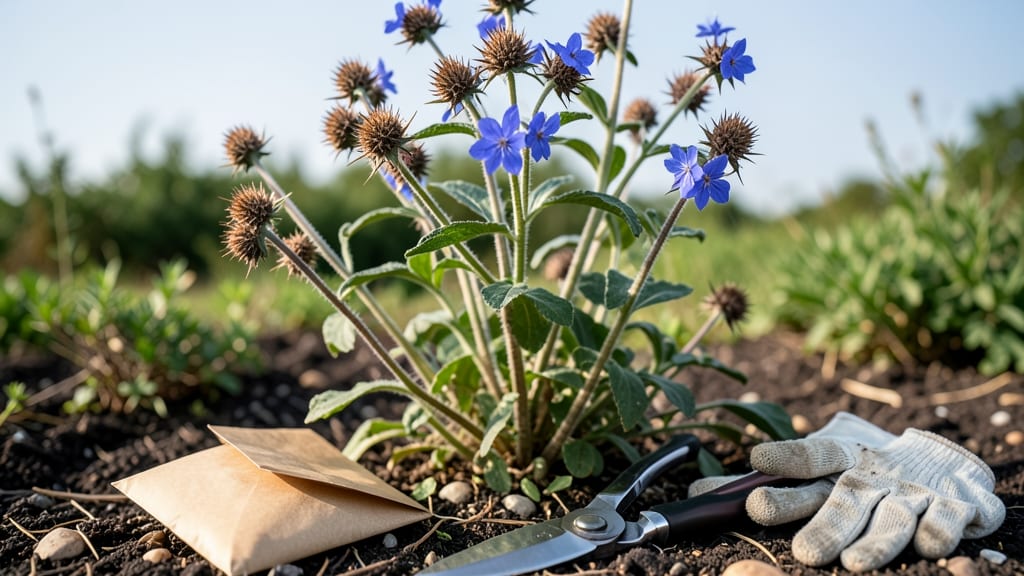
Collecting borage seeds isn't just about saving money—it's about preserving a plant that self-seeds like crazy if you let it. 🌱 Last summer, I watched my borage plants explode into blue starbursts, only to realize too late that the seeds were already scattering everywhere.
This method ensures you capture the best seeds at peak viability, so you can grow a thriving patch every season without the chaos.
The key moment arrives when those spiky seed pods turn from green to dry and papery, splitting open at the slightest touch. You'll know they're ready when the pods feel light as feathers and the seeds rattle inside—typically 60 to 90 days after flowering, depending on your climate.
Harvest on a dry morning when humidity is low, because damp seeds won't store well, no matter how carefully you handle them.
Once you've identified the perfect pods, the twist-and-pull technique is simpler than it sounds. Gently grasp the stem just below the seed head and give it a firm twist while pulling upward—this detaches the entire pod cleanly.
Spread the pods on a tray or paper towel to dry completely for another 24 hours before storing them in a sealed envelope or jar. Properly stored, these seeds stay viable for up to three years, ready to sprout into next year's crop.
Here's where most gardeners trip up: overcrowding the seed heads or harvesting too early. Space your plants properly at the start, and always wait until the pods are fully dry before collecting.
If you rush it, you'll end up with shriveled seeds that won't germinate—or worse, a garden overrun with weak, spindly volunteers that don't match your original plants. Patience here pays off in stronger, more predictable growth.
📚 In This Guide
- What you need
- Instructions
- Tips and common mistakes
- Wrapping up and next steps
What you need
- ● Mature borage plants: Choose healthy, fully bloomed plants with dry, brown seed pods (typically late summer to early fall). Aim for at least 3–5 plants for a good yield.
- ● Pruning shears or sharp scissors: A pair with clean, sharp blades (4–6 inch length) to snip pods without damaging stems.
- ● Brown paper bags or breathable seed-saving envelopes: 2–3 medium-sized bags (12x15 inches) to collect pods and prevent moisture buildup.
- ○ Gloves (optional but recommended): Lightweight gardening gloves to protect hands from prickly stems and potential skin irritation.
- ● Labeling tags or masking tape + marker: To tag bags with the harvest date and plant variety (e.g., "Borage Seeds – 2024").
- ● Drying tray or screen: A flat, elevated surface (like a wire mesh tray or cardboard box with holes) for pods to dry thoroughly.
- ● Small bowl or container: For sorting and storing clean, dry seeds after processing.
- ● Seed catalog or notebook: To record germination rates or notes on plant performance.
- ● Desiccant packets (silica gel): Place 1–2 packets in seed bags to absorb excess moisture during storage.
- ● Fine-mesh sieve: For sifting seeds to remove debris or chaff after pods open.
- ● Humidity monitor: If storing seeds long-term, ensure your storage area stays below 40% humidity.
Step-by-Step instructions for collecting borage seeds
Here's how I harvest seeds from mature borage plants using a simple twist-and-pull technique.
🌿 Step 1: Identify Mature Seed Pods
Wait until the borage flowers have faded and dried into brown, papery seed pods. These pods will feel light and hollow when tapped—immature pods are still green and firm. I check plants in late summer or early fall, typically 8-12 weeks after flowering.
Look for pods that have split open slightly at the top. This natural opening signals the seeds are ready for collection. If you pick pods too early, the seeds won't be fully developed or viable. A good pod should contain 3-5 small, dark brown seeds inside.
🌱 Step 2: Harvest Pods with the Twist-and-Pull Method
Gently grasp a mature pod between your thumb and forefinger. Twist it firmly while pulling upward with steady pressure. The stem should snap cleanly just below the pod—this is the "twist-and-pull" technique that prevents damage to the plant.
Place harvested pods in a paper bag (not plastic) to allow airflow. I like to work on a dry, sunny day when the pods are fully dry. If morning dew is present, wait until the pods dry completely before handling them. Wet pods may stick together or develop mold.
💧 Step 3: Dry and Separate the Seeds
Spread the harvested pods on a clean, dry surface like a baking sheet or tray. Let them dry for 3-5 days in a warm, well-ventilated area. The pods should become brittle and crumbly—this means the seeds are fully dried and ready for separation.
Once dry, gently crush the pods between your fingers or with a rolling pin. The seeds will fall out while the empty pod husks remain. Sift the mixture through a fine-mesh screen or strainer to remove debris. Store the clean seeds in a paper envelope or glass jar in a cool, dark place.
⏰ Step 4: Store Seeds for Future Planting
Label your seed storage with the variety and harvest date. Borage seeds remain viable for 2-3 years when stored properly. I keep mine in a sealed container with a silica gel packet to absorb excess moisture.
Before planting next season, test a few seeds by placing them on a damp paper towel. If they sprout within 7-10 days, the rest of the batch is ready for planting. If they don't sprout, the seeds may have lost viability and should be discarded.
Tips & tricks for perfect borage seed collection
Real talk: Harvesting borage seeds takes patience, but these little tricks make all the difference between decent and stellar results.
Timing Secret: The 8-12 week window after flowering is critical for seed viability. I mark my calendar when the first flowers appear so I know exactly when to check for mature pods. If you miss this window, the seeds inside won't be fully developed or won't germinate properly. Trust me on this—waiting for that natural pod split is worth the extra time.
Harvest Technique: When using the twist-and-pull method in Step 2, apply steady pressure while twisting—don't yank! The stem should snap cleanly just below the pod. If you pull too hard, you might damage the plant's stem or leave the pod attached. I find it helps to use my other hand to stabilize the plant stem while twisting. This ensures a clean break every time, which keeps your plants healthy for future harvests.
Drying Wisdom: The 3-5 day drying period in Step 3 is where many people rush and end up with moldy seeds. I spread my pods on a baking sheet in a warm, well-ventilated area near a sunny window. Check them daily—they're ready when they become brittle and crumble easily between your fingers. If you notice any moisture or condensation on the pods, extend the drying time by another day or two.
Storage Strategy: For long-term viability, I store my clean seeds in glass jars with silica gel packets. The silica gel absorbs any moisture that could compromise seed quality. Label each jar with the harvest date—this helps you track seed age and viability. I've successfully stored seeds for up to 3 years using this method, though I always test a few seeds before planting to confirm viability.
Pro Tips for Collect Borage Seeds
- Real talk: Harvesting borage seeds takes patience, but these little tricks make all the difference between decent and stellar results.
- Timing Secret: The 8-12 week window after flowering is critical for seed viability.
- Harvest Technique: When using the twist-and-pull method in Step 2, apply steady pressure while twisting—don't yank!
Frequently asked questions
When is the best time to harvest borage seeds?
The ideal time to collect borage seeds is in late summer to early fall (August–September in most climates), when the seed pods turn brown and papery. Harvest them on dry, sunny days to ensure viability—moisture can cause mold or premature germination.
How long do borage seeds stay viable for storage?
Properly dried and stored borage seeds remain viable for 2–3 years in a cool, dark place (like a sealed jar in the fridge). For longer storage, freeze them for up to 5 years. Test a few seeds annually to check germination rates!
What if my borage pods don’t open naturally?
If pods stay closed, try these tricks:
- Gently twist and pull (as described in the twist-and-pull method).
- Dry them further on a mesh screen for 2–3 extra days.
- Freeze them overnight—thawing can help loosen seeds.
Can I collect seeds from store-bought borage?
Store-bought borage (often sold as an edible flower) is usually sterilized or hybridized and won’t produce viable seeds. For seed collection, grow borage from open-pollinated seeds or save seeds from organic, untreated plants in your garden.
How do I know if my seeds are dry enough?
Seeds are ready when:
- The pods crinkle when squeezed and feel light.
- Seeds rattle inside when shaken.
- They don’t stick to your fingers when touched.
Wrapping up and next steps
Collecting borage seeds is a simple yet rewarding process—once you master the twist-and-pull method, you’ll have a steady supply of viable seeds for future gardens. With just a few tools and a little patience, you can ensure healthy, dry pods that yield high-quality seeds.
Now that you’re equipped with the know-how, grab your gloves and get growing! 🌱
Ready to take the next step? Plant those seeds in well-draining soil and watch your borage thrive—bonus points if you share your harvest with fellow gardeners! 🌿