
Planting
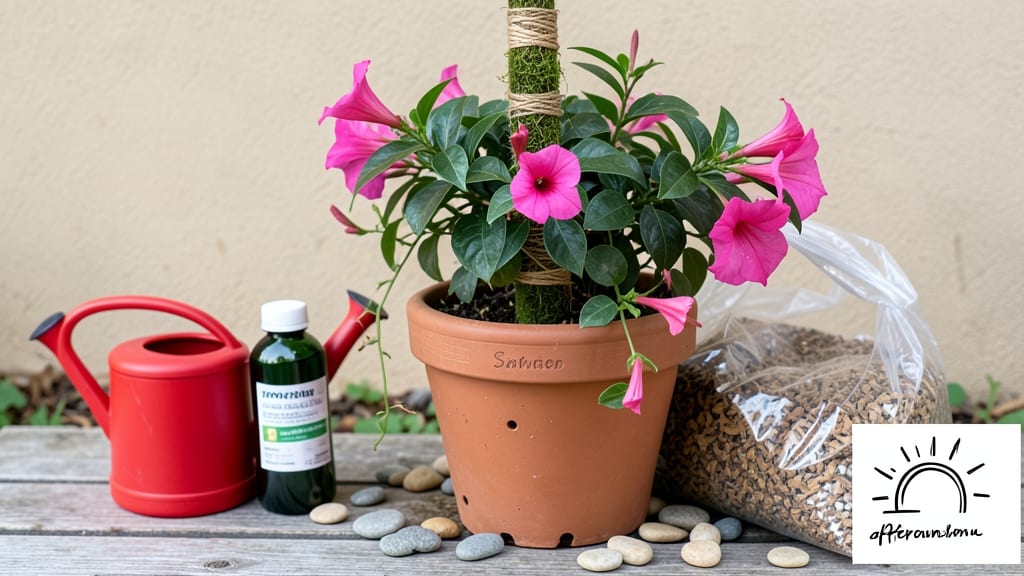
Caring for a mandevilla plant in pots unlocks year-round color that’ll make your porch or patio the envy of the neighborhood. 🌿 I’ve turned my own leggy, struggling vines into lush, blooming powerhouses by mastering just three key elements: sunlight, water, and a little winter TLC.
The secret starts with the right pot—at least 10-12 inches wide with drainage holes, because soggy roots kill mandevillas faster than anything. I use a well-draining cactus/succulent mix with added perlite to keep roots happy, and I never skip the saucer underneath to catch water runoff.
Outdoor pots need afternoon shade in hot climates, while indoor plants thrive near bright windows (south or west-facing is ideal).
Watering’s where most people trip up: soak until water drains, then wait until the top inch of soil is dry before watering again. Overwatering turns leaves yellow, while underwatering makes them crispy—both are easy to fix once you spot the pattern.
Feed with a balanced liquid fertilizer every 2-4 weeks during growing season (spring-fall), and cut back to monthly in winter when growth slows.
Pruning isn’t just for shaping—it’s how you keep your mandevilla blooming like crazy. Pinch back leggy stems in spring to encourage bushier growth, and trim back by one-third after each flush of flowers.
For winter, bring pots indoors (60-65°F) or wrap them in frost cloth if you’re keeping them outside—just don’t let them freeze. The payoff? Come spring, you’ll have a vine so vigorous it’ll cover your trellis in weeks, not months.
📚 In This Guide
- What you need
- Instructions
- Tips and common mistakes
- Wrapping up and next steps
What you need
- ● Pot: A well-draining container with drainage holes (minimum 12-inch diameter for mature plants). Terracotta or ceramic pots work best.
- ● Potting Mix: A lightweight, airy blend (e.g., 60% peat moss, 20% perlite, 20% compost). Avoid heavy garden soil.
- ● Mandevilla Plant: A healthy nursery-grown vine (check for vibrant leaves and no pests).
- ● Support Structure: A trellis, stake, or cage (at least 3-4 feet tall) for climbing.
- ● Fertilizer: A balanced, water-soluble fertilizer (e.g., 20-20-20) or a slow-release granular (like 14-14-14).
- ● Watering Can: With a narrow spout for precise watering.
- ● Pruning Shears: Sharp, sterilized shears for trimming.
- ● Mulch: Organic mulch (like bark chips) to retain moisture.
- ● Plant Food: A liquid bloom booster (e.g., 10-30-20) for extra color.
- ● Grow Lights: If indoors, a full-spectrum LED grow light (12+ hours/day).
- ● Pest Control: Neem oil or insecticidal soap for aphids or spider mites.
- ● Pot Feet: To elevate pots and improve drainage.
Step-by-Step instructions for caring for Mandevilla in pots
Here’s how I keep my Mandevillas blooming nonstop—even in containers—using simple routines that prevent common pitfalls.
☀️ Step 1: Position for Maximum Sunlight
Mandevillas crave bright, indirect light—think 6-8 hours of morning sun followed by afternoon shade, especially in hot climates. A south- or west-facing patio works perfectly, but avoid harsh midday rays that scorch leaves. I notice my plants grow leggy when light is insufficient, so I rotate pots weekly to encourage even growth.
If you only have shade, supplement with a grow light (12-14 hours daily). Watch for leaves turning pale yellow—a sign they’re reaching for more light. In winter, move pots near a sunny window or extend light exposure to maintain blooms.
💧 Step 2: Water Deeply but Sparingly
Let the top 2 inches of soil dry out between waterings—overwatering is the #1 killer of potted Mandevillas. Stick your finger in the soil: if it feels damp past the first inch, wait another day. I water in the morning to let excess drain through the pot’s holes, preventing root rot.
During summer heat, I check soil moisture daily. Yellowing leaves or drooping vines signal underwatering, while mushy stems mean too much water. Mandevillas store moisture in their thick stems, so they’re surprisingly drought-tolerant once established.
✂️ Step 3: Prune for Shape and Bloom Boost
Prune in early spring to shape the plant and encourage bushier growth. Cut back leggy stems by one-third, just above a leaf node. I also remove spent blooms regularly—this redirects energy to new flowers instead of seed production. Use clean, sharp shears to avoid tearing the vines.
If your Mandevilla outgrows its pot, prune aggressively in late winter to reset growth. You’ll sacrifice some blooms that season, but the plant will rebound with stronger, more compact vines. Never prune after mid-summer—new growth won’t harden off before winter.
🪴 Step 4: Feed and Repot Strategically
Feed every 2-4 weeks during spring and summer with a balanced liquid fertilizer (10-10-10 or 20-20-20). I halve the recommended dose—Mandevillas are sensitive to salt buildup. Flush the soil monthly with water to prevent fertilizer burn, which shows as brown leaf tips.
Repot every 2-3 years or when roots circle the pot. Choose a container 2-3 inches larger with drainage holes. I use a well-draining cactus/succulent mix amended with perlite to prevent compaction. After repotting, hold off on fertilizer for 4-6 weeks to avoid shocking the roots.
⏰ Step 5: Protect from Cold and Pests
Mandevillas are tropical—bring pots indoors before temperatures drop below 50°F. I place mine near a bright window or under grow lights during winter. If you must keep them outside, use frost cloth or move them to a garage with indirect light.
Watch for aphids or spider mites, which thrive on stressed plants. Wipe leaves with soapy water weekly as prevention. Yellowing leaves often signal pest issues—check undersides of leaves and stems. Neem oil spray works wonders if infestations appear.
Tips & tricks for thriving Mandevilla vines in pots
These simple yet game-changing strategies will help you keep your container-grown Mandevillas blooming like showstoppers all year long.
The Light Factor: In Step 1, when positioning your pots for that crucial 6-8 hours of morning sun, pay close attention to seasonal shifts. I place a small whiteboard near my patio to track sunlight patterns—this helps me adjust pot locations as the sun's angle changes. For indoor growers, rotate pots quarter-turns weekly to prevent lopsided growth toward the light source. The goal is even exposure on all sides, which prevents those unsightly leggy stems.
Soil Moisture Secrets: The "top 2 inches dry" rule in Step 2 is non-negotiable, but here's the pro move: invest in a moisture meter for $10—it eliminates guesswork. I've learned that Mandevillas actually prefer slightly drier conditions than most tropical plants, especially in winter when growth slows. The thick stems store water like little reservoirs, so resist the urge to water at the first sign of wilting.
Pruning Precision: When you're cutting back those leggy stems in Step 3, always make your cuts just above a leaf node where new growth will emerge. I use my pinky finger as a guide—if I can see the node clearly when holding the stem at that angle, I know I'm in the right spot. For aggressive pruning in late winter, I time it with the first warm day above 60°F to give new growth the best start.
Fertilizer Strategy: That 2-4 week feeding schedule in Step 4 is perfect, but here's the key: switch to a low-nitrogen, high-phosphorus formula (like 5-10-10) when you notice buds forming. The extra phosphorus boosts flowering without overfeeding the foliage. And that 4-6 week fertilizer break after repotting? It's non-negotiable—roots need time to establish before taking in nutrients again.
Pro Tips for Care For A Mandevilla Plant In Pots
- These simple yet game-changing strategies will help you keep your container-grown Mandevillas blooming like showstoppers all year long.
- The Light Factor: In Step 1, when positioning your pots for that crucial 6-8 hours of morning sun, pay close attention to seasonal shifts.
- Soil Moisture Secrets: The "top 2 inches dry" rule in Step 2 is non-negotiable, but here's the pro move: invest in a moisture meter for $10—it eliminates guesswork.
Frequently asked questions
Got questions about keeping your Mandevilla happy in pots?
Here are answers to the most common concerns—from watering woes to winter prep—so you can enjoy those stunning blooms all season long!
How often should I water my potted Mandevilla?
Water your Mandevilla when the top 1-2 inches of soil feel dry. In hot weather, this could be every 2-3 days, while cooler months may stretch it to 5-7 days. Always check moisture with your finger—overwatering is the #1 killer! Use well-draining pots to prevent soggy roots.
Can Mandevillas survive winter in pots?
Mandevillas are tender perennials—they’ll die in frost but can be overwintered indoors or in a garage (50–60°F). Prune back vines, repot in fresh soil, and reduce watering. Resume outdoor care in spring after the last frost. Pro tip: Place pots near a sunny window or under grow lights!
Why are my Mandevilla leaves yellowing or curling?
Yellowing often signals overwatering or poor drainage, while curling can mean underwatering, pests (like spider mites), or too much sun. Check for pests on undersides of leaves. Adjust care: trim damaged foliage, improve drainage, and move to morning sun + afternoon shade if scalded.
How do I prune a Mandevilla in a pot?
Prune in early spring to shape the plant and encourage bushier growth. Cut back leggy stems by ⅓ and remove dead flowers to redirect energy to blooms. Use clean shears and sterilize cuts with cinnamon powder to prevent disease. Bonus: Pruned cuttings can root in water for free new plants!
What’s the best pot size for a Mandevilla?
Start with a 10–12 inch pot for young plants, then upgrade to 14–16 inches as roots fill the space. Mandevillas have shallow but sprawling roots, so prioritize width over depth. Add a drainage layer (pebbles or broken pots) and use a lightweight, airy potting mix to keep roots healthy.
Wrapping up and next steps
Caring for a Mandevilla plant in pots is all about balancing sunshine, water, and love—plus a dash of seasonal adjustments! With the right well-draining soil, supportive trellis, and consistent attention, your vine will reward you with vibrant blooms year-round.
Remember, patience is key—these tropical beauties thrive when you let them set their own pace.
Now that you’re armed with expert tips, go ahead and give your Mandevilla the VIP treatment! 🌿✨ Ready to watch it flourish? Next, experiment with pruning techniques or try propagating cuttings to expand your lush green collection!