
How To
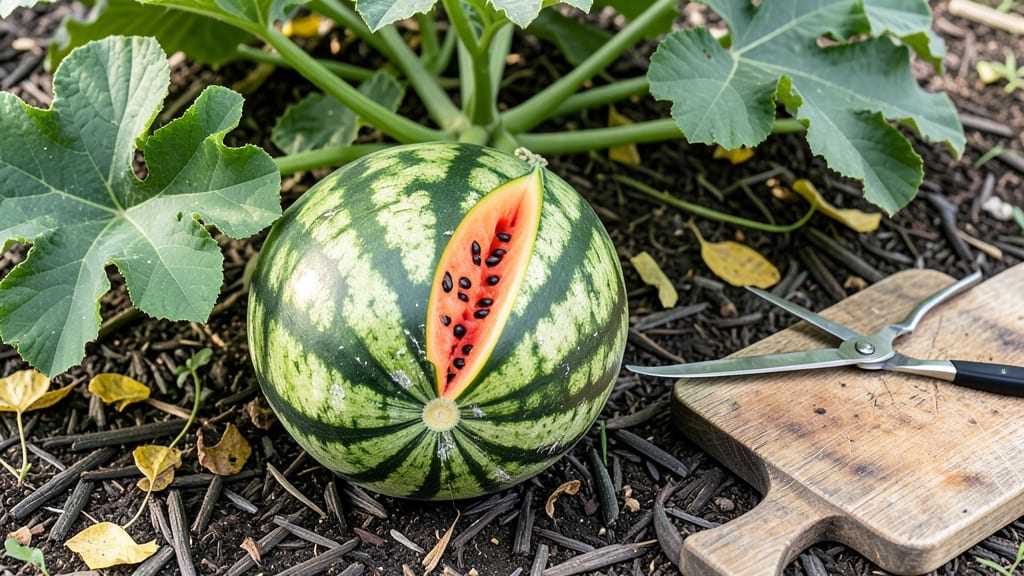
How to know when to pick a watermelon off the vine can turn a guess into a guaranteed sweet victory. That perfect moment between too soon (watery disappointment) and too late (overripe mush) is easier to spot than you think—if you know what to look for.
I’ve spent years watching watermelons 🍉 ripen in my garden, and the key isn’t just waiting for size—it’s reading the plant’s signals.
From the telltale hollow sound when you thump the rind to the way tendrils dry up, these 5 simple tests will help you harvest melons at peak flavor every time.
Whether you’re a first-time gardener or a seasoned pro, these tricks work for Zone 6a growers and beyond. No more cutting melons too early or letting them rot on the vine—just sweet, juicy perfection ready for your table.
Let’s dive into the field-tested cues that’ll have you picking watermelons like a pro, no crystal ball required.

5 Field-ready tests to determine watermelon ripeness
Timing your watermelon harvest perfectly means the difference between a sweet, juicy reward and a disappointing, watery mess. I’ve tested these 5 foolproof methods over years of growing—no guesswork required. Start by checking the field spot, that creamy-yellow patch where the melon rested on the ground.
A ripe spot should be deep cream or buttery yellow, not pale or greenish.
Next, give the stem end a gentle twist. If it snaps cleanly (instead of tearing), that’s your cue to harvest. This dry, papery stem signals the melon’s internal sugars have fully developed. But here’s the catch: some varieties resist this test—so always cross-check with other signs.
Now for the classic thump test. Tap the melon’s blossom end (opposite the stem) with your knuckles. A ripe watermelon sounds hollow and deep, like a drum.
If it thuds like a drumstick, it’s still firming up. Pro tip: Test in the morning when temps are cooler for the most accurate results.
Don’t overlook the rind color, which varies by variety. For classic dark green watermelons, look for a deep, glossy hue with no streaks. Yellow varieties should turn golden and uniform.
Stripes should be crisp and defined, not faded. This shift happens in the final 5-7 days before ripeness.
🔍 Watermelon Ripeness
5 Field-ready tests to determine watermelon ripeness
Knowing exactly when to harvest your watermelons transforms a guess into a guaranteed sweet victory. Unlike many fruits, watermelons don’t ripen further after picking, so timing is everything. The good news? Nature provides clear clues if you know where to look.
From the field spot to the tendril color, these five foolproof tests will have you harvesting melons at peak perfection every season.
Start with the most obvious visual cue: the field spot—that creamy yellow patch where the melon rested on the ground. When it turns from pale green to a deep, buttery yellow, that’s your first green light.
Pair this with the tendril (the curly vine near the stem), which should dry up and turn brown. These two signs alone cut your harvest guesswork in half. But don’t stop there—let’s dive into the full