
Companion Plants
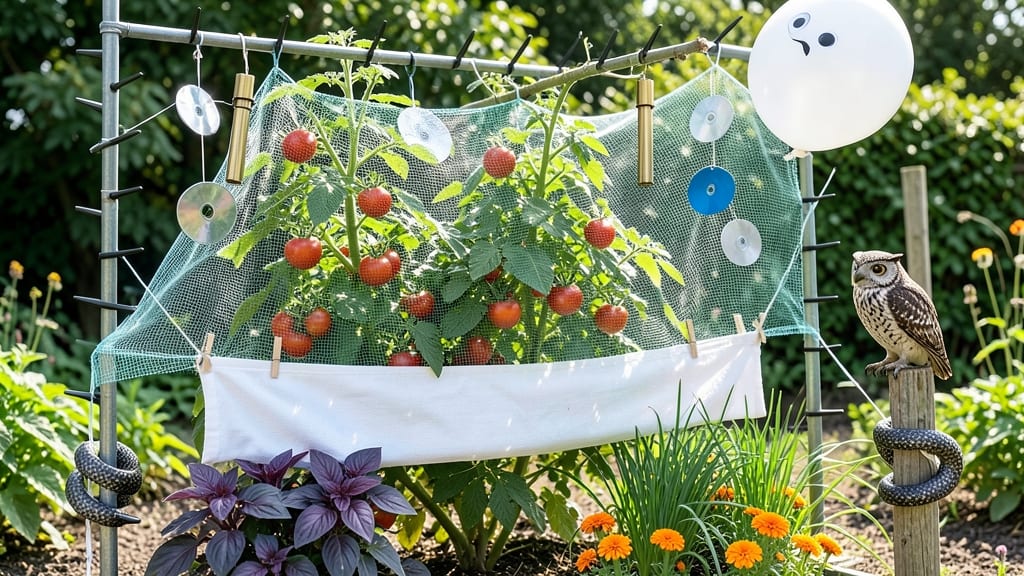
How to keep birds off of the tomato plants before they turn into bird buffets—those glossy green fruits are just too tempting for sparrows and other feathered thieves. The moment they ripen, the neighborhood birds descend like a feathered army unless you act fast. Row covers and spicy pepper spray saved my harvest last season, and I’ve since added predator decoys for good measure.
Start with lightweight row covers—they’re the easiest way to block birds without harming them. Stretch them over cages or stakes before fruit sets, and secure the edges tightly.
For birds already pecking at tomatoes, a homemade pepper spray (mix cayenne pepper, water, and a drop of dish soap) works like magic when sprayed on leaves—not the fruit.
You’ll notice fewer bird visits within 24 hours of setting up barriers, and your tomatoes will stay intact until harvest. The key is consistency: check covers weekly for tears and reapply spray every 7-10 days during peak bird activity. Even stubborn birds eventually give up when their favorite snack disappears.
This method works for all tomato varieties and scales from small containers to full garden beds. The best part? Birds stay safe, your plants thrive, and you get to enjoy that first homegrown tomato—ripe and unpecked. Let’s get started!
📚 In This Guide
- What you need
- Instructions
- Tips and common mistakes
- Wrapping up and next steps
What you need
- ● Row Covers (Floating or Hoop House Style): Lightweight, breathable fabric (e.g., Agribon or Reemay) – 1–2 covers (depending on garden size). Choose 30–50% shade cloth for airflow.
- ● Hoops or stakes (bamboo, PVC, or metal) – 8–12 pieces (spaced ~3–4 ft apart) to create a tunnel.
- ● Clips or weights (e.g., garden clips, bricks, or rocks) to secure the cover edges.
- ● Spicy Pepper Spray: Fresh hot peppers (e.g., jalapeños, cayenne, or habaneros) – 1–2 cups (adjust for spice level).
- ● Rubbing alcohol (70% isopropyl) – 1 cup (acts as a solvent).
- ● Dish soap – 1 tbsp (helps the spray stick).
- ● Water – 1 gallon (for dilution).
- ● Spray bottle or garden sprayer (1–2 quart capacity).
- ● Reflective tape or old CDs – Hang near plants to scare off birds with flashes of light.
- ● Bird netting (if row covers aren’t an option) – Fine-mesh, ½-inch or smaller.
- ● Gloves – For handling spicy peppers (trust us, your hands will thank you!).
- ● Labeling tags – To mark treated areas (especially if using pepper spray near edibles).
Tips & tricks for protecting tomato plants from birds
These practical strategies will help you outsmart persistent birds and keep your tomato plants thriving without any harm to your feathered friends.
Timing is Everything: Install your floating row covers immediately after planting seedlings, not when you notice birds already pecking at your plants. Birds are opportunistic—they spot vulnerable plants from a distance, so giving them nothing to target from day one is key. For indeterminate varieties, keep covers on until tomatoes are golf-ball sized, as birds will still be drawn to the foliage.
Layered Defense Strategy: Combine row covers with spicy pepper spray for maximum effectiveness. Start with the row covers as your first line of defense, then add the pepper spray to leaves and stems every 3-5 days. The combination creates a multi-sensory deterrent that's far more effective than either method alone. Always apply the spray lightly—you're aiming to create a deterrent, not a toxic environment.
Pollination Considerations: Remove row covers during peak pollination hours (usually mid-morning) to allow bees access. Birds aren't the only visitors you want in your garden! After pollination, reapply covers immediately. For indeterminate varieties, consider using lightweight netting that allows both pollinators and airflow while still blocking birds. This is especially important in areas with heavy bird traffic.
Garden Maintenance Matters: Keep your garden area completely clean of fallen fruit, seeds, or debris. Birds are attracted to easy meals, so eliminating these food sources makes your tomatoes less appealing. I've found that even a single fallen tomato can attract a flock that will then target your healthy plants. Regularly inspect the ground beneath your plants and remove any signs of damage or dropped fruit immediately.
Pro Tips for Keep Birds Off Of Tomato Plants
- These practical strategies will help you outsmart persistent birds and keep your tomato plants thriving without any harm to your feathered friends.
- Timing is Everything: Install your floating row covers immediately after planting seedlings, not when you notice birds already pecking at your plants.
- Layered Defense Strategy: Combine row covers with spicy pepper spray for maximum effectiveness.
Frequently asked questions
What’s the best time of day to apply bird deterrents like pepper spray?
Apply deterrents early morning or late afternoon when birds are most active but before peak heat. Avoid spraying when bees or pollinators are active (midday), as capsaicin in pepper spray can harm them. Reapply after rain or every 3–5 days for effectiveness.
Will row covers harm my tomato plants or their growth?
No, lightweight row covers (like floating fabric) won’t harm plants if used correctly. Ensure they’re secured but allow airflow and water access. Remove covers during pollination (if hand-pollinating isn’t needed) to avoid heat stress. Pro tip: Use hoops or stakes to keep covers 12–18 inches above plants.
Are there humane alternatives to pepper spray for bird control?
Yes! Try these non-toxic options:
- Reflective tape/discs: Hang shiny objects to scare birds with light reflections.
- Fake predators: Use owl statues or rubber snakes (move them weekly to stay effective).
- Noise deterrents: Wind chimes or radio static on a timer can disrupt roosting.
- Companion planting: Marigolds or basil near tomatoes may deter some birds.
How long does it take for birds to stop eating tomatoes after using deterrents?
Results vary, but most gardeners see a noticeable reduction within 2–3 days of consistent deterrent use. Birds may return if they find deterrents ineffective—combine methods (e.g., row covers + pepper spray) for best results. Persistence is key!
Can I still harvest tomatoes if birds have already pecked at them?
Yes, but inspect carefully—discard any tomatoes with deep punctures or droppings nearby (risk of contamination). Birds rarely destroy entire plants; they typically peck at ripe fruit. Pro tip: Harvest tomatoes daily to reduce temptation and use netting on the lowest branches first.
Wrapping up and next steps
Keeping birds off your tomato plants doesn’t have to be a battle—just a few simple, nature-friendly strategies like row covers, spicy pepper spray, and smart companion planting can make all the difference! 🌱 With the right tools and a little patience, you’ll protect your harvest and keep your feathered friends happy elsewhere.
Ready to grow those juicy tomatoes without the bird buffet? Start by picking one or two methods from this guide, test what works best in your garden, and watch your plants thrive! 🍅