
Companion Plants
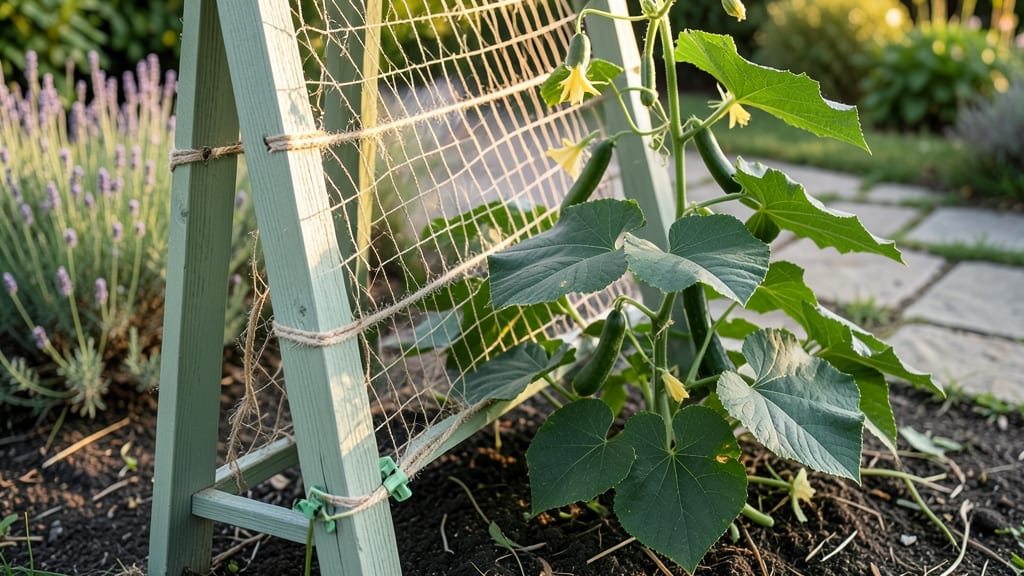
How to hang cucumber plants doubles your harvest in half the space. 🌿 I learned this the hard way after watching my sprawling vines take over the garden—until I switched to vertical training. The difference? Cleaner plants, fewer pests, and cucumbers that don’t rot on the ground.
You’ll need sturdy trellises (or strong strings tied between posts), soft plant ties, and a sunny spot with at least 6 hours of light. The key is gentle guidance—cucumbers climb by tendrils, not vines, so they need help early.
Start with 3-4 plants per trellis to avoid overcrowding, and watch those vines race upward like green fireworks.
By mid-summer, you’ll be picking crisp, disease-free cucumbers from waist height instead of crawling on the ground. The trellis also improves air circulation, cutting down on powdery mildew—the bane of bush cucumbers. Plus, your neighbors will wonder how you fit so much in so little space.
Works for patios, balconies, or small gardens—just adjust the trellis size. Here’s how to set it up without the common pitfalls that trip up beginners. Let’s get those vines growing up, not out!
📚 In This Guide
- What you need
- Instructions
- Tips and common mistakes
- Wrapping up and next steps
What you need
- ● Cucumber plants: Disease-resistant varieties (e.g., 'Straight Eight,' 'Marketmore 76') or young seedlings (3–4 weeks old). Quantity: 1–3 plants per trellis, depending on space.
- ● Trellis or support structure: Vertical trellis: 6–8 ft tall, made of wood, metal, or PVC (e.g., A-frame, ladder-style, or netting). Width: 2–3 ft for 1–2 plants.
- ● Horizontal trellis: String or twine (3/16"–1/4" diameter) stretched between posts (8–10 ft apart). Height: 6–10 ft.
- ● Netting: Plastic or biodegradable (1"–2" mesh) for bushier varieties. Size: 6 ft x 10 ft roll.
- ● Fasteners: Ziploc ties, soft plant clips, or twist ties (for securing vines). Quantity: 10–20 per plant.
- ● Staples or screws (for attaching string/netting to trellis).
- ● Pruning shears: Sharp, clean pair for trimming excess growth.
- ● Gloves: Gardening gloves to protect hands from thorns or rough vines.
- ● Potting mix: Well-draining, organic-rich soil (e.g., 60% compost + 40% coco coir). Quantity: 1–2 gallons per plant.
- ● Fertilizer: Balanced organic fertilizer (10-10-10) or compost tea. Application: Every 4–6 weeks.
- ● Drip irrigation kit: To keep vines hydrated without wetting leaves (reduces disease risk).
- ● Shade cloth: Lightweight (30–50% coverage) for hot climates.
- ● Plant markers: Labels to track varieties and training progress.
Step-by-Step instructions for trellising cucumber plants
Here’s how I train cucumbers vertically for cleaner growth, better air circulation, and a bountiful harvest—no sprawl, no mess.
🪴 Step 1: Install a Sturdy Trellis System
Choose a trellis that’s at least 6 feet tall (cucumbers can climb higher but need support at 3-4 feet). I use galvanized wire mesh or wooden slats spaced 6 inches apart—both work well. Secure it firmly to a south-facing wall or a freestanding frame so it won’t sway in wind or collapse under weight. The trellis should be 3-4 feet wide to accommodate 4 plants (one every 12 inches).
If using a wall, attach the trellis with sturdy brackets or heavy-duty zip ties—cucumbers get heavy fast. For freestanding, drive 4-foot stakes into the ground at each corner and weave the trellis material between them. Test the stability by gently shaking it; if it wobbles, reinforce it before planting.
🌱 Step 2: Plant Cucumbers Near the Trellis
Sow seeds or transplant seedlings 6-12 inches away from the trellis, depending on the variety. Bushless types like ‘Straight Eight’ or ‘Little Leaf’ can go closer (6 inches), while vining varieties need 12 inches to sprawl slightly before climbing. Plant in well-draining soil enriched with compost—cucumbers are heavy feeders and need nutrients to support vertical growth.
Dig a hole twice as wide as the root ball to encourage root spread. If transplanting, bury the stem up to the first leaves—this promotes stronger root development. Water deeply after planting to settle the soil, but avoid soggy conditions, which can rot roots before they establish.
✂️ Step 3: Train Vines to Climb Early
As soon as tendrils appear (thin, curly growths at leaf nodes), gently guide the main vine toward the trellis. Use soft plant ties or twine to secure it loosely—too tight, and you’ll strangle the stem. I like to weave the vine through the trellis slats or loop it around the wire every 12 inches to encourage upward growth.
Watch for side shoots (small stems growing from leaf axils). Pinch these off early—if left unchecked, they’ll divert energy from the main vine. Strong main stems produce more fruit and fewer yellowing leaves from overcrowding. Prune with clean scissors at a 45-degree angle just above a leaf node to prevent disease entry.
💧 Step 4: Maintain Water and Fertility
Cucumbers on trellises dry out faster than ground plants, so water deeply 2-3 times per week, aiming for 1 inch of moisture per week. Use a soaker hose or drip irrigation to keep the soil evenly moist—not soggy, not bone-dry. I water in the early morning to reduce fungal risks from wet foliage.
Feed every 2 weeks with a balanced liquid fertilizer (10-10-10) or compost tea to support climbing growth. Yellowing leaves? That’s your cue to fertilize—cucumbers are hungry climbers. Avoid high-nitrogen feeds; they’ll produce leafy vines instead of fruit.
☀️ Step 5: Harvest and Prune for Continuous Growth
Harvest cucumbers when they’re 6-8 inches long (check the variety’s guidelines) to encourage more production. Use pruning shears to cut the fruit from the vine—never twist, or you’ll damage the stem. I harvest every 2-3 days in peak season to prevent overripe cucumbers from sapping energy from new growth.
After harvest, prune any dead or diseased leaves immediately to improve air circulation. If a vine stops producing after 6-8 weeks, trim it back by half—this often triggers a second flush of flowers and fruit. Keep training new shoots upward as they appear, and your trellis will stay productive until frost.
Tips & tricks for vertical cucumber trellising
Let me share the insights I’ve picked up after years of experimenting with cucumber trellises—these small adjustments make all the difference between a struggling vine and a thriving vertical garden.
Trellis Stability is Non-Negotiable: In Step 1, when installing your trellis, I can’t stress enough how critical stability is—especially in windy conditions. After installing a freestanding trellis last summer, a gust of wind nearly toppled it mid-season. I now recommend using 4-foot ground stakes at each corner AND adding cross-bracing between the top and bottom rails. This creates a rigid frame that won’t flex even when laden with 20-pound cucumbers. The extra 10 minutes spent reinforcing now saves you from replanting later.
Plant Spacing Matters More Than You Think: The 6-12 inch spacing in Step 2 might seem generous, but trust me—it’s worth it. Bushless varieties like 'Straight Eight' can actually get too crowded at 6 inches, leading to poor air circulation and powdery mildew. I’ve found that giving them 8-10 inches of space (the upper range) prevents these issues while still encouraging upward growth. For vining types, that full 12 inches becomes essential—they’ll thank you with stronger main stems and more fruit.
Pruning Technique Makes All the Difference: When you’re pinching off those side shoots in Step 3, there’s a right way and a wrong way. I used to just snap them off, but that often leaves jagged edges that invite disease. Now I use clean pruning shears and make cuts at a 45-degree angle just above a leaf node. This technique promotes faster healing and prevents fungal infections. Also, never prune more than one-third of the plant’s foliage at once—this prevents shock and maintains photosynthesis.
Watering Strategy for Vertical Growth: The 2-3 times per week guideline in Step 4 works, but here’s what I’ve learned: morning watering is crucial, but timing matters too. Water right after sunrise when temperatures are cooler—this reduces evaporation and gives roots time to absorb moisture before the heat of the day. I’ve also noticed that trellised cucumbers benefit from a mulch layer around the base (straw works perfectly) to retain that precious 1 inch of weekly moisture while keeping soil temperatures stable.
Pro Tips for Hang Cucumber Plants
- Let me share the insights I’ve picked up after years of experimenting with cucumber trellises—these small adjustments make all the difference between a struggling vine and a thriving vertical garden.
- Trellis Stability is Non-Negotiable: In Step 1, when installing your trellis, I can’t stress enough how critical stability is—especially in windy conditions.
- Plant Spacing Matters More Than You Think: The 6-12 inch spacing in Step 2 might seem generous, but trust me—it’s worth it.
Frequently asked questions
Got questions about hanging cucumber plants? You’re not alone! Here are answers to the most common queries to help you grow like a pro.
How soon after planting can I start trellising cucumbers?
Start training cucumbers up a trellis or string as soon as they sprout their first true leaves (about 1–2 weeks after germination). Young vines are flexible and won’t snap easily—just give them gentle support. Pro tip: Use soft ties or old T-shirts to avoid damaging stems!
What if my cucumbers grow too heavy for the trellis?
If vines sag or bend under weight, reinforce your trellis with sturdy stakes or a second support line. Prune excess leaves near the base to redirect energy to fruit-bearing vines. For extra security, weave vines through the trellis in a zigzag pattern to distribute weight evenly.
Can I hang cucumber plants indoors or in containers?
Use a vertical garden trellis, hanging planter, or even a DIY ladder trellis for containers. Ensure pots have drainage holes and provide 6+ hours of sunlight daily. Dwarf or bush varieties (like ‘Spacemaster’) work best for small spaces.
How long does it take for cucumbers to climb a trellis?
Cucumbers can climb aggressively—expect visible progress within 3–5 days if conditions are ideal (warmth, moisture, and support). Some varieties (like ‘Straight Eight’) may take 2–3 weeks to fully utilize vertical space. Fun fact: Vines can grow 6–12 inches per day in optimal conditions!
Why aren’t my cucumbers climbing the trellis?
Check these common culprits:
- Lack of sunlight: Move to a sunnier spot (cucumbers need 6+ hours/day).
- Poor soil/nutrients: Fertilize with compost or a balanced 10-10-10 mix.
- Overcrowding: Thin plants to 12–24 inches apart.
- Pests/disease: Inspect for aphids or powdery mildew—treat with neem oil if needed.
Can I reuse last year’s trellis for cucumbers?
Yes, but sterilize it first! Soak wooden or metal trellises in a 1:10 bleach-water solution for 10 minutes, then rinse. For plastic/mesh, wipe with vinegar or soapy water. Bonus: Disassemble and store trellises in a dry place to prevent mold or pest buildup.
Wrapping up and next steps
Hanging cucumber plants isn’t just a clever gardening trick—it’s a game-changer for space, air circulation, and bountiful harvests! 🌿 By mastering trellis training, you’ll enjoy healthier vines, fewer pests, and easier maintenance, all while maximizing your garden’s potential.
Whether you’re a seasoned gardener or a curious beginner, these steps make the process simple and rewarding.
Ready to transform your garden? Grab your supplies, follow the guide, and watch your cucumbers thrive—one vine at a time. Next up: Pair your trellised cucumbers with the perfect companion plants to boost growth and flavor even more!