
Picking
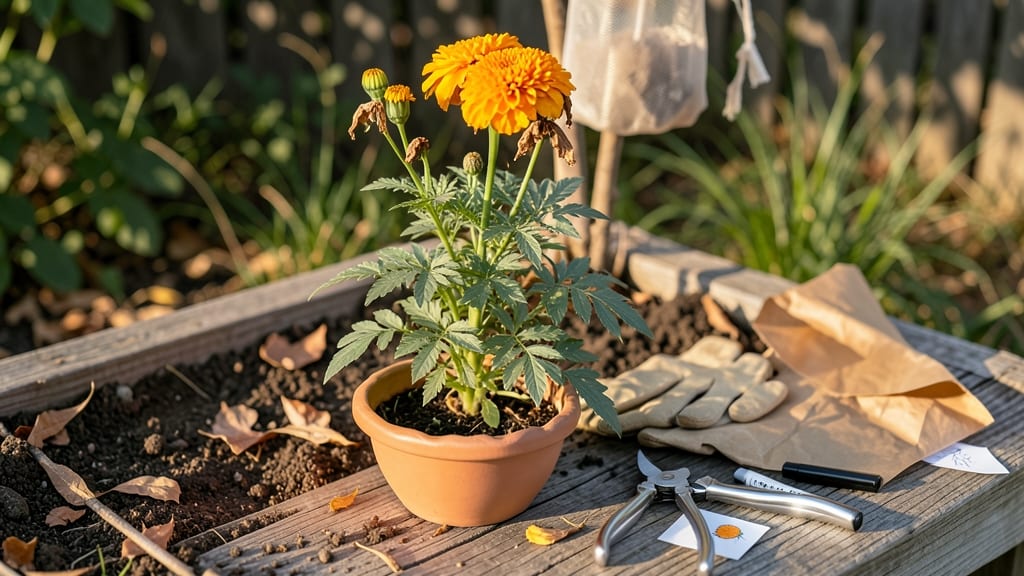
How to harvest marigold seeds for next year starts with a simple but crucial step: letting frost transform their leaves into delicate lace. Harvesting seeds at this stage guarantees strong, viable plants for spring—no guesswork, just reliable results every time.
Look for seed heads that turn from green to dry brown, splitting open to reveal tiny black seeds inside. The best time is after the first hard frost when plants naturally slow down.
Cut stems with 2-3 inches of stalk attached and bundle them upside-down in a paper bag for drying.
Once completely dry (about 2-3 weeks), shake seeds into a container and store in a cool, dark place. Properly stored, these seeds stay viable for 3-4 years, letting you grow marigolds season after season without buying new packets.
This method works for French, African, and signet marigolds alike. The key is patience—waiting for full maturity prevents weak germination. Your future garden will thank you for the foresight!
📚 In This Guide
- What you need
- Instructions
- Tips and common mistakes
- Wrapping up and next steps
What you need
- ● Mature marigold plants: Choose healthy, disease-free plants with fully formed seed pods (usually late summer/fall). Aim for at least 3–5 plants for a good seed yield.
- ● Sharp pruning shears or scissors: For cleanly snipping seed heads. A bypass pruner (4–6 inch blades) works best.
- ● Paper bags or brown lunch bags: 2–3 per plant (one for seed heads, one for drying). Avoid plastic—it traps moisture!
- ● Labeling tags or masking tape + marker: To note varieties (e.g., French, African, or Mexican marigolds).
- ● Drying surface: A clean, well-ventilated area like a mesh screen, cardboard box, or even a hanging paper bag with holes punched in it.
- ● Small envelope or airtight container: For long-term storage (e.g., glass jars with lids or Mason jars).
- ● Fine-mesh sieve or colander: To separate seeds from chaff during cleaning.
- ● Desiccant packets (e.g., silica gel): Place 1–2 in storage containers to absorb excess moisture.
- ● Seed catalog or notebook: To log varieties, harvest dates, and germination notes.
- ● Glove: If your hands get sticky from seed pods (marigold sap can be a little messy!).
- ● Fan or dehumidifier: Speeds up drying in humid climates.
Step-by-step instructions for harvesting marigold seeds
Here's how I collect, dry, and store marigold seeds for planting next season—no fancy tools required.
Identify Mature Seed Heads
Wait until the marigold blooms fade and turn brown—this signals the seed heads are ready. The dried flower heads will feel papery and brittle, almost like they're ready to crumble. Gently squeeze one between your fingers; if the seeds inside rattle but don't fall out, they're perfect for harvesting.
I like to harvest on a dry morning after the dew has evaporated. This prevents moisture from sticking to the seeds and encourages faster drying. Use clean pruning shears or sharp scissors to snip the entire seed head from the stem, leaving about an inch of stem attached. This makes handling easier later.
Dry the Seed Heads Properly
Lay the harvested seed heads on a clean, dry surface in a warm, well-ventilated area. I use a mesh screen or a piece of cardboard over a table to allow airflow underneath. Avoid direct sunlight—it can overheat the seeds and reduce their viability. A spot near a window with indirect light works perfectly.
Let the seed heads dry for about 10-14 days. You'll know they're ready when they crumble easily at the touch and the seeds inside rattle loudly when shaken. If you're in a humid climate, drying may take longer—just be patient. Once fully dry, gently crush the seed heads with your fingers or a clean cloth to release the seeds.
Clean and Store the Seeds
Spread the seeds on a clean paper towel or piece of parchment paper. Use a fine-mesh sieve or your fingers to remove any remaining plant debris or chaff. I like to do this outside or over a bowl to catch any stray seeds that might slip through. Once clean, transfer the seeds to a small envelope or airtight container.
Label your container with the marigold variety and the harvest date—this helps track seed freshness. Store the seeds in a cool, dry place, like a pantry or seed storage box. Marigold seeds stay viable for 2-3 years if stored properly, so you’ll have plenty for future plantings.
Test Seed Viability Before Planting
Before you plant next season, test a few seeds to ensure they’re still good. Place 10 seeds in a small container with moist potting mix and cover lightly. Keep them in a warm spot—around 70°F—and check for sprouts in 7-10 days. If at least half sprout, your seeds are ready for planting.
If germination is poor, try storing the seeds in the refrigerator for a few weeks before testing again. Cold stratification can sometimes break dormancy and improve viability. Once you confirm the seeds are viable, you’re ready to plant them out in the garden next spring.
Tips & tricks for perfect marigold seed harvesting
Took me a while to figure these out, so here's how I make sure my marigold seeds stay viable and ready for next season.
Timing Secret: Harvest your seed heads in the morning after dew has evaporated. This simple step prevents moisture from sticking to the seeds, which can cause mold during the drying process. I've ruined batches before by harvesting too late in the day—don't make my mistake! The dry morning light also helps the seeds dry more evenly.
Drying Strategy: When drying your seed heads for those 10-14 days, place them in a spot with good airflow but avoid direct sunlight. I use a mesh screen over a table near a window with indirect light. This balances drying time and temperature—too much sun can overheat the seeds and reduce their viability. If you're in a humid climate, be patient and check daily for that telltale crumble.
Storage Wisdom: Label your seed containers with both the marigold variety and the harvest date. I've found this makes a huge difference when tracking seed freshness. Store them in a cool, dry place like a pantry or seed storage box. The cooler temperature helps preserve viability for those 2-3 years—just remember to check germination before planting.
Viability Test: Before planting, test 10 seeds in a warm spot around 70°F for 7-10 days. If half or more sprout, your seeds are ready. This simple test saves you from planting old seeds that might not germinate. If germination is poor, try cold stratification—just store the seeds in the refrigerator for a few weeks before testing again.
Pro Tips for Harvest Marigold Seeds For Next Year
- Took me a while to figure these out, so here's how I make sure my marigold seeds stay viable and ready for next season.
- Timing Secret: Harvest your seed heads in the morning after dew has evaporated.
- Drying Strategy: When drying your seed heads for those 10-14 days, place them in a spot with good airflow but avoid direct sunlight.
Frequently asked questions
Got questions about saving marigold seeds? You're not alone! Here are some of the most common queries—plus straightforward answers to help you nail next year’s harvest.
When is the best time to harvest marigold seeds?
Harvest seeds when the flower heads turn brown and dry out—usually 6–8 weeks after blooming. If you wait too long, the seed pods may crack open and scatter seeds. Aim for late summer to early fall in most climates.
How long does it take for marigold seeds to dry indoors?
With proper airflow, seeds typically dry in 1–2 weeks. Place them in a paper bag or envelope in a warm, dry spot (like a sunny windowsill). Stir them gently every few days to speed up the process—just avoid direct sunlight to prevent mold.
Can I save seeds from store-bought marigolds?
Yes, but check the label first! Hybrid varieties (marked "F1" or "hybrid") may not grow true to form. For reliable seeds, save from heirloom or open-pollinated marigolds. If unsure, ask the nursery or grow from saved seeds as a fun experiment!
What’s the best way to store marigold seeds long-term?
Store seeds in a cool, dark, dry place (like a sealed jar or envelope with a silica packet). Label them with the variety and date—most stay viable for 2–3 years. Avoid refrigeration unless using airtight containers to prevent moisture buildup.
Why aren’t my marigold seeds germinating?
Seeds may fail to sprout if they’re too old, stored damp, or planted too deep (max ¼ inch). Try soaking seeds overnight in warm water before planting, or test viability by placing a few in a damp paper towel—if they don’t sprout in 7–10 days, they may be nonviable.
Can I reuse dried marigold seed heads as mulch?
Once seeds are harvested, let the dried flower heads decompose in your garden as natural mulch. They’ll break down slowly, adding organic matter to the soil while deterring pests—just avoid overcrowding plants.
Wrapping up and next steps
Harvesting marigold seeds is a simple yet rewarding way to ensure a vibrant garden next season! By following these steps—selecting healthy seed heads, drying them properly, and storing them correctly—you’ll be ready to plant with confidence. 🌱 Your efforts today will bloom into beautiful flowers tomorrow.
Ready to take the next step? Grab your dried seeds, mark your calendar, and start your early sowing indoors for a head start on the growing season. Happy gardening!