
Propagation
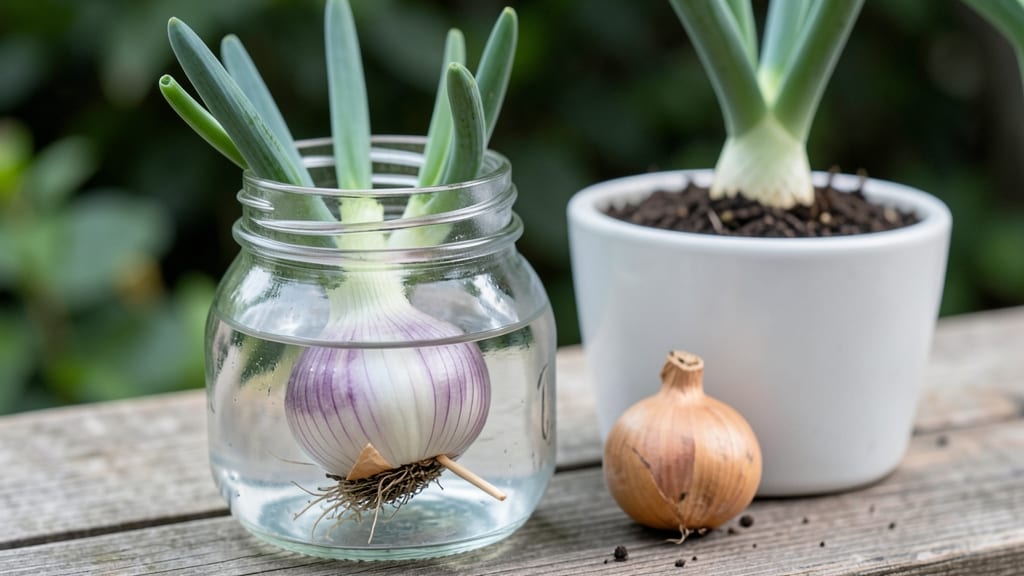
How to grow onions from onions in water is a kitchen-to-garden game changer. 🌱 I’ve regrown lush green onion stems from scraps for years—no soil, no fuss, just a glass of water and patience. The best part? You can transplant these into your garden for a head start on next year’s harvest.
Start with firm, healthy onion bulbs—avoid soft or sprouting ones. Trim the roots to about ½ inch and place the bulb in a shallow container of water, leaving the top half exposed.
Change the water every 2-3 days to prevent rot, and set the container in bright, indirect light. Within 1-2 weeks, you’ll see feathery green shoots pushing through the top.
Once roots reach 2-3 inches and the stems are 4-6 inches tall, it’s time to transition them to soil. Plant them 1 inch deep, spacing them 4-6 inches apart, and keep the soil consistently moist.
These baby onions grow surprisingly fast, and you’ll have fresh green onions ready to harvest in just 4-6 weeks—no seed packets required.
The secret to success? Avoid overwatering (rotting is the #1 killer) and give them plenty of sunlight. If you notice yellowing leaves, it’s usually a sign of too much water or not enough light.
With this method, you’ll never waste onion scraps again—and you’ll have a head start on your garden’s onion crop.
📚 In This Guide
- What you need
- Instructions
- Tips and common mistakes
- Wrapping up and next steps
What you need
- ● 1-2 fresh onion bulbs – Choose yellow or white onions (not red or sweet varieties, as they may not regrow as well). Look for bulbs with short, firm green stems (about 1–2 inches long).
- ● Clear glass or jar – A 16–24 oz mason jar, drinking glass, or any transparent container wide enough to hold the onion base upright.
- ● Water – Room-temperature tap water (avoid distilled or boiled water, as it lacks minerals).
- ● Scissors or knife – For trimming the onion base (if needed).
- ○ Paper towels or coffee filter – Optional, to cover the jar and keep water clean.
- ● Natural light source – A sunny windowsill (south-facing is ideal) or a grow light for 6–8 hours daily.
- ● Organic liquid fertilizer – A few drops of fish emulsion or seaweed extract every 2–3 weeks once roots sprout.
- ● Small pot or soil – If you plan to transplant the onion later (after 4–6 weeks). Use well-draining potting mix.
- ● Spray bottle – To mist leaves if the air feels dry.
Step-by-step instructions for regrowing onions in water
Here's how to turn scraps into fresh green onions in just weeks—no soil or garden needed.
💧 Step 1: Prep Your Onion Scraps
Grab a bunch of green onions with roots still attached—save the white bulb too. Trim the roots to about 1 inch at the base and remove any wilted or damaged leaves. This ensures you're starting with healthy, disease-free material. I always save the scraps from my grocery bag; they regrow just as well as store-bought.
Place the trimmed ends in a glass or jar with about 1 inch of water. The water should cover just the roots, not the white bulb. If you use multiple scraps, space them out so they don’t crowd—they’ll need room to grow upright. Watch for the first signs of regrowth in 3-5 days as tiny new leaves appear.
☀️ Step 2: Provide Light and Refresh Water
Set your jar in a spot with bright, indirect light—a sunny windowsill works best. Avoid direct midday sun, which can scorch the tender new growth. You’ll see the stems start to elongate and new leaves emerge within a week. If your stems grow leggy (too tall and thin), they’re reaching for more light—rotate the jar daily to keep them straight.
Change the water every 2-3 days to prevent bacteria buildup. Fresh water keeps the roots oxygenated and healthy. I like to use a spray bottle to rinse the roots gently before adding fresh water—this removes any gunk that might slow growth. Keep the water level at 1 inch; too much can drown the roots, while too little will dry them out.
🌿 Step 3: Harvest and Encourage Continued Growth
Once the green stems reach about 4-6 inches tall, they’re ready to harvest. Snip the stems just above the water line with clean scissors. This encourages the onion to produce more growth—think of it like trimming hair to promote thickness. After harvesting, the onion may take 1-2 weeks to regrow new stems, depending on light and care.
If the white bulb starts to shrink or the roots look mushy, it’s time to retire that onion. But don’t worry—one healthy bulb can often produce 3-4 harvests before it’s spent. I’ve had mine last for months with proper care, giving me fresh green onions all season long. Store unused bulbs in the fridge to slow their decline until you’re ready to regrow them.
⏰ Step 4: Transition to Soil (Optional)
For a longer-lasting harvest, you can transplant your regrown onions into soil. Once the stems reach 3-4 inches, choose a pot with drainage holes or plant directly in the garden. Bury the white bulb about 1 inch deep, leaving the green stems above ground. Water lightly and place in partial sun for a week to help it adjust.
Soil-grown onions will continue producing green stems for months, and the bulb may even start to swell slightly. This method works best in cooler months—onions prefer temperatures between 50-70°F. If you live in a warm climate, keep them indoors near a bright window. Either way, you’ll have a steady supply of fresh green onions without buying another bunch!
Tips & tricks for regrowing green onions in water
Here's what nobody tells you about growing fresh green onions from scraps—these little tricks make all the difference between wilted disappointment and a steady harvest.
Root Trimming Precision: When you trim those roots to 1 inch, make sure you cut at a clean angle. This exposes more surface area for water absorption and helps prevent rot. I learned this the hard way after ruining three batches with uneven cuts—now I use kitchen shears for a clean snip every time. Also, avoid cutting too close to the bulb, as this can introduce bacteria into the water.
Light Positioning Strategy: That "bright, indirect light" is key—direct sun can scorch the delicate new growth while too little light makes stems leggy. I place my jar on the south-facing windowsill but shift it slightly every few days to ensure even exposure. If your stems start leaning, it's their way of telling you they need more light. A simple rotation keeps them growing straight and strong.
Water Quality Matters: Tap water works fine, but if your water has high chlorine or mineral content, the roots might struggle. I've found that letting tap water sit out for 24 hours before using helps reduce chlorine levels. Also, always use room-temperature water—cold water can shock the roots and slow growth. That 1-inch water level is critical: too much drowns the roots, while too little causes them to dry out.
Harvesting Technique: When snipping those 4-6 inch stems, use clean scissors and cut just above the water line. This prevents water from wicking up into the stems and keeps them fresh longer. After harvesting, I like to rinse the remaining stems with cool water to remove any mineral buildup from the water—this helps them recover faster for the next growth cycle.
Pro Tips for Grow Onions From Onions In Water
- Here's what nobody tells you about growing fresh green onions from scraps—these little tricks make all the difference between wilted disappointment and a steady harvest.
- Root Trimming Precision: When you trim those roots to 1 inch, make sure you cut at a clean angle.
- Light Positioning Strategy: That "bright, indirect light" is key—direct sun can scorch the delicate new growth while too little light makes stems leggy.
Frequently asked questions
Got questions about growing onions from scraps? You’re not alone!
Here are answers to the most common queries—so you can regrow those green stems with confidence.
Can I use any onion to regrow?
Not all onions work! Only green onions (scallions) or bunching onions regrow well—avoid yellow or storage onions (they’re too mature). Look for fresh, firm stems with roots still attached for best results.
How long does it take to regrow onions?
With patience, you’ll see 1–3 inches of new growth in 1–2 weeks. Full regrowth (ready to harvest) takes 4–6 weeks, depending on light, water, and temperature. Keep an eye on those leafy greens!
Why aren’t my onion scraps growing?
Check these fixes:
No roots? Trim the base to expose fresh roots or let it soak in water for 24 hours.
Yellowing leaves? Too much sun (move to indirect light) or not enough water.
Moldy water? Change it daily—stagnant water = sad onions.
Can I replant the regrown onion in soil?
Once roots are 1–2 inches long and greens are 3–4 inches tall, transplant to soil. Choose a sunny spot, keep it moist, and harvest in 3–4 weeks. Pro tip: Pinch the tops to encourage bulb growth!
What if I don’t have a sunny windowsill?
No problem! Use a grow light (LED or fluorescent) for 12–14 hours/day or place near a bright, indirect light source (like a southern-facing window). Even a kitchen counter with a lamp works—just keep it consistent!
Wrapping up and next steps
Growing onions from scraps in water is a simple, rewarding, and budget-friendly way to expand your home garden—no soil or fancy tools required! 🌱 With just a little patience and the right conditions, you’ll enjoy fresh green onions in weeks, ready to brighten up soups, salads, or sandwiches.
Whether you’re a beginner or a seasoned gardener, this method proves that almost any kitchen waste can become a thriving plant.
Now that you’re armed with the know-how, try it today! Start with a few scraps, experiment with different varieties, and share your success with friends or family.
Next, take your newfound skills to the next level—try growing other veggies from scraps, like lettuce or celery, and turn your kitchen into a mini urban farm! 🌿