
Size
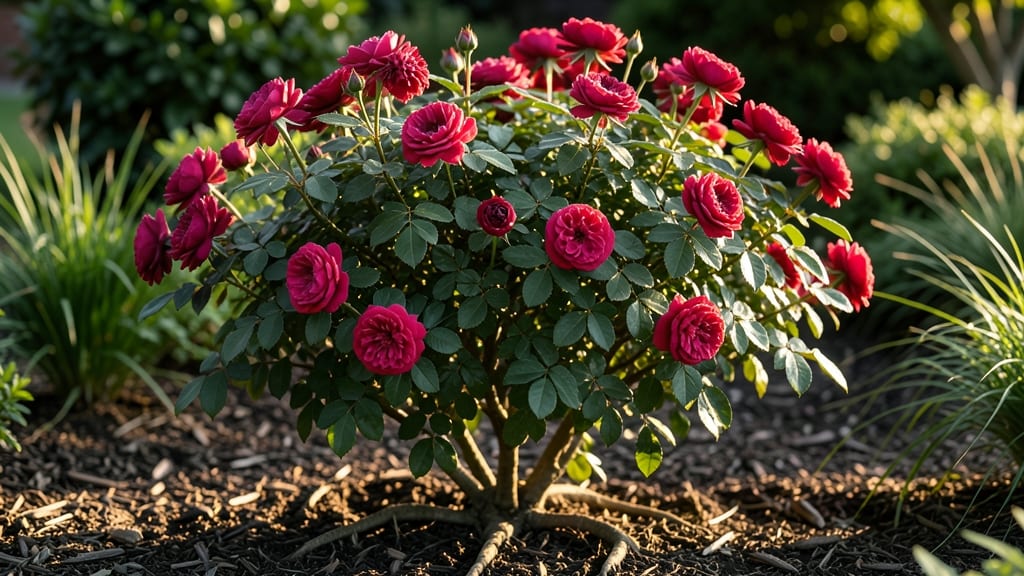
How to grow knockout rose bushes that change how you garden forever. 🌹 These roses bloom nonstop from spring to frost, with almost no fuss—no deadheading required, no constant pruning, just vibrant color that makes neighbors stop and stare. The secret lies in their disease-resistant genetics and low-maintenance habits, but getting them started right makes all the difference.
Start with the right location: full sun (at least 6 hours daily) and well-draining soil. Amend heavy clay with compost, and avoid planting too deep—Knockouts hate soggy roots.
The planting hole should be twice as wide as the root ball but no deeper, with a 2-inch layer of gravel at the bottom to prevent waterlogging. Water deeply after planting, then mulch to keep roots cool.
Once established, these roses thrive on weekly watering during dry spells and a balanced fertilizer every 6-8 weeks. Prune only to shape in early spring—no need for the heavy cuts other roses demand.
The result? Four seasons of blooms with minimal effort, and bushes that outperform store-bought varieties year after year.
They handle heat, humidity, and even urban pollution better than most roses, making them perfect for city gardens, small yards, or foundation plantings. The only real challenge? Resisting the urge to over-prune—these roses reward patience with months of effortless color. Here’s how to set yours up for success.
📚 In This Guide
- What you need
- Instructions
- Tips and common mistakes
- Wrapping up and next steps
What you need
- ● Knockout rose bushes: Choose disease-resistant varieties (e.g., Knock Out®, Double Knock Out®, or Raised Knockout®). Buy 1-3 plants depending on your desired coverage.
- ● Well-draining soil: Aim for a mix of 60% topsoil, 30% compost, and 10% perlite or sand (1-2 cubic yards per bush).
- ● Organic mulch: 3-4 inches of shredded bark, pine straw, or compost to retain moisture and suppress weeds.
- ● Balanced fertilizer: 10-10-10 or 5-10-5 (1-2 lbs per bush) for planting. Switch to rose-specific fertilizer (e.g., 12-12-12) after establishment.
- ● Slow-release rose food: Granular or spike form (e.g., Espoma Rose-Tone) for ongoing nutrition.
- ● Watering can or hose with a gentle nozzle: For deep, consistent watering (5-10 gallons per bush, 2-3 times per week).
- ● Garden trowel or spade: For digging planting holes (12-18 inches wide/deep).
- ● Pruning shears: Bypass pruners (sharp, clean) for trimming dead or overgrown branches.
- ● Gloves: Heavy-duty gardening gloves to protect against thorns.
- ● Measuring tape: To ensure proper spacing (3-4 feet apart for single bushes, 4-5 feet for hedges).
- ○ Stakes or cages (optional): 5-6 foot metal or wooden cages to support tall varieties (e.g., Knock Out® can grow 3-4 feet tall).
- ● Sunlight: Full sun (6+ hours/day)—Knockout roses thrive in bright, open spaces.
- ● Drainage: Avoid low-lying areas where water pools. Slope the planting site slightly if needed.
- ● pH Level: Test soil pH (ideal range: 6.0-6.5). Adjust with lime (to raise) or sulfur (to lower) if necessary.
- ● Patience: Knockout roses establish roots in 4-6 weeks but bloom best after 1-2 years of growth.
Step-by-Step instructions for growing Knockout rose bushes
Here's the straightforward method I've used to grow vibrant, low-maintenance Knockout roses that bloom nonstop.
🌱 Step 1: Select the Perfect Planting Site
Knockout roses thrive in full sun—choose a spot that gets at least 6 hours of direct sunlight daily. I always test the location by observing how much sun it receives over a week before planting. Avoid low-lying areas where cold air settles, as these roses are sensitive to frost pockets.
Well-draining soil is critical—Knockout roses hate soggy roots. If your soil drains poorly, amend it with 2-3 inches of compost and a handful of sand or perlite per planting hole. The ideal soil pH is 6.0-6.5, so test your soil and adjust with lime or sulfur if needed. I dig a hole twice as wide as the root ball but only as deep—planting too deep suffocates the graft union.
🪴 Step 2: Plant with Proper Spacing and Support
Dig the hole and loosen the roots of your Knockout rose slightly—never let them dry out before planting. Place the bush in the hole so the graft union (the swollen area near the base) sits 2-3 inches above soil level. This prevents root rot and ensures strong regrowth after winter.
Backfill with native soil mixed with compost, tamping gently to remove air pockets. Space plants 3-4 feet apart—this gives them room to grow without competing for nutrients. Immediately install a sturdy stake (at least 6 feet tall) and tie the main stem loosely with soft plant ties. Knockout roses grow upright but can get top-heavy with blooms, so support prevents flopping.
☀️ Step 3: Water Deeply and Mulch for Retention
Water thoroughly right after planting—aim for 1-2 gallons per bush to settle the soil. Let the top 2 inches of soil dry between waterings, but never let the roots dry out completely. I use drip irrigation for consistency, as overhead watering can spread disease. In the first year, water 2-3 times per week unless rain provides adequate moisture.
Apply 2-3 inches of mulch (wood chips or shredded bark) around the base, keeping it 3 inches away from the stem to prevent rot. Mulch locks in moisture and regulates soil temperature—critical for Knockout roses, which bloom year-round. Replenish mulch annually in early spring before new growth appears.
✂️ Step 4: Prune for Continuous Blooms
Knockout roses are famously low-maintenance, but light pruning keeps them bushier and encourages more flowers. Prune in early spring (just as buds swell) and again after the first flush of blooms in late spring. Remove dead, crossing, or weak stems first—cut at a 45-degree angle just above an outward-facing bud.
For shaping, trim back the longest canes by one-third to promote branching. Never remove more than one-third of the plant at once—this stresses Knockout roses more than most varieties. Deadhead spent blooms in summer to maintain the plant’s energy for new flowers, but skip this in fall to allow hips to form for winter interest.
🌿 Step 5: Feed and Protect for Year-Round Health
Fertilize once in early spring with a balanced rose fertilizer (10-10-10) and again in mid-summer with a low-nitrogen, high-phosphorus formula to boost blooming. I avoid high-nitrogen feeds—too much leafy growth at the expense of flowers. Water deeply before and after applying fertilizer to prevent root burn.
Watch for black spot (dark spots on leaves) and powdery mildew (white fuzzy patches). At the first sign, spray with neem oil or a copper fungicide. For prevention, space plants properly and water at the base, not overhead. In winter, mound 6 inches of mulch around the base to insulate roots—Knockout roses are hardy to Zone 4, but extra protection ensures bigger blooms the following year.
Tips & tricks for perfect Knockout rose bushes
These game-changing insights will help you cultivate knockout roses that bloom like crazy with minimal effort.
Sunlight Strategy: While 6-8 hours of sun is ideal, I’ve found that morning sun paired with afternoon shade in hot climates prevents leaf scorch while maintaining vibrant blooms. In extremely hot zones, provide afternoon shade during peak summer months (June-August) to protect delicate foliage.
Soil Preparation Secret: The 2-3 inches of compost recommendation is non-negotiable for heavy clay soils, but I’ve also seen dramatic improvements using a mix of compost and perlite (50/50 ratio) for better drainage. This creates an ideal air-soil balance that roots love. Test your soil’s pH—Knockout roses prefer slightly acidic soil (6.0-6.5).
Pruning Precision: When cutting back to just above a 5-leaflet leaf in Step 3, look for outward-facing bud eyes—they’ll grow into stronger branches. I always make cuts at a 45-degree angle about 1/4 inch above the bud to prevent water from pooling and causing rot. This small detail makes a huge difference in plant health.
Winter Protection Pro Tip: For Zone 6 and colder, I’ve had the best results using a combination of soil and straw mulch (60/40 ratio) for the 12-18 inch mound. The straw provides extra insulation while breaking down slowly. In milder climates, add a thick layer of leaves or evergreen boughs over regular mulch for added protection against late frosts.
Pro Tips for Grow Knockout Rose Bushes
- These game-changing insights will help you cultivate knockout roses that bloom like crazy with minimal effort.
- Sunlight Strategy: While 6-8 hours of sun is ideal, I’ve found that morning sun paired with afternoon shade in hot climates prevents leaf scorch while maintaining vibrant blooms.
- Soil Preparation Secret: The 2-3 inches of compost recommendation is non-negotiable for heavy clay soils, but I’ve also seen dramatic improvements using a mix of compost and perlite (50/50 ratio) for better drainage.
Frequently asked questions
Got questions about growing Knockout roses?
You’re not alone—these stunning bushes are popular for a reason! Below, we’ve answered the most common queries to help you cultivate thriving, low-maintenance blooms.
How often do Knockout roses need watering?
Newly planted Knockout roses need 1–1.5 inches of water per week, including rainfall. Once established (after 1–2 years), they’re drought-tolerant but still thrive with deep watering 2–3 times per week during dry spells. Pro tip: Water at the base (not the leaves) to prevent fungal issues like black spot.
When is the best time to prune Knockout roses?
Prune your Knockout roses late winter or early spring (February–March), just before new growth begins. Key rule: Cut back one-third of the oldest canes to the ground and shape the bush by removing dead or crossing branches. No summer pruning needed! These roses bloom nonstop with minimal effort.
What pests or diseases should I watch for?
Knockout roses are disease-resistant, but aphids, spider mites, and Japanese beetles may still visit. Prevent issues by:
- Spraying neem oil for pests
- Avoiding overhead watering (reduces fungal risks)
- Removing infected leaves immediately
Can I grow Knockout roses in containers?
Choose a container at least 15–20 gallons with drainage holes. Use a well-draining potting mix (like a 50/50 blend of garden soil and compost) and fertilize monthly with a balanced rose food. Tip: Place containers in full sun (6+ hours/day) and water more frequently than in-ground plants.
Why aren’t my Knockout roses blooming as much as expected?
Less blooming often stems from over-fertilizing (too much nitrogen), poor sunlight, or root-bound containers. Fix it by:
- Switching to a bloom-boosting fertilizer (high phosphorus)
- Ensuring 6+ hours of direct sun
- Repotting if in a container (every 2–3 years)
Wrapping up and next steps
Growing Knockout rose bushes is a rewarding journey that brings vibrant color and low-maintenance beauty to your garden year after year! 🌸 With the right location, soil prep, and a little seasonal care—like smart pruning and consistent watering—you’ll enjoy lush blooms with minimal fuss.
Whether you’re a beginner or a seasoned gardener, these hardy plants make gardening feel like a breeze.
Now that you’re armed with the know-how, roll up your sleeves and get planting! Start by selecting your healthiest bare-root or potted rose and follow the steps above.
Before you know it, your garden will be bursting with Knockout roses that turn heads—and maybe even inspire your neighbors to try their hand at growing these stunning shrubs too! 🌿✨