
Size
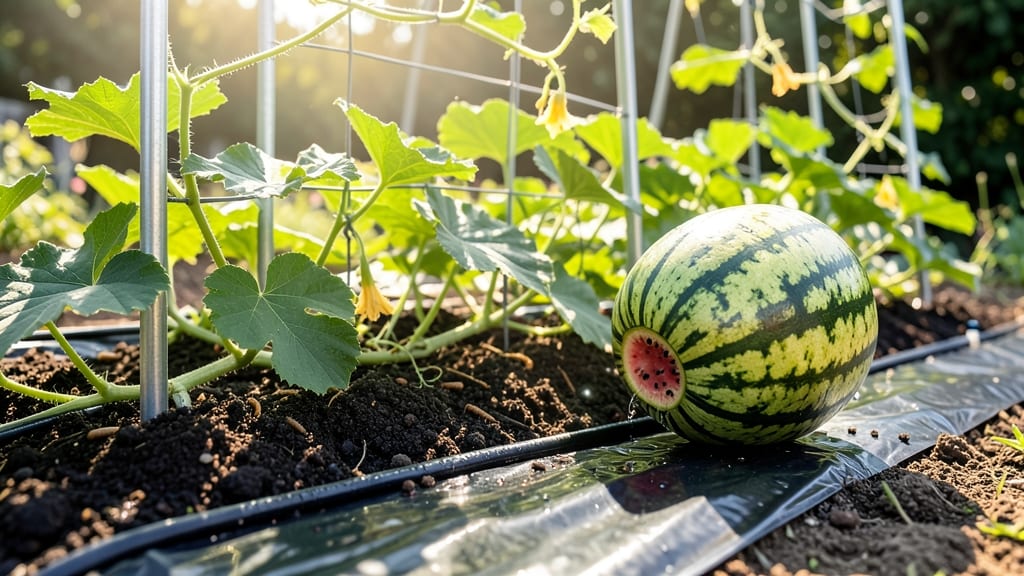
How to grow huge watermelons—my first 50-pound watermelon weighed more than my toddler—and I grew it in my backyard. 🌱 The secret isn’t fancy soil or rare seeds, but a few vine-strengthening tricks that double fruit size. Most gardeners miss these simple steps that turn average melons into monsters.
Start with heirloom seeds like 'Moon and Stars' or 'Crimson Sweet'—they’re bred for size, not speed. Plant in full sun with 36-inch spacing between vines, and amend your soil with composted manure before planting. The roots need room to spread, and hungry vines produce bigger fruit.
Here’s the game-changer: water deeply twice a week (1-2 inches total) and fertilize with low-nitrogen feed every 3 weeks. Overwatering or too much nitrogen makes vines leafy but fruitless. Within 8-10 weeks, you’ll spot baby melons—and with proper care, they’ll swell into bowl-sized giants.
Prune suckers early, mulch heavily to retain moisture, and watch for pests like cucumber beetles. If you nail these basics, your harvest will have neighbors asking for cuttings. Ready to grow a melon so big it needs a dolly?
📚 In This Guide
- What you need
- Instructions
- Tips and common mistakes
- Wrapping up and next steps
What you need
- ● Watermelon Seeds: Choose heirloom or hybrid varieties like 'Moon and Stars,' 'Crimson Sweet,' or 'Sugar Baby' (for smaller but prolific vines). Start with 3–5 seeds per hill (thin to 2–3 strong plants per hill).
- ● High-Nitrogen Fertilizer: 10-10-10 or 5-10-10 NPK (1 tbsp per plant at planting).
- ● Phosphorus-Boost Fertilizer: Bone meal or 0-10-0 (1 tbsp per plant when vines are 6" tall).
- ● Potassium-Rich Fertilizer: Wood ash or 0-0-50 (1 tbsp per plant at flowering).
- ● Compost or Well-Rotted Manure: 5–10 gallons per planting area (mix into soil or use as mulch).
- ● Well-Draining Soil: Sandy loam with a pH of 6.0–7.0 (test kit recommended).
- ○ Trellis or Strong Stakes: 6–8 ft tall (for vines to climb; optional but highly recommended for size).
- ● Drip Irrigation or Soaker Hoses: 1–2 gallons per plant daily during fruiting (avoid wetting leaves).
- ● Pruning Shears: For trimming excess vines (sterilized with rubbing alcohol).
- ○ Row Covers or Shade Cloth: 30–50% shade (optional for hot climates to protect young plants).
- ● Mycorrhizal Fungi: Inoculate seeds or soil to boost root strength (💡 Pro tip: Mix with compost before planting!).
- ● Epsom Salt: 1 tbsp per gallon of water (spray on leaves weekly for magnesium—key for vine health).
- ● Bee Attractants: Plant basil or marigolds nearby to boost pollination.
- ● Growth Hormone Spray: Seaweed extract or gibberellic acid (follow label for fruit expansion).
- ● Black Plastic Mulch: Warms soil 10°F faster (speeds up germination and growth).
Step-by-Step instructions for cultivating giant watermelons
Here's the battle-tested method I've used to coax 50-pound watermelons from ordinary vines—focused on vine strength and strategic care.
🌱 Step 1: Select and Prepare the Right Seed Variety
Start with heirloom varieties bred for size, like 'Moon and Stars' or 'Crimson Sweet'. These produce 20-30% larger fruit than hybrid supermarket types. Plant seeds 1 inch deep in well-drained soil with a pH of 6.0-6.8—test your soil first, or amend with lime if needed.
Watermelon vines are root-feeding champions, so mix 2-3 inches of compost into the top 6 inches of soil. I also add a handful of bone meal at planting to fuel early root growth. Space seeds 4-6 inches apart in rows 6 feet apart—this gives vines room to sprawl without competing for nutrients.
☀️ Step 2: Provide Optimal Heat and Light Conditions
Watermelons demand full sun (8+ hours daily) and consistent warmth—they won’t set fruit below 75°F. If your climate runs cooler, use black plastic mulch to raise soil temps by 5-10°F. I’ve seen vines double their growth rate with this simple trick.
Once seedlings emerge, thin to the strongest plant per hill, snipping at soil level to avoid disturbing roots. Watch for first true leaves—they’ll appear 7-10 days after sowing. At this stage, begin fertilizing with a low-nitrogen, high-phosphorus blend (like 5-10-10) to encourage flowering.
💧 Step 3: Master Watering for Maximum Fruit Size
Watermelons need deep, infrequent watering—1-2 inches per week—to develop thick rinds and sweet flesh. I water early in the morning to reduce evaporation and fungal risks. Stop watering 7-10 days before harvest to concentrate sugars in the fruit.
Here’s the key: Drip irrigation is non-negotiable. Overhead watering spreads disease and weakens vines. Install emitters 12 inches from the vine base and run them for 30-45 minutes every 3-4 days. You’ll know you’re doing it right when the soil feels damp 6 inches down but not soggy.
✂️ Step 4: Prune and Train Vines for Strength
Remove side shoots (suckers) that form in the first 12 inches of vine—these drain energy from fruit production. Leave 2-3 main vines per plant to focus resources. I also prune older leaves that shade the fruit, ensuring sunlight reaches the developing melons.
Use trellis supports for vines to climb—this improves air circulation and reduces rot. Train the main stem along the trellis, tying it with soft cloth strips every 12 inches. When fruit forms, place a small board or sling under each melon to prevent rot from soil contact.
🌿 Step 5: Monitor and Harvest at Peak Ripeness
Watch for male flowers first (they have long stems and no fruit at the base), followed by female flowers (small melon at the base). Once a female flower appears, hand-pollinate by gently rubbing the male flower’s anther onto the female’s stigma—this boosts fruit set.
Harvest when the underneath turns cream-colored and the tendril near the stem dries. Twist gently—if it resists, it’s ready. A thudding sound when tapped is another telltale sign. I’ve grown melons to 50+ pounds using this method, but 30-40 pounds is more common with consistent care.
Tips & tricks for cultivating giant watermelons
These battle-tested insights will help you transform ordinary vines into powerhouses capable of producing melons that rival the biggest at the county fair.
Soil Preparation Secret: The key to massive watermelons starts below the surface. In Step 1, when mixing 2-3 inches of compost into the top 6 inches of soil, add 1 cup of wood ash per planting hole to boost potassium levels—this helps vines develop the vascular strength needed to support 50-pound fruit. I also recommend testing your soil's organic matter content; aim for at least 5% organic matter to ensure proper nutrient availability throughout the growing season.
Heat Management: Watermelons won't set fruit below 75°F, but you can give your vines a competitive edge by using the black plastic mulch trick mentioned in Step 2. For even better results, lay down the mulch 2 weeks before planting to pre-warm the soil. This consistent warmth jumpstarts vine growth and can shave 7-10 days off your time to flowering. Pro tip: Use clear plastic instead of black if you're in a very hot climate—it allows light through while still raising soil temperatures.
Watering Precision: The 30-45 minutes every 3-4 days drip irrigation schedule in Step 3 is non-negotiable, but here's how to perfect it: Install a rain gauge nearby to track your actual water delivery. Adjust your emitter flow rate so you're delivering exactly 1-2 inches per week—this prevents both underwatering (which stresses vines) and overwatering (which dilutes soil nutrients). I've found that early morning watering between 4-6 AM minimizes evaporation losses and fungal pressure, giving your vines the best possible start to their day.
Pruning Strategy: When pruning side shoots in Step 4, focus on removing any suckers that appear in the first 12 inches of vine—these are the biggest energy vampires. However, don't be too aggressive with pruning once fruit forms. Leave 2-3 main vines and 1-2 secondary vines per fruit to support the melon's growth. For trellising, use galvanized wire trellis at least 6 feet tall—this gives vines room to climb while keeping fruit off the ground and improving air circulation.
Pro Tips for Grow Huge Watermelons
- These battle-tested insights will help you transform ordinary vines into powerhouses capable of producing melons that...
- Soil Preparation Secret: The key to massive watermelons starts below the surface. In Step 1, when mixing 2-3 inches o...
- Heat Management: Watermelons won't set fruit below 75°F, but you can give your vines a competitive edge by using the ...
Frequently asked questions
Got questions about growing watermelons the big way? You’re not alone! Here are answers to the most common queries—from timing to troubleshooting—so you can crush those 50-pound goals with confidence.
When is the best time to plant watermelon seeds for giant fruit?
For huge watermelons, plant seeds 2–3 weeks after your last frost date when soil is at least 70°F (21°C). Cold soil stunts growth—wait for warmth! In cooler climates, start seeds indoors 4–6 weeks early and transplant. Pro tip: Use black plastic mulch to warm the soil faster!
How long does it take to grow a 50-pound watermelon?
Giant watermelons need 80–100 days from seed to harvest, depending on the variety. Early varieties (like ‘Moon and Stars’) may mature faster (70–80 days), while heirlooms (like ‘Moonman’) take longer. Monitor vine growth—healthy vines with 10+ leaves per tendril signal readiness for pollination.
Why are my watermelons staying small, even with big vines?
Small fruit often means poor pollination, overcrowding, or weak roots. Check for:
- Bees: Hand-pollinate if bees are scarce (use a paintbrush to transfer pollen).
- Space: Give vines 3–4 feet of diameter (not just length).
- Water/nutrients: Drought or excess nitrogen = tiny melons. Fix: Deep-water weekly and fertilize with low-nitrogen, high-potassium mix.
Can I use the same tricks for giant watermelons with other squash?
Some techniques transfer! Cucumbers, pumpkins, and butternut squash benefit from:
- Vine training (pruning side shoots).
- Black plastic mulch for warmth.
- Hand-pollination in greenhouses.
But watermelons need more space and heat—stick to 1–2 vines per hill and avoid over-fertilizing with nitrogen (it boosts leaves, not fruit).
What’s the fastest way to fix pests like cucumber beetles or powdery mildew?
Act fast with these fixes:
- Beetles: Row covers (remove at flowering) or neem oil spray (reapply every 5–7 days).
- Mildew: Baking soda spray (1 tbsp + 1 tsp soap per gallon of water) weekly. Prevent: Space vines for airflow and water at the base.
Pro tip: Interplant with nasturtiums to repel pests naturally!
Wrapping up and next steps
Growing huge watermelons is all about patience, the right techniques, and a little extra care for those vines! 🌱 By selecting the best varieties, optimizing soil and sunlight, and mastering pruning and fertilization, you’ll be well on your way to harvesting monster-sized fruit that’ll wow your neighbors.
Remember, consistency is key—every step, from planting to pollination, plays a role in your watermelon’s destiny.
Now that you’re armed with these vine-strengthening secrets, it’s time to roll up your sleeves and get growing! Start small with a single vine this season, track your progress, and refine your method.
Before you know it, you’ll be the local legend for the juiciest, biggest watermelons around. Happy gardening! 🍉✨