
Landscaping
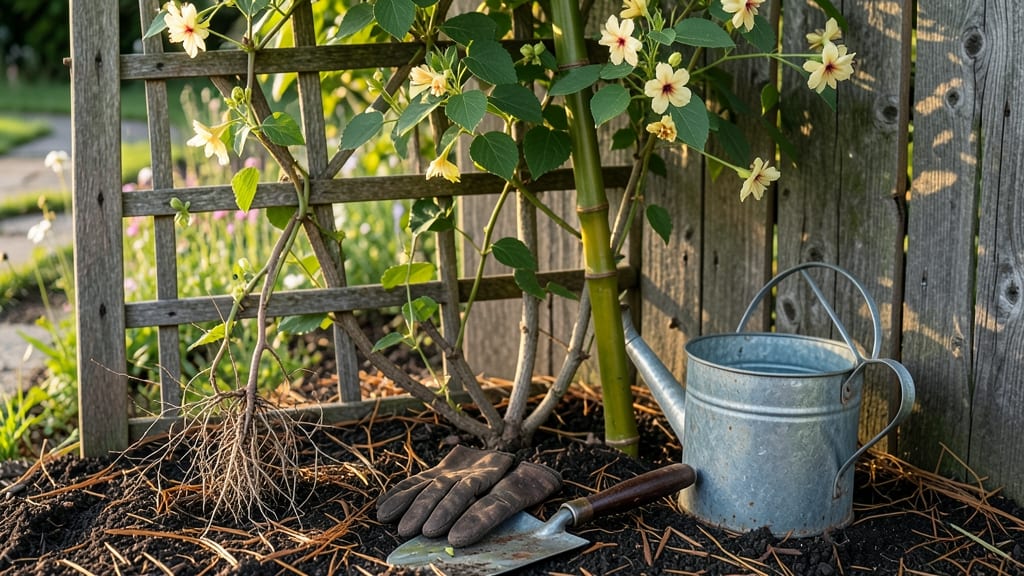
This fragrant honeysuckle on your fence is a perfect example of how to grow honeysuckle on a fence, turning summer afternoons into a sweet-scented escape. 🌿 The key to success starts with the right soil prep and support—two simple steps that make all the difference between scraggly vines and a lush, fragrant canopy.
Most people overlook the fence material, but wood and metal work best for honeysuckle’s aggressive growth. Amend your soil with compost to encourage strong root development, and plant in early spring when temperatures are mild.
The vines need 6-8 hours of sunlight daily, so avoid shady spots where they’ll stretch weakly.
Within 2-3 seasons, you’ll have a 15-20 foot vertical display of trumpet-shaped blooms that hummingbirds adore. The fragrance alone makes it worth the effort—imagine stepping outside to that classic summer sweetness every evening.
Prune in late winter to shape the growth, and watch as new tendrils twist around your fence like nature’s own decorative lattice. Perfect for privacy screens, fragrant pathways, or just adding charm to any outdoor space.
📚 In This Guide
- What you need
- Instructions
- Tips and common mistakes
- Wrapping up and next steps
What you need
- ● Honeysuckle plants: Choose Lonicera varieties (e.g., Lonicera periclymenum or Lonicera sempervirens). Buy 2–4 healthy plants (1 per 3–5 ft of fence space) from a nursery.
- ● Fence: A wooden, metal, or lattice fence (avoid smooth, non-porous surfaces like vinyl). Ensure it’s at least 6–10 ft tall for optimal growth.
- ● Pruning shears: Sharp, bypass-pruning shears (for trimming and shaping vines).
- ● Garden gloves: A pair of durable, breathable gloves (to protect hands from thorns and sap).
- ● Mulch: 2–3 inches of organic mulch (shredded bark or straw) to retain moisture and suppress weeds.
- ○ Stakes or trellis: Optional but helpful: Temporary bamboo stakes or a lightweight trellis to guide vines until they latch onto the fence.
- ● Fertilizer: Balanced, slow-release fertilizer (10-10-10 or compost) to boost early growth.
- ● Drip irrigation or hose: For consistent watering (especially in dry climates).
- ● Vine ties: Soft fabric or plastic ties to secure vines to the fence while they establish.
- ● Pruning saw: For thick, woody stems (if your honeysuckle matures into a large plant).
- ● Bird/butterfly-friendly plants: Companion plants like lavender or milkweed to attract pollinators to your fragrant fence!
Step-by-step instructions for growing honeysuckle on a fence
Here’s how to transform your fence into a fragrant, living trellis using honeysuckle’s vigorous vines.
🌱 Step 1: Choose the Right Honeysuckle Variety and Planting Time
Start with a twining honeysuckle variety like Lonicera sempervirens (Coral Honeysuckle) or Lonicera japonica (Japanese Honeysuckle), both perfect for fences. Plant in early spring (after last frost) or fall (6-8 weeks before first frost) for best root establishment. I’ve found spring planting gives vines a full season to climb, while fall-planted vines establish roots before winter dormancy.
Honeysuckle thrives in full sun to partial shade (at least 6 hours of sunlight daily). If your fence is in deep shade, opt for shade-tolerant varieties like Lonicera nitida (Box Honeysuckle), though they won’t climb as vigorously. Test your fence’s sunlight by observing the area for a week—you’ll notice leaves staying dry in full sun or wilting slightly in afternoon shade.
🪴 Step 2: Prepare the Fence and Planting Site
Ensure your fence is sturdy and free of sharp edges—honeysuckle vines can grow 10-20 feet per season and will test even the toughest materials. If using a chain-link fence, attach horizontal wires or wooden slats every 12-18 inches to give vines something to grip. I’ve seen honeysuckle strangle weaker fences over time, so reinforce any wobbly sections before planting.
Dig a hole twice as wide as the root ball but only as deep as the container the plant came in. Honeysuckle roots are shallow but spread aggressively, so amend the soil with 2-3 inches of compost mixed into the top 6 inches of soil. This encourages strong root growth and better nutrient uptake. Water the hole deeply before planting to settle the soil.
🌿 Step 3: Plant and Train the Vines
Place the honeysuckle plant in the hole, ensuring the top of the root ball sits level with the ground—burying too deep can suffocate the stem. Backfill with soil, pressing gently to remove air pockets, but avoid compacting the mix. Water immediately after planting to help roots settle into the soil. You’ll see the first signs of success when new growth appears within 2-3 weeks.
Train the main vine to climb by tying it loosely to the fence with soft twine or plant ties every 12 inches. Honeysuckle vines twine naturally, but young plants need guidance. Avoid tight ties—they’ll restrict growth as the vine thickens. Prune any side shoots that form at the base to encourage upward growth. This step is where patience pays off; a well-trained vine will cover 10-15 feet of fence in a single season.
☀️ Step 4: Water, Fertilize, and Prune for Maximum Growth
Water deeply once a week during the first growing season, ensuring the soil stays moist but not soggy. Honeysuckle is drought-tolerant once established, but young plants need consistent moisture. You’ll know it’s time to water when the top 2 inches of soil feel dry to the touch. Mulch around the base with 2-3 inches of organic mulch (like shredded bark) to retain moisture and suppress weeds.
Fertilize in early spring with a balanced, slow-release fertilizer (10-10-10) to support vigorous growth. Avoid high-nitrogen fertilizers—they encourage leafy growth at the expense of flowers. Prune in late winter or early spring before new growth begins, cutting back any dead or overcrowded branches. This keeps the plant healthy and encourages abundant blooms. You’ll see clusters of fragrant flowers by mid-to-late summer, attracting hummingbirds and butterflies.
✂️ Step 5: Maintain and Enjoy Your Living Fence
Once established, honeysuckle requires minimal maintenance. Prune lightly after flowering to shape the vine and encourage bushier growth. If the vine becomes too aggressive, trim back one-third of the longest stems in late winter to control its spread. This prevents it from overwhelming smaller fences or neighboring plants.
The real reward comes in late spring to summer, when the vine erupts in fragrant, tubular flowers that perfume the air. The berries that follow provide food for birds, making your fence a wildlife magnet. With proper care, your honeysuckle will thrive for decades, creating a lush, fragrant privacy screen that’s far more beautiful than any plastic alternative.
Tips & tricks for growing honeysuckle on a fence
Here's what nobody tells you about turning your fence into a fragrant, living masterpiece—these are the secrets that'll make all the difference.
Variety Matters: Not all honeysuckle varieties climb with equal vigor. For maximum coverage, choose Lonicera sempervirens (Coral Honeysuckle) or Lonicera japonica (Japanese Honeysuckle). These twining varieties will aggressively climb your fence, while Lonicera nitida (Box Honeysuckle) stays compact—perfect for smaller spaces but less dramatic. I've seen Lonicera japonica cover 15 feet of fence in just one season if given proper support!
Fence Reinforcement: Honeysuckle vines can exert up to 100 pounds of pressure per vine as they mature. Before planting, inspect your fence for weak spots or sharp edges that could damage the vines. Chain-link fences? Add horizontal wires or wooden slats every 12-18 inches to give the vines proper grip points. I once watched a beautiful honeysuckle vine slowly pull apart a flimsy wooden fence over three years—don't let that happen to yours!
Soil Preparation: The secret to rapid growth lies in the soil. Mix 2-3 inches of compost into the top 6 inches of your planting hole—this isn't optional, it's essential. The compost provides nutrients while improving drainage, which honeysuckle loves. I've noticed plants in amended soil show new growth within 2-3 weeks, while those in unamended soil take twice as long. Water the hole deeply before planting to help settle the soil around the roots.
Training Technique: When you're tying the main vine to the fence every 12 inches, use soft twine or plant ties—but here's the key detail: leave room for growth. Tight ties will strangle the vine as it thickens. I learned this the hard way when my first attempt resulted in girdled vines that struggled to climb. Instead, use a loose figure-eight knot that can be easily adjusted as the vine grows. This simple adjustment makes all the difference in maintaining healthy, vigorous growth.
Pro Tips for Grow Honeysuckle On A Fence
- Here's what nobody tells you about turning your fence into a fragrant, living masterpiece—these are the secrets that'...
- Variety Matters: Not all honeysuckle varieties climb with equal vigor. For maximum coverage, choose Lonicera sempervi...
- Fence Reinforcement: Honeysuckle vines can exert up to 100 pounds of pressure per vine as they mature. Before plantin...
Frequently asked questions
Got questions about growing honeysuckle on your fence? You’re not alone—this fragrant beauty is a favorite, but it comes with a few quirks! Here are answers to the most common queries to help you cultivate a thriving, aromatic vine hedge.
When is the best time to plant honeysuckle on a fence?
Plant honeysuckle in early spring (just as new growth begins) or fall (4-6 weeks before frost). This gives roots time to establish before extreme temperatures. Avoid planting in summer heat or winter, as stress can stunt growth. If you must plant in summer, water deeply and mulch to retain moisture.
How fast does honeysuckle grow, and how often should I prune it?
Honeysuckle grows 6–12 inches per year, but aggressive varieties (like Lonicera sempervirens) can climb faster with proper support. Prune once a year in late winter or early spring to shape the vine and encourage bushier growth. Trim back overgrowth after flowering to maintain airflow and prevent disease.
Why isn’t my honeysuckle climbing my fence? What can I do?
Honeysuckle needs support to twine—if it’s not climbing, try tying young vines to the fence with soft twine or spiral ties every 1–2 feet. Ensure it gets full sun to partial shade (6+ hours of sun daily) and well-draining soil. If growth is slow, fertilize lightly in spring with a balanced 10-10-10 formula.
Can I grow honeysuckle on a wooden fence, or will it damage it?
Honeysuckle is non-invasive and won’t rot wood like ivy or wisteria, but its tendrils can loosen nails or screws over time. Use galvanized or coated hardware and secure vines gently to prevent strain. For extra protection, add a trellis or wire mesh between the fence and vine for better support.
Are there any alternatives to honeysuckle for a fragrant fence?
If honeysuckle isn’t your style, try these low-maintenance, fragrant climbers:
- Clematis – Fast-growing with showy blooms (needs winter mulch).
- Jasmine (Trachelospermum jasminoides) – Evergreen with intoxicating nighttime scent.
- Star jasmine (Trachelospermum asiaticum) – Drought-tolerant and highly fragrant.
- Passionflower – Unique foliage and edible fruit (but may attract butterflies).
Wrapping up and next steps
Growing honeysuckle on a fence is a rewarding way to add beauty, fragrance, and life to your outdoor space! With the right materials, a little patience, and consistent care, you’ll soon enjoy a lush, fragrant canopy that attracts pollinators and brightens up your yard. 🌿✨
Now that you’re armed with the know-how, take action—pick your favorite variety, prep your fence, and start planting! Before you know it, your garden will be filled with sweet-scented blooms and vibrant greenery. Happy gardening!