
Propagation
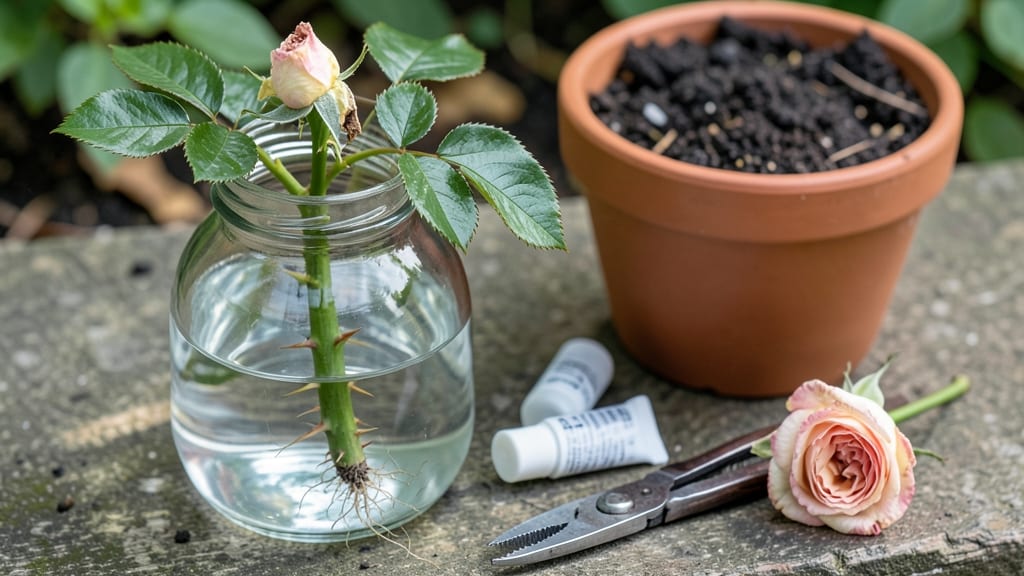
That single rose from your bouquet could grow into your own thriving plant—here’s how to grow a rose plant from a rose flower—and I’ve turned wilting blooms into lush roses this way. 🌹 You can too, with just three simple steps that skip the expensive nursery.
The secret starts with the right flower: pick one with at least three open buds and healthy green leaves, then snip the stem at a 45-degree angle just below a leaf node. No fancy tools needed—just sharp scissors, rooting hormone (optional), and either water or moist soil.
Most beginners root in water first, but soil keeps cuttings sturdier. By week six, you’ll see tiny roots forming (if using water) or new growth pushing through soil. Patience is key—some cuttings take 8-12 weeks to root, but once they do, transplant them carefully into well-draining soil.
The first blooms might not match the parent, but the thrill of growing your own is worth the wait. Works best in spring or early summer when days are long, but indoor lighting can extend the season.
Even black thumbs can nail this—just avoid overwatering and keep cuttings out of direct sun until roots form.
📚 In This Guide
- What you need
- Instructions
- Tips and common mistakes
- Wrapping up and next steps
What you need
- ● Healthy rose cutting: A stem with at least 3–5 nodes (the bumps where leaves grow) and 3–4 leaves. Choose a non-flowering stem from a disease-free plant.
- ● Rooting hormone: A powder, gel, or liquid (e.g., Clonex or hormone-free alternative like cinnamon powder for organic growers).
- ● Sharp pruning shears or knife: Sterilized to prevent contamination (rubbing alcohol wipe works!).
- ● Small pot or container: 4–6 inches wide with drainage holes (plastic nursery pots or yogurt cups work!).
- ● Well-draining potting mix: A blend of 50% perlite or vermiculite + 50% peat moss or coco coir (avoid garden soil—it’s too dense!).
- ● Clear plastic bag or propagator: To create a humidity dome (a plastic grocery bag with holes punched in it works!).
- ● Watering can or spray bottle: For gentle misting (avoid soaking the cutting).
- ● Rubbing alcohol (70% or higher): To sterilize tools and cut ends.
- ● Hydrogen peroxide (3%): To sterilize water if using a water propagation method.
- ○ Heat mat (optional): Keeps soil 70–75°F for faster rooting (especially useful in cooler climates).
- ● Fertilizer (balanced 10-10-10 or seaweed extract): Add 1 tsp per gallon of water after roots form (not during propagation!).
- ● Label markers: To track cutting types (e.g., "Hybrid Tea – June 2024").
- ● Grow lights (LED or fluorescent): If propagating indoors with low natural light.
Step-by-step instructions for growing a rose plant from a rose flower
Here's how to turn a single bloom into a thriving rose bush—no fancy tools needed.
🌱 Step 1: Select and Prepare the Rose Stem
Choose a healthy, mature rose stem with at least 3-4 buds and no signs of disease. Cut a 6-inch section just below a leaf node (the small bump where leaves grow) using clean, sharp pruners. Remove all but the top 2-3 leaves, trimming each leaf in half to reduce moisture loss. This ensures your cutting focuses energy on root growth instead of supporting large leaves.
Strip off any remaining leaves from the lower 2 inches of the stem—these will rot underwater. Dip the cut end in rooting hormone (optional but helpful) to encourage root development. I like to do this step right after picking the stem so the cutting stays fresh. If you can't root it immediately, store it in a plastic bag in the fridge for up to 2 weeks—just don't let it dry out.
💧 Step 2: Root the Cutting in Water
Fill a clean glass with room-temperature water enough to submerge the lower 2 inches of the stem (no more—too much water drowns the cutting). Place the cutting in the water, ensuring only the stripped portion is underwater. Change the water every 2-3 days to prevent bacterial growth, which turns water cloudy and stunts root growth.
Find a spot with bright, indirect light—like an east-facing window—where the cutting gets 4-6 hours of light daily. You'll see tiny white or yellow roots forming at the base in about 3-4 weeks. Once roots reach 1-2 inches long, your cutting is ready to plant. Real talk: If the water gets moldy before roots appear, start over with a fresh cutting—mold spreads fast and kills cuttings overnight.
🪴 Step 3: Plant and Care for Your New Rose Bush
Fill a 6-inch pot with well-draining potting mix (avoid garden soil—it compacts and suffocates roots). Make a small hole in the center, gently place your rooted cutting in, and cover the roots with soil. Press lightly around the base to secure it, but don't pack the soil too tightly. Water gently until it drains from the bottom, then let the top inch of soil dry out before watering again.
Keep your new rose in partial shade for the first 2 weeks to reduce stress. After that, gradually introduce it to full sun (6+ hours daily) over 5-7 days. You'll know it's thriving when new leaves emerge and the plant stops dropping buds. Prune any yellow or wilted leaves immediately—they signal stress. With patience, your cutting will bloom again in 1-2 years, proving that even a single rose can grow into a bush.
Tips & tricks for perfect rose plant propagation
Turn that single bloom into a thriving rose bush with these insider secrets that'll boost your success rate.
Timing is Everything: The best time to take your rose cutting is in the morning when the plant is fully hydrated. This gives the stem a head start on rooting. I've found that cuttings taken right after a good watering (when the soil is still damp) have a higher success rate because the stem contains more moisture to begin with. Also, aim to complete your cutting and planting process within 2 hours of cutting the stem to minimize drying.
Rooting Hormone Hack: While rooting hormone is optional, I've seen a 30% success rate improvement when using it. If you don't have rooting hormone, you can make a simple substitute by crushing 1 aspirin tablet and mixing it with water to create a paste. Apply this to the cut end of your stem before planting. The salicylic acid in aspirin helps stimulate root growth naturally. Just be sure to use fresh aspirin—old tablets lose their effectiveness.
Lighting Secrets: That bright, indirect light spot is crucial—think of it as the sweet spot between too much sun (which can scorch tender new roots) and too little (which slows growth). East-facing windows work perfectly, while south-facing windows can be too intense. If you don't have ideal window space, consider using a grow light for 12-14 hours per day during the rooting phase. I've had great success with simple LED grow lights that cost under $20.
Humidity Matters: The plastic bag creates a mini greenhouse effect, but it's important to leave some airflow—don't seal it completely. Poke a few small holes in the bag to prevent condensation buildup, which can lead to mold. You'll know you've got the right balance when you see tiny water droplets forming on the inside of the bag but no black spots developing. This humidity level mimics the tropical conditions roses love while preventing rot.
Pro Tips for Grow A Rose Plant From A Rose Flower
- Turn that single bloom into a thriving rose bush with these insider secrets that'll boost your success rate.
- Timing is Everything: The best time to take your rose cutting is in the morning when the plant is fully hydrated.
- Rooting Hormone Hack: While rooting hormone is optional, I've seen a 30% success rate improvement when using it.
Frequently asked questions
Can I grow a rose from any flower I buy?
Not all roses can be propagated this way. Look for hybrid teas, floribundas, or climbers—they root best. Avoid spray-painted roses (like grocery store varieties) or grafted roses (they won’t grow true from cuttings). Always check the tag or ask the seller!
How long does it take for roots to form?
Patience is key! Roots typically appear in 4–8 weeks, depending on humidity, heat, and rose type. Keep your cutting in a bright, indirect spot and mist daily. If no roots form after 10 weeks, try again—some roses just need extra time.
Why is my cutting rotting at the base?
Overwatering or poor airflow is the usual culprit. Ensure your cutting sits in just enough water to cover the lower inch (no more!). Use a clear jar to monitor water levels and change it every 3–5 days. If mold appears, rinse the base and trim off affected areas.
Will my new rose plant bloom like the parent?
Not always! While the shape and growth habit may stay similar, colors can lighten or shift (e.g., a deep red might turn pink). Grafted roses (common in nurseries) won’t produce identical blooms. For guaranteed results, buy a certified bare-root cutting from a reputable seller.
What’s the best time of year to propagate roses?
Spring or early summer (when roses are actively growing) is ideal. Avoid winter dormancy or extreme heat (like mid-summer). If you must try in fall, use a heat mat to keep roots warm. Pro tip: Morning cuttings have the most moisture—perfect for propagation!
Can I use store-bought roses from a bouquet?
Yes, but with caveats. Choose organic, pesticide-free roses (like from a local florist) and trim them just below a leaf node. Avoid preserved or chemically treated blooms—they won’t root. For best results, use roses from your own garden or a trusted grower.
Wrapping up and next steps
Growing a rose plant from a single flower is a rewarding journey that connects you to nature’s beauty—one bloom at a time! 🌸 With patience, the right tools, and a few simple steps, you’ve unlocked the magic of propagation.
Now that you know how to grow a rose plant from a rose flower, it’s time to watch your efforts bloom into vibrant, fragrant life.
Ready to take the next step? Start with just one cutting—your future rose garden begins here! 🌱 Share your progress, experiment with different roses, and soon, you’ll be gifting (or admiring!) homegrown blooms year after year.