
How To
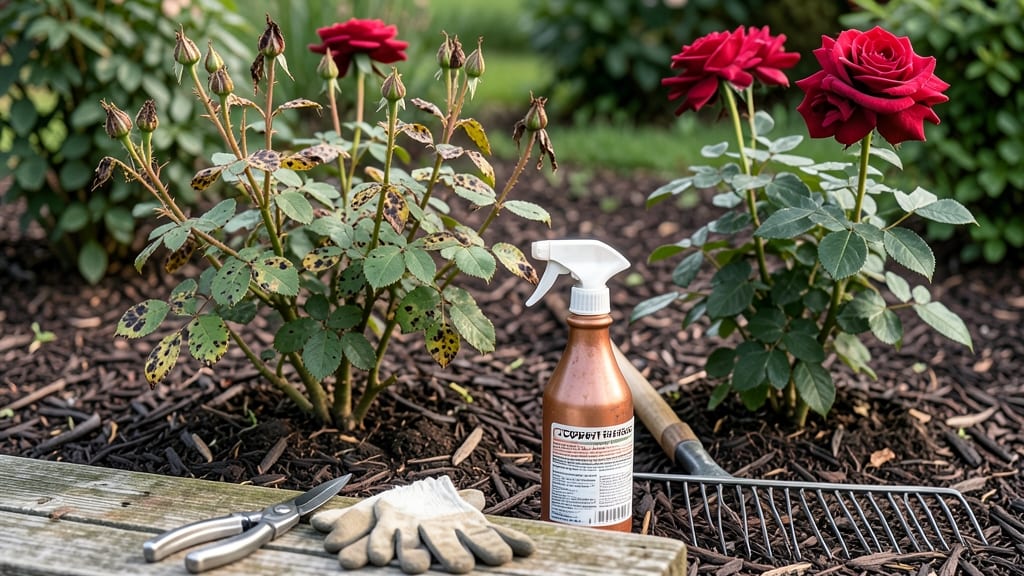
How to get rid of rose fungus naturally—those ugly black spots don’t have to ruin your roses’ beauty. ✨ I’ve battled black spot, powdery mildew, and rust on my own roses—and discovered a fungicide-free combo that cleans them up in weeks. No harsh chemicals, just simple ingredients you likely already have.
The secret lies in baking soda and horticultural oil, which disrupt fungus while protecting your roses’ health. Black spot looks like dark, greasy splotches; powdery mildew coats leaves in white dust; rust shows as orange pustules.
These fixes work for all three, plus they prevent future outbreaks when used right.
By the end of this, your roses will be lush and disease-free, with fewer spots and stronger growth. The best part? You’ll save money and skip the chemical residue that can harm beneficial insects. Let’s get those roses thriving again.
Works for hybrid teas, floribundas, and shrub roses alike—no matter your climate or garden size. Here’s how to tackle it step by step, without sacrificing beauty or health.
Root Causes Of Rose Fungus
Rose fungus—whether it’s black spot, powdery mildew, or rust—doesn’t just appear out of nowhere. It thrives when specific conditions align, often tied to your rose’s environment, care habits, or even the plant’s natural vulnerabilities.
Understanding these triggers is the first step to stopping the spread. Let’s break down the real culprits behind your roses’ fungal woes.
Fungi love moisture—it’s their lifeline. When leaves stay damp for prolonged periods, spores germinate and infect your roses like a silent invasion. Here’s why it happens:
- Poor air circulation: Dense, bushy roses (especially hybrid teas or floribundas) trap humidity between branches. Without airflow, water lingers, creating the perfect fungal buffet.
- Overhead watering: Splashing water onto foliage (especially in the evening) mimics a tropical rainforest—ideal for fungal growth. Black spot, for example, thrives in these conditions.
- Heavy dew or rain: Roses in shaded or low-lying areas dry slower, extending moisture exposure. Some fungi, like powdery mildew, can even spread via windborne spores when humidity exceeds 75%.
Pro Tip: 💡 Water at the base in the morning so leaves dry quickly. Prune to improve airflow—aim for a “open vase” shape where sunlight can reach inner leaves.
Fungi aren’t picky—they just need the right climate. Most rose pathogens peak when temperatures and humidity hit a “Goldilocks zone”:
| Fungus Type | Ideal Conditions | Your Roses’ Risk Level |
|---|---|---|
| Black Spot (Diplocarpon rosae) | 60–80°F (15–27°C) + high humidity (75%+) | ⚠️ High in spring/fall—cooler temps + frequent rain = outbreak |
| Powdery Mildew (Sphaerotheca pannosa) | 65–80°F (18–27°C) + dry leaves but high ambient humidity | ⚠️ Moderate-High in summer heat waves with poor airflow |
| Rose Rust (Phragmidium mucronatum) | 50–75°F (10–24°C) + wet foliage | ⚠️ Low-Moderate in cool, damp springs |
Pro Tip: 🌡️ Use a hygrometer to monitor humidity. If it’s consistently above 70%, take action—prune, space plants, or use shade cloth to reduce stress.
A stressed rose is a fungus magnet. When your plant’s defenses are down, pathogens pounce. Common stressors include:
- Nutrient deficiencies: Low nitrogen (_N_) or phosphorus (_P_) weakens cell walls, making roses more susceptible. Yellowing leaves or stunted growth? That’s an open invitation for fungi.
- Over- or under-watering: While too much water causes rot, drought stress also harms roses. Weak roots = less energy to fight infections.
- Physical damage: Pruning cuts, thorns, or hail injuries create entry points for spores. Even bug bites (like from aphids) can leave wounds fungi exploit.
- Poor soil drainage: Roots suffocating in soggy soil lead to root rot, which spreads upward to stems and leaves.
Pro Tip: 💪 Feed roses regularly with a balanced fertilizer (10-10-10 or 5-10-10) and mulch properly (2–3 inches of organic mulch) to retain moisture without suffocating roots.
Fungi spread like wildfire—especially in gardens where roses are planted close together. Here’s how:
- Windborne spores: Powdery mildew spores can travel up to 50 miles on breezes. If a neighbor’s roses are infected, yours are at risk.
- Tools and hands: Pruners, gloves, or even your fingers can transfer spores from one plant to another. Black spot spores survive on tools for weeks.
- Compost or mulch: Old plant debris (like infected leaves in compost) can harbor spores, reinfecting your garden when reused.
- Wild roses or weeds: Many fungi cross-infect between Rosa species and even weeds like brambles or multiflora rose.
Pro Tip: ✨ Quarantine new roses for 2 weeks before planting. Sterilize tools with 70% isopropyl alcohol or a 10% bleach solution (1 part bleach to 9 parts water) between uses.
Now that you know why fungus takes hold, the next step is actionable fixes—starting with baking soda and horticultural oil to disrupt the cycle. Stay tuned!
Natural Fixes for Rose Fungus
Rose fungus—whether black spot, powdery mildew, or rust—can turn your prized roses into a sad, spotty mess. But before reaching for harsh chemicals, try these effective, fungicide-free solutions tailored to the root cause of your problem.
Below, we map common fungal triggers to practical fixes, plus prevention tips to keep your roses thriving.
---
Cause: Fungus thrives in damp, shaded, or tightly packed foliage where air can’t circulate. Solution: - 🔥 Prune aggressively – Remove at least one-third of the plant’s growth, focusing on: - Dead or diseased leaves/stems. - Crossing branches blocking airflow. - Inner growth where humidity lingers. - 👨🍳 Space them out – Give roses 3–4 feet of clearance between plants and 6+ feet from walls/fences to improve airflow. - ⏰ Time it right – Prune in early spring (just before new growth) or late winter to avoid stressing the plant.
💡 Pro Tip: If your roses are in containers, repot into larger pots with drainage holes—fungus loves soggy roots!
---
Cause: Wet leaves (especially at night) create the perfect fungus party. Solution: - 🥘 Water at the base – Use a soaker hose or drip irrigation to deliver water directly to the soil, not the foliage. - ⏰ Schedule wisely – Water early in the morning (before 10 AM) so leaves dry by sunset. - 🌡️ Avoid overhead sprinklers – If you must use them, water before 9 AM and ensure leaves dry within 4–6 hours.
💡 Pro Tip: Mulch around the base with 2–3 inches of organic mulch (like straw or wood chips) to keep soil moist without wetting leaves.
---
Cause: Existing fungal spores (black spot, powdery mildew) need a quick kill. Solution: - 🔪 Mix your spray – Combine in a 1-gallon spray bottle: - 1 tbsp baking soda - 1 tbsp vegetable oil (or horticultural oil) - 1 tsp mild liquid soap (as a surfactant) - 1 gallon water - 👨🍳 Spray thoroughly – Coat both sides of leaves and stems, especially undersides where spores hide. - 🔄 Repeat weekly until new growth appears (usually 3–4 weeks).
✨ Bonus: For powdery mildew, add 1 tsp neem oil to the mix for extra fungal-fighting power.
---
Cause: Fungal spores overwinter in buds and stems, ready to strike next season. Solution: - 🍳 Apply dormant oil spray in late winter/early spring (before buds swell): - Use 1–2% horticultural oil (like Safer® Brand Dormant Oil). - Spray evenly on stems, buds, and undersides of leaves. - 🌡️ Reapply after rain – Oil washes off, so treat again if heavy rain occurs.
💡 Pro Tip: Test a small branch first—some roses (like hybrid teas) are sensitive to oil.
---
Cause: Weak, nutrient-deficient roses are fungus magnets. Solution: - 📊 Feed with compost or fish emulsion – Use a balanced organic fertilizer (like 5-5-5) in early spring. - 🥗 Avoid high-nitrogen fertilizers (like lawn fertilizer)—they promote leafy growth but weaken disease resistance. - 🍎 Add compost tea – Brew 1 cup compost in 1 gallon water for 24 hours, then strain and spray foliage for extra fungal resistance.
--- If more than 50% of leaves are diseased: - 🔪 Prune infected parts immediately (sterilize pruners with rubbing alcohol between cuts). - 🌱 Quarantine the plant – Move it to a shady, dry spot until new growth appears. - 🚫 Remove fallen leaves – Fungal spores overwinter in debris, so bag and discard (don’t compost).
--- | Do This | Avoid This | |---------------------------|-----------------------------| | ✅ Prune for airflow | ❌ Overhead watering | | ✅ Water early morning | ❌ Crowding plants | | ✅ Use soaker hoses | ❌ Leaving mulch too close to stems | | ✅ Apply dormant oil yearly | ❌ Ignoring undersides of leaves | | ✅ Clean tools with alcohol | ❌ Skipping fall cleanup |
--- Final Thought: Fungus may seem like a lost cause, but with consistent care, your roses can bounce back stronger. Start with pruning and proper watering, then arm them with baking soda and oil sprays—your roses will thank you with vibrant, disease-free blooms! 🌹✨
Frequently asked questions
Can I use vinegar to treat rose fungus?
While vinegar can kill some fungal spores, it’s not ideal for roses. A 1:1 vinegar-water mix is too harsh and can burn leaves. Instead, use the baking soda spray (1 tbsp baking soda + 1 gallon water)—it’s gentler and just as effective. Always test a small leaf first to check for sensitivity.
How often should I spray my roses with the baking soda solution?
Spray every 7–10 days until you see new, healthy growth (usually 3–4 weeks). For prevention, reduce to every 2–3 weeks during humid seasons. Always spray in the early morning so leaves dry quickly—this stops fungus from returning.
Will pruning alone get rid of rose fungus?
Pruning helps remove infected parts, but it’s not enough on its own. You must also treat the remaining plant with a baking soda spray or horticultural oil to kill lingering spores. Without treatment, fungus can return within 2–3 weeks as spores spread to new growth.
Can I still use my roses if they have fungus?
Cut flowers from infected roses only if the stems are healthy. Avoid bringing diseased foliage indoors—spores can spread to other plants. For the best blooms, treat the plant first, then harvest flowers once it’s fungus-free for 2 weeks.
Why does my rose fungus keep coming back?
Fungus returns when spores survive in old leaves, mulch, or soil. Always remove and discard infected debris (don’t compost it), improve airflow by pruning, and reapply treatments after rain. Overwatering or poor drainage also encourages regrowth—fix these first.