
Pests
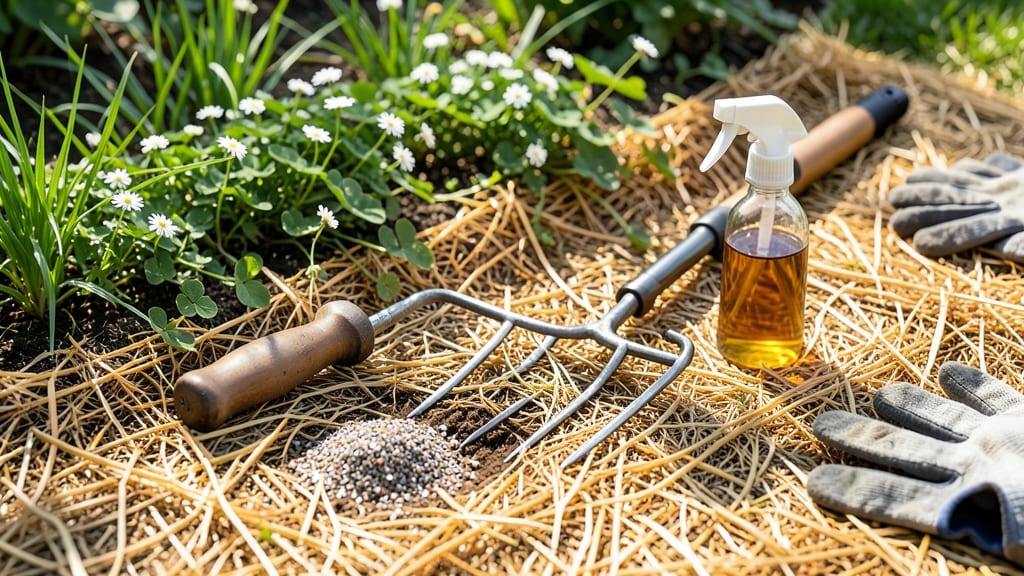
How to get rid of clover in the garden—turn your lush lawn into a patchwork of green and white—until you learn this vinegar-salt combo that works in hours. 🌱 I’ve battled clover for years, and this method finally gave me the control I needed without harsh chemicals. The secret? A targeted spray that kills clover while preserving your grass or garden plants.
Most solutions either take too long or damage everything around them. This one uses household ingredients you already have—vinegar for acidity, salt for dehydration, and a drop of dish soap to help it stick.
It’s fast, organic, and works best on sunny days when the clover is actively growing. No more pulling stubborn clover by hand or waiting weeks for results.
By the end of the day, you’ll see the clover wilting and turning brown, ready to be raked away. The best part? It won’t harm your grass or garden plants if applied carefully.
This method is perfect for small patches, garden beds, or even stubborn lawn weeds that refuse to quit.
For larger areas or persistent clover, I’ll also cover smothering techniques and preventive tips to keep it from coming back. Let’s reclaim that perfect green space—without the frustration.
Why it happens
Clover might seem like an innocent little plant, but it’s actually a highly competitive survivor—one that thrives in conditions where your lawn or garden plants struggle. Understanding why clover takes over is the first step to reclaiming your green space.
Let’s break down the science behind its persistence and how it outsmarts your turf.
🌱 Poor Soil Conditions
Clover is a nitrogen-fixing powerhouse, meaning it forms a symbiotic relationship with soil bacteria called Rhizobia. These bacteria convert atmospheric nitrogen into a form plants can use, creating a self-sustaining nutrient cycle. If your soil is:
- Compacted: Heavy foot traffic, construction, or clay-heavy soil prevents water and air from reaching grass roots, leaving them weak. Clover, with its shallow but sprawling roots, thrives in these conditions.
- Low in Organic Matter: Sandy or depleted soils lack the nutrients grass needs to establish deep roots. Clover’s hardy nature lets it fill the gap by outcompeting weaker plants.
- Acidic or Alkaline: Most lawn grasses prefer a pH between 6.0 and 7.5. Clover, however, tolerates a wider range (often 5.0–8.0), making it the default choice in unbalanced soil.
Actionable Insight: Test your soil’s pH and nutrient levels with a DIY kit or lab test. Amending with compost, lime (for acidic soil), or sulfur (for alkaline soil) can starve out clover by creating an environment where it can’t outcompete your desired plants.
☀️ Overwatering or Underwatering
Clover is a drought-tolerant opportunist. Unlike many grasses that need consistent moisture, clover:
- Survives in dry spells by going dormant and regrowing when rain returns.
- Flourishes in overly moist areas where grass roots suffocate (think shaded, poorly drained spots).
- Outcompetes shallow-rooted grasses by spreading via stolons (horizontal stems) and rhizomes (underground stems), creating a dense mat that chokes out weaker plants.
Actionable Insight: Adjust your watering routine—aim for 1–1.5 inches per week (including rain) and water deeply but infrequently to encourage deep grass roots. If your yard has wet pockets, consider aeration or installing drainage solutions to make clover less hospitable.
🌿 Thin or Weak Grass
Clover doesn’t just invade—it exploits gaps. When grass is sparse, clover’s aggressive spread fills the void quickly. Common reasons for thin grass include:
- Poor Seeding: Low-quality grass seed, incorrect planting depth, or lack of soil contact can lead to patchy growth, giving clover an opening.
- Pest or Disease Damage: Grubs, chinch bugs, or fungal infections (like brown patch) weaken grass, creating bare spots clover immediately colonizes.
- Improper Mowing: Cutting grass too short (below 2–3 inches) stresses it, while mowing at the same height every time prevents sunlight from reaching the soil, encouraging clover.
Actionable Insight: Overseed bare patches with high-quality grass seed suited to your climate, and follow up with a pre-emergent herbicide (applied in early spring) to block clover seeds from germinating. Keep mower blades sharp and adjust height seasonally.
🌍 Lack of Maintenance
Clover is the ultimate low-maintenance plant, while many lawn grasses require regular care to stay competitive. Neglect in these areas gives clover the upper hand:
- No Fertilization: Grass needs nitrogen, phosphorus, and potassium to grow thick. Without it, clover’s natural nitrogen-fixing ability makes it the default plant.
- Infrequent Aeration: Compacted soil smothers grass roots but lets clover’s shallow system thrive. Aerating 2x yearly (spring/fall) helps grass recover.
- Weed and Clover Ignored: Pulling clover by hand or spot-treating it early prevents it from dominating your lawn.
Actionable Insight: Commit to a seasonal maintenance schedule:
- Spring: Fertilize, aerate, and overseed.
- Summer: Water deeply, mow high, and monitor for pests.
- Fall: Apply pre-emergent herbicide and top-dress with compost.
- Winter: Leave grass clippings as natural mulch.
Clover won’t stand a chance against a healthy, well-maintained lawn.
🌱 Shade and Poor Sunlight
Most lawn grasses need 4–6 hours of direct sunlight daily to photosynthesize efficiently. In shady areas:
- Grass grows slowly or dies, leaving open space for clover.
- Clover’s broadleaf structure captures more light in low-light conditions, giving it an edge.
- Shade-loving grasses (like fine fescue) may still struggle if the area is too dark.
Actionable Insight: If your yard has persistent shade, choose shade-tolerant grass varieties (e.g., creeping red fescue) or consider ground covers like moss or clover-resistant alternatives. For small shaded spots, mulch heavily to suppress clover growth.
Practical Ways to Banish Clover
Now that you understand why clover invades your garden, let’s tackle the real question: how to get rid of clover for good. The good news? With the right approach, you can reclaim your garden without resorting to harsh chemicals.
Below, we’ve mapped out solutions based on the most common causes of clover infestations—so you can pick the method that fits your garden’s needs.
Clover thrives where grass and plants are sparse, so improving soil health is key.
🔥 Fix It: Overseed with Dense Grass
- Why it works: A thick lawn or garden bed leaves no room for clover to take root.
- How to do it:
- Mow existing grass short (if present) and rake away debris.
- Spread a high-quality grass seed blend (like Kentucky bluegrass or fescue) evenly.
- Lightly cover with soil and water gently but deeply.
- Pro tip: 💡 Use a pre-emergent herbicide after seeding to prevent weeds (but not clover-killers, as they’ll harm new grass).
🍳 Fix It: Plant Competitive Ground Covers
- Why it works: Some plants outcompete clover naturally.
- Best options:
- Clover-resistant grasses (e.g., creeping red fescue).
- Low-growing perennials like thyme, creeping phlox, or ajuga.
- Clover’s natural enemy: White Dutch clover (yes, really—it chokes out itself!).
Moisture and shade create the perfect clover paradise.
👨🍳 Fix It: Improve Drainage & Sunlight
- Why it works: Clover struggles in dry or sunny conditions.
- How to do it:
- For soggy soil: Amend with compost or sand to improve drainage.
Consider raised beds if drainage is poor. - For shady areas: Plant shade-tolerant grasses (like fine fescue) or mulch heavily to suppress clover growth. - Pro tip: 🌡️ If your garden stays damp year-round, consider a soaker hose to encourage deeper root growth in your desired plants.
⏰ Fix It: Hand-Pull When Soil is Dry
- Why it works: Clover’s roots loosen when the ground is dry, making removal easier.
- How to do it:
- Wait for a dry, sunny day.
- Pull clover by the roots (use a weeding tool for stubborn patches).
- Pro tip: ✨ Timing is everything! Pull in late spring or early summer when clover is actively growing but before it seeds.
Persistent clover means seeds or roots are still lurking.
🔪 Fix It: Smother or Solarize
- Why it works: Blocks sunlight to kill existing clover and prevent regrowth.
- How to do it:
- Cardboard/sheet mulching: Lay down thick cardboard or newspaper, then cover with 4-6 inches of mulch (straw or wood chips).
Wait 4-6 weeks for clover to die. - Solarization: Cover the area with clear plastic for 4-6 weeks in hot sun.
The trapped heat cooks clover roots and seeds. - Pro tip: 🎯 Combine with vinegar spray (1 gallon vinegar + 1 cup dish soap) for stubborn patches—reapply every 2-3 days until clover wilts.
🌱 Fix It: Prevent Seed Spread
- Why it works: Stops clover from reseeding.
- How to do it:
- Mow high (3-4 inches) to weaken clover before it flowers.
- Remove flower heads by hand if clover starts blooming.
- Pro tip: 💡 Goats or chickens can graze clover down naturally—just don’t let them eat your veggies!
Once you’ve banished clover, keep it from returning with these habits:
- 🌱 Maintain a thick, healthy lawn—clover can’t compete with dense grass.
- 💧 Water deeply but less often to encourage deep roots in your plants.
- 🌿 Use mulch (2-3 inches) in garden beds to block sunlight from clover seeds.
- 🔄 Rotate crops in veggie gardens to disrupt clover’s life cycle.
- 🛡️ Apply corn gluten meal in early spring—it’s a natural pre-emergent that stops weed seeds (including clover) from sprouting.
Final Thought: Clover isn’t all bad—it fixes nitrogen in the soil! But if you’d rather grow your plants, these methods will help you win the battle without breaking the bank or the environment. 🚀
Frequently asked questions
Is clover actually bad for my garden?
Not always! Clover can be beneficial as it fixes nitrogen in the soil, improving fertility. However, if you're growing vegetables or ornamental plants, its aggressive spread can outcompete them. For lawns, many prefer clover-free grass for a uniform look. The key is balancing its benefits with your garden goals.
Will vinegar really kill clover without harming my grass?
Vinegar can work but requires caution. Use a 1:1 vinegar-to-water mix with 1 tablespoon dish soap and apply only to clover leaves on sunny days. Grass may get damaged if overspray occurs—always spot-test first. For best results, treat small patches and avoid windy conditions.
How long does it take for smothering methods to work?
Smothering with cardboard or plastic typically takes 4-6 weeks in hot weather. The key is complete light blockage—no gaps where clover can peek through. For faster results, combine with a vinegar spray every 2-3 days during the process. Patience is crucial for full eradication.
Can I use corn gluten meal to stop new clover growth?
Yes! Apply 20 pounds per 1,000 sq ft in early spring before clover seeds germinate. It works by preventing root development in emerging weeds. Reapply every 3 months for ongoing prevention. This organic method is safe for established plants and soil health.
Why does clover keep coming back after I remove it?
Clover spreads through both seeds and underground runners. If you don't remove all roots or seeds, new plants will emerge. The solution is persistent removal combined with preventive measures like proper mowing (3-4 inches), mulching, and maintaining healthy grass or ground cover.