
Blooming
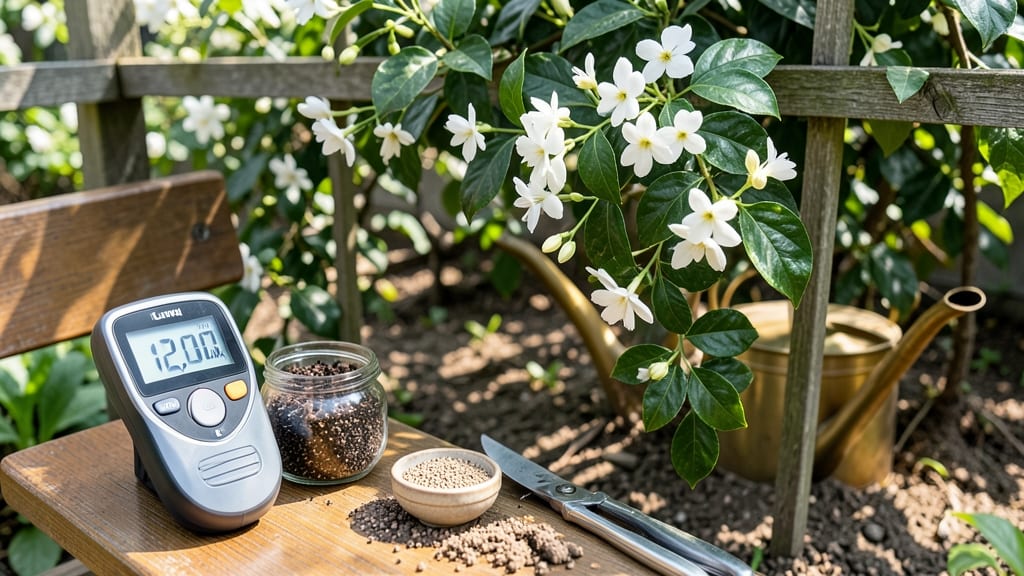
Your jasmine plant has been leafy but stubbornly bloomless—until now you learn how to get it to bloom. ✨ The secret isn’t just sunlight or fertilizer; it’s the right balance of light exposure, pruning timing, and seasonal patience that finally triggers those intoxicating flowers.
Most gardeners overdo fertilizing or prune at the wrong time, sending the plant into survival mode instead of bloom mode. I’ve seen jasmine plants go from zero flowers to heavy blooming in just one season by adjusting just these three factors—no fancy tricks required.
By summer’s end, you’ll smell the difference: clusters of star-shaped blossoms that attract hummingbirds and fill the air with fragrance. The key is understanding when to push growth (spring) and when to encourage rest (fall).
Works for both outdoor vines and indoor pots—just adjust the light and timing to your climate. Let’s get those buds opening!
📚 In This Guide
- What you need
- Instructions
- Tips and common mistakes
- Wrapping up and next steps
What you need
- ● Jasmine plant (preferably a mature variety like Jasminum officinale, Jasminum sambac, or Jasminum polyanthum—these are the most reliable bloomers!)
- ● Well-draining potting mix (aim for a blend of 50% peat moss or coco coir, 30% perlite or pumice, and 20% compost for aeration and nutrients). Pro tip: Avoid heavy garden soil—jasmine roots hate soggy feet! 🌡️
- ● Pot with drainage holes (3–5 inches in diameter for small plants, 10+ inches for established vines). Terracotta or clay pots are ideal—they wick away excess moisture.
- ○ Balanced liquid fertilizer (10-10-10 or 20-20-20 NPK ratio, diluted to ½ strength). Optional: A bloom-specific fertilizer (like 10-30-20) for extra floral encouragement!
- ● Pruning shears or sharp scissors (sterilized with rubbing alcohol to prevent disease). Pro tip: Use bypass pruners for clean cuts—no jagged edges! ✨
- ● Support structure (trellis, arbor, or sturdy stakes for climbing varieties). Bonus: A sprawling vine needs 3–5 feet of vertical space to thrive!
- ● Watering can with a gentle rose nozzle (to avoid disturbing the soil or roots).
- ○ Humidity tray or pebble tray (for tropical jasmine varieties like Jasminum sambac). Optional: A misting bottle for occasional leaf spritzes.
- ● Patience—jasmine plants can take 1–3 years to bloom from seed or a young cutting. Mature plants may need 6–8 hours of sunlight daily and consistent care.
- ● Climate awareness: Hardy jasmines (e.g., Jasminum officinale) tolerate USDA Zones 6–9 and can handle cooler temps.
- ● Tropical jasmines (e.g., Jasminum sambac) thrive in Zones 10–11 or as houseplants in cooler climates.
- ● Seasonal timing: Prune after flowering (late winter/early spring) to encourage new growth.
- ● Fertilize every 4–6 weeks during spring and summer (blooming season!).
Tips & tricks for perfect jasmine blooms
These are the subtle details that separate a struggling jasmine plant from one that bursts into fragrant blossoms year after year.
Light Intensity Matters: The 6-8 hours of direct sunlight in Step 1 isn't just about quantity—it's about quality. Place your jasmine within 12 inches of a south-facing window where the light is brightest. If you notice leaves stretching toward the light (a condition called etiolation), it's time to rotate the pot or move it closer to the window. Morning sun is especially important as it kickstarts photosynthesis for the day.
Watering Wisdom: When checking those top 2 inches of soil in Step 2, pay attention to the texture. Soil should feel like a wrung-out sponge—not bone dry, but not damp either. I've learned the hard way that jasmine roots rot quickly in soggy conditions, so always water at the base and avoid wetting the leaves. In winter, when growth slows, you can extend the watering interval to every 14 days, but never let the soil completely dry out.
Pruning Precision: The one-third prune in Step 3 might seem drastic, but it's essential for redirecting energy. When cutting, make sure your pruners are clean and sharp to prevent disease transmission. The 45-degree angle isn't just decorative—it helps water run off the cut, reducing the risk of fungal infections. If you're nervous about cutting too much, start with just the oldest, leggiest stems and observe how the plant responds before doing a full prune.
Pro Tips for Get Jasmine Plant To Bloom
- These are the subtle details that separate a struggling jasmine plant from one that bursts into fragrant blossoms yea...
- Light Intensity Matters: The 6-8 hours of direct sunlight in Step 1 isn't just about quantity—it's about quality. Pla...
- Watering Wisdom: When checking those top 2 inches of soil in Step 2, pay attention to the texture. Soil should feel l...
Frequently asked questions
about getting your jasmine plant to bloom—because even the pros need a little extra help!How long does it take for jasmine to bloom after planting?
Jasmine plants typically take 1 to 3 years to bloom after planting, depending on the variety and growing conditions. Patience is key! Young plants focus on root and foliage growth first. Ensure they get full sun (6+ hours/day) and well-draining soil to speed up the process. Some fast-growing varieties, like Jasminum officinale, may flower sooner if given ideal care.
Why isn’t my jasmine blooming, even after a year?
If your jasmine isn’t blooming after a year, check these common culprits:
- Insufficient sunlight: Jasmine loves bright, direct light—move it to a sunnier spot or supplement with grow lights.
- Over-fertilizing: Too much nitrogen promotes leaves over flowers. Use a balanced bloom-boosting fertilizer (like 10-10-10) in spring/summer.
- Lack of pruning: Deadhead spent blooms and trim leggy growth to encourage new flower buds.
- Stress or pests: Yellow leaves or wilting? Check for aphids, root rot, or underwatering.
Does jasmine need a cold period to bloom?
Yes! Most jasmine varieties (especially winter jasmine or star jasmine) benefit from a cooling period to stimulate blooming. Here’s how:
- Move potted jasmines to 50–60°F (10–15°C) for 4–6 weeks in late fall/winter.
- For outdoor plants, avoid fertilizing in fall—let them rest.
- Spring warmth after dormancy triggers flower production.
Can I force my jasmine to bloom indoors?
Indoor jasmine (Jasminum polyanthum or J. sambac) can bloom year-round with the right care:
- Light: Place near a south-facing window or use grow lights (12–14 hours/day).
- Humidity: Mist leaves or use a pebble tray—jasmine thrives in 50–60% humidity.
- Pruning: Trim back 1/3 of the plant after blooming to encourage denser growth.
- Food: Feed with low-nitrogen fertilizer (like 5-10-5) every 4–6 weeks in spring/summer.
What’s the best fertilizer for jasmine blooms?
Use a balanced, bloom-focused fertilizer with a higher phosphorus (P) content to encourage flowers. Top picks:
Type
Ratio
When to Use
Bloom Booster
10-30-20 or 7-9-5
Spring through early summer (every 4–6 weeks)
Organic Options
Fish emulsion (5-1-1) or compost tea
Every 6 weeks; great for soil health
Wrapping up and next steps
Getting your jasmine plant to bloom is all about patience, consistency, and the right care—but trust us, it’s worth it! 🌸 With the perfect balance of sunlight, pruning, and a little extra love, you’ll soon be rewarded with fragrant blooms that’ll fill your space with magic.
Start by applying these tips today, and don’t forget to celebrate every small step—your green thumb is growing stronger with each prune and watering!
Ready to take it further? Document your jasmine’s progress in a garden journal or share your blooming wins with fellow plant lovers online. The more you learn, the more your jasmine will thrive—and so will your confidence! 🌿✨