
Container Gardens
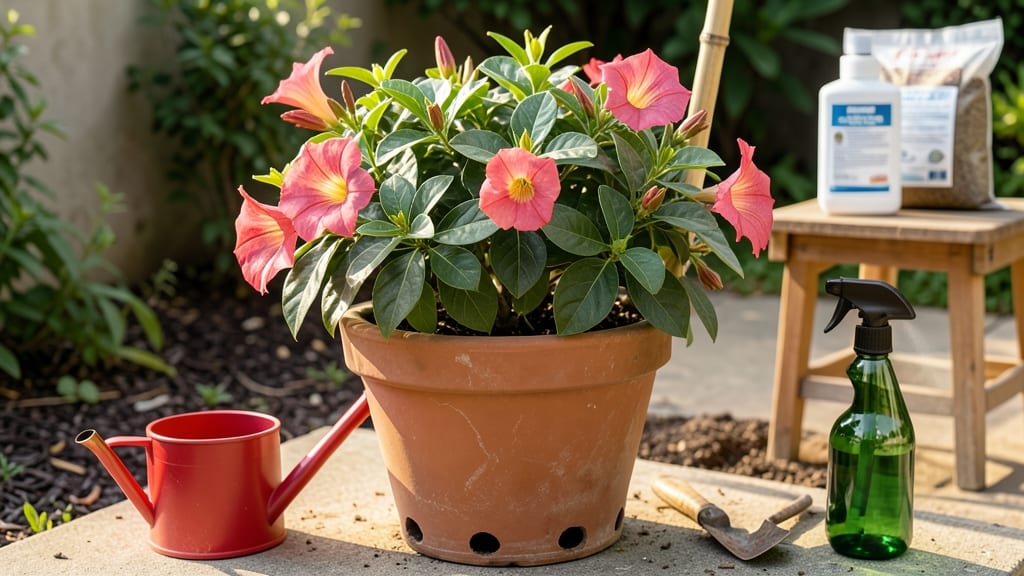
Caring for Mandevilla in pots transforms any patio into a tropical paradise with vibrant pink, red, or white blooms that last all summer. 🌸 I’ve grown these dramatic vines for years, and the secret to their success isn’t complicated—it’s about matching their tropical roots to container conditions.
Too much water or shade, and they’ll sulk. Get it right, and you’ll have a plant that flowers nonstop from spring until frost.
The key is bright, indirect light (think morning sun with afternoon shade) and well-draining soil—Mandevilla hates soggy roots. Use a mix of potting soil and perlite, and choose a pot with drainage holes (terracotta works best).
Water when the top inch feels dry, but never let it sit in saucers—root rot is their biggest enemy. Fertilize every 4-6 weeks with a balanced liquid feed to encourage those lush, blooming vines.
By mid-summer, your plant will look like a blooming waterfall, with glossy leaves and clusters of trumpet-shaped flowers. Prune leggy stems in spring to shape it and boost flowering, and watch how it responds—healthy Mandevilla grows 2-3 feet per season with the right care.
The best part? They’re pest-resistant when happy, so you’ll spend less time spraying and more time admiring.
When autumn cools down, bring pots indoors before temps drop below 50°F—they’re tropical, after all. Reduce watering and give them bright light until spring. With this routine, your Mandevilla will come back stronger every year, proving that minimal effort really can yield maximum beauty. Ready to try it?
📚 In This Guide
- What you need
- Instructions
- Tips and common mistakes
- Wrapping up and next steps
What you need
- ● Pot: A container at least 12–18 inches in diameter with drainage holes (terracotta or ceramic works best). For larger vines, opt for 18–24 inches.
- ● High-quality potting mix: A well-draining blend like cactus/succulent mix or a 50/50 mix of potting soil and perlite/pumice (avoid heavy garden soil!).
- ● Mandevilla plant: Buy a healthy, established vine (check for vibrant leaves and no yellowing).
- ● Fertilizer: A balanced, water-soluble fertilizer (10-10-10 or 20-20-20) or a slow-release granular fertilizer for convenience.
- ● Support structure: A trellis, bamboo stake, or obelisk (6+ feet tall for climbing varieties like Mandevilla sanderi).
- ● Watering can or hose with a gentle spray nozzle: Avoid over-saturating the roots.
- ● Pruning shears: Sharp, clean shears (sterilize with rubbing alcohol between cuts).
- ● Mulch: Orchid bark or pine needles to retain moisture and mimic tropical conditions.
- ● Self-watering pot: Reduces maintenance if you travel often.
- ● Grow lights: A full-spectrum LED for indoor setups with less than 6 hours of sunlight/day.
- ● Plant food: Organic options like fish emulsion or seaweed extract for a nutrient boost.
- ● Pot feet or saucer: Protects surfaces and catches excess water.
Step-by-Step instructions for growing mandevilla in containers
Here's how to keep your potted mandevilla blooming all season with just a few simple adjustments.
🪴 Step 1: Choose the Right Pot and Drainage
Mandevilla needs room to grow, so pick a container at least 12 inches deep and wide—any smaller, and roots will circle and strangle themselves. I use terracotta pots because they breathe better than plastic, but if you go plastic, add extra drainage holes (they don’t come standard). Place a 2-inch layer of gravel or broken pottery at the bottom to prevent soil from clogging the holes.
This vine loves to sprawl, so if you want it to climb, add a small trellis or bamboo stake now. If left to trail, give it space to spread 3-4 feet wide—mandevilla won’t be shy about reaching for sunlight. I’ve seen them cascade over balconies and deck railings like a tropical waterfall.
☀️ Step 2: Plant in Well-Draining Soil and Full Sun
Fill the pot with a mix of 50% potting soil and 50% perlite or orchid bark—this keeps roots aerated and prevents soggy soil, which mandevilla hates. Dig a hole twice as wide as the root ball and place your plant in, then backfill gently, pressing down just enough to eliminate air pockets. Water deeply until it drains from the bottom, then let it dry slightly before watering again.
Mandevilla craves bright, direct sunlight—think 6+ hours daily. If you notice leaves turning yellow or stems stretching too tall, it’s begging for more light. A south- or west-facing spot is ideal, but if you’re in a shady area, supplement with a grow light 12 inches above the plant for 8-10 hours a day. You’ll see the difference in bold, glossy leaves and nonstop blooms within weeks.
💧 Step 3: Water and Feed for Continuous Blooms
Water when the top 1-2 inches of soil feel dry—stick your finger in to check. Mandevilla wilts dramatically when thirsty, so don’t wait until it’s crispy. I water deeply every 2-3 days in summer, but less in cooler months. Overwatering is the #1 killer, so always empty the saucer after 10 minutes to avoid root rot.
Feed with a balanced liquid fertilizer (10-10-10 or 20-20-20) every 2 weeks during spring and summer. Cut back to once a month in fall and stop in winter. You’ll know it’s working when new buds form every 2-3 weeks—no gaps, no waiting. If blooms slow down, it’s usually too much shade or not enough food. A little Epsom salt (1 tbsp per gallon of water) monthly keeps leaves vibrant too.
✂️ Step 4: Prune and Support for Bushier Growth
Pinch back new growth by 1/3 when stems reach 6-8 inches to encourage bushier, fuller plants. This is where mandevilla gets its lush, cascading look—skip pruning, and you’ll end up with one long, leggy vine. Use clean, sharp pruners and make cuts just above a leaf node (the bump where leaves grow). Deadhead spent blooms regularly—this tricks the plant into producing more flowers instead of seeds.
If your mandevilla starts to sag or flop, tie it to the trellis or stake with soft garden twine or Velcro plant ties. Never use wire—it can damage the delicate stems. In late winter, cut back stems by half to refresh the plant. It might look sad for a week, but new growth will explode in spring, and you’ll have a denser, more vibrant plant by summer.
⏰ Step 5: Protect and Overwinter for Next Year
When temperatures dip below 50°F at night, move your mandevilla indoors or to a sheltered porch. It’s not frost-hardy, so any freeze will kill it. Reduce watering to every 7-10 days in winter, and stop fertilizing entirely. Place it near a sunny window or under grow lights—it won’t bloom much, but keeping it alive ensures a strong comeback in spring.
If you’re in a USDA Zone 9-11, you can leave it outside year-round as long as it’s protected from wind and frost. In colder zones, dig up the pot and store it in a cool, bright garage or basement (but not below 40°F). Before storing, trim back dead leaves and water lightly to keep roots from drying out. In early spring, repot if roots are circling and fertilize to kickstart growth.
Tips & tricks for thriving potted mandevilla
Let me share the little details that make all the difference with your container-grown mandevilla—these are the secrets I've learned after watching mine transform from scraggly to show-stopping.
Soil Mix Matters: That 50/50 soil blend in Step 2 is non-negotiable, but here's the thing: if you're in a humid climate, increase the perlite to 60% to prevent root rot. I've seen mandevilla plants drown in too-heavy soil, even with drainage holes. The roots need air—don't skimp on the perlite or orchid bark. For extra insurance, add a handful of coconut coir to the mix for better moisture retention without compacting.
Sunlight Strategy: When supplementing with grow lights (Step 2), position them just 8-10 inches above the plant rather than the full 12 inches. Mandevilla needs strong light to trigger blooming, and closer lights mimic the intensity of direct sun. I use LED grow lights on a timer and notice a dramatic difference in flower production when they're closer. Just don't let them touch the leaves—those can get crispy fast.
Watering Wisdom: The "top 1-2 inches dry" rule in Step 3 is perfect, but here's what nobody tells you: mandevilla's wilt is dramatic but temporary. If you catch it early, it'll perk right back up. However, if the leaves start curling and feel papery, that's a sign of permanent damage from underwatering. The key is consistency—stick to that 2-3 day summer schedule, but always check before watering. Overwatering kills faster than underwatering, so when in doubt, wait another day.
Pruning Payoff: When you cut back stems by half in late winter (Step 4), don't toss those cuttings! Root them in water for a few weeks, then transplant into their own pots. I've propagated dozens of new plants this way, and they often bloom just as heavily as the mother plant. Just be patient—it can take 2-3 months for them to establish and start growing vigorously. This is how you get free mandevilla plants for your friends (or your own collection!).
Pro Tips for Care For Mandevilla In Pots
- Let me share the little details that make all the difference with your container-grown mandevilla—these are the secrets I've learned after watching mine transform from scraggly to show-stopping.
- Soil Mix Matters: That 50/50 soil blend in Step 2 is non-negotiable, but here's the thing: if you're in a humid climate, increase the perlite to 60% to prevent root rot.
- Sunlight Strategy: When supplementing with grow lights (Step 2), position them just 8-10 inches above the plant rather than the full 12 inches.
Frequently asked questions
about caring for Mandevilla in pots—because even the easiest plants have their quirks! Here are answers to the most common questions to keep your vines happy and blooming.Can Mandevilla grow in small pots?
Mandevilla thrives in pots, but root-bound stress can stunt growth. Opt for at least 10–12 inches in diameter for mature plants, with drainage holes. If space is tight, repot every 1–2 years to refresh soil and encourage blooms. Pro tip: Use a self-watering pot to prevent overwatering in small containers.
How do I protect Mandevilla from winter?
Mandevilla is tender perennials—they cannot survive frost! Before temps drop below 40°F (4°C), move pots to a bright, cool indoor spot (like a sunroom) or wrap them in burlap. Reduce watering and fertilizing to half-strength until spring. Pro tip: If indoors, place near a south-facing window for light.
Why are my Mandevilla leaves yellowing?
Yellow leaves usually signal overwatering or poor drainage. Check the soil—it should be slightly moist but not soggy. Ensure your pot has drainage holes and use a well-draining potting mix (like cactus/succulent blend). Pests like spider mites can also cause yellowing; spray with neem oil if needed. Pro tip: Prune yellow leaves to redirect energy to healthy growth.
Can I grow Mandevilla from cuttings?
Take 4–6 inch cuttings from healthy stems in spring or summer, just below a leaf node. Dip the cut end in rooting hormone (optional) and plant in moist perlite or sand. Keep humid (use a plastic bag) and in bright, indirect light. Roots form in 2–4 weeks! Pro tip: Bottom heat (like a heating mat) speeds up rooting.
Why isn’t my Mandevilla blooming?
Mandevilla needs full sun (6+ hours/day) and regular feeding to bloom. If indoors, a grow light helps. Use a balanced fertilizer (20-20-20) every 2–4 weeks in spring/summer. Stress factors like overcrowded roots or low humidity can also halt blooms. Pro tip: Deadhead spent flowers to encourage new buds.
Wrapping up and next steps
Caring for Mandevilla in pots is all about balancing sunlight, water, and patience—and the rewards are stunning, low-maintenance vines that bring life to your space! 🌿 With the right container, well-draining soil, and a little seasonal TLC, your Mandevilla will thrive year after year.
Now that you’re armed with expert tips, go ahead and give it a try—even if you’re a beginner, these vines are forgiving and gorgeous.
Ready to elevate your container garden? Next, explore creative ways to train your Mandevilla or check out seasonal care adjustments to keep it blooming nonstop! 🌸