
Pruning
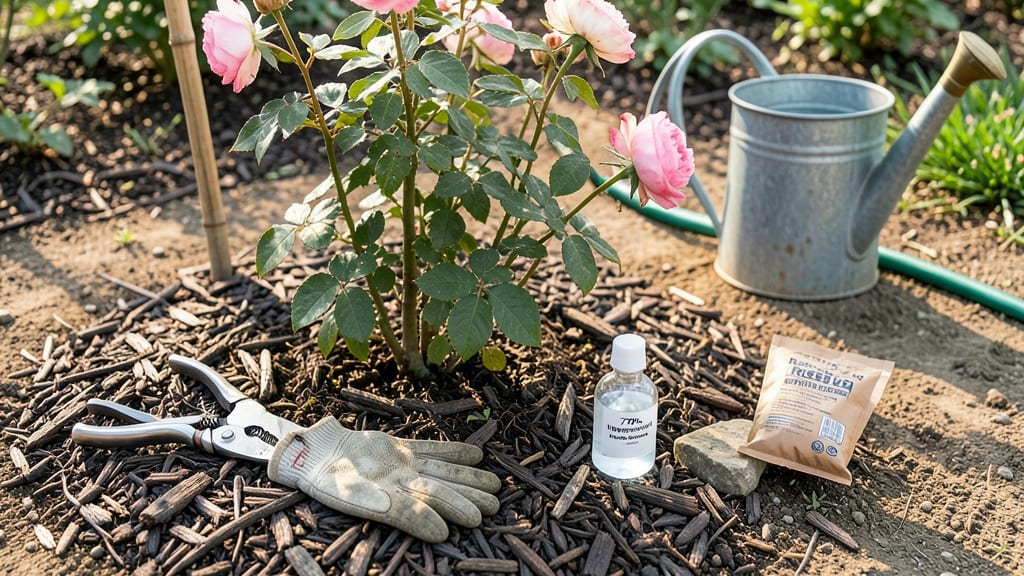
How to bring back a dead rose bush—it’s not as hopeless as it seems. 🌱 I’ve nursed back three "hopeless" bushes in my own yard, and the same techniques work every time. The key? Diagnosing why it failed first, then giving it exactly what it needs to bounce back.
Most "dead" roses actually suffer from one of three things: rotting roots from overwatering, disease hiding under the surface, or starvation from poor soil. You’ll start by inspecting the roots—healthy ones smell earthy and look white or tan, while mushy black roots mean it’s drowning.
Prune back all dead wood first, then focus on fixing the root of the problem (literally).
Within 4-6 weeks, you’ll see new green shoots if you’ve addressed the core issue. The bush might not bloom immediately, but it’ll grow strong enough to produce more flowers next season than it ever did before. The secret is patience—revival takes time, but the payoff is worth it.
This works for hybrid teas, climbers, and shrub roses alike, even in hot climates where roses struggle. The same principles apply whether your bush is in the ground or a container. Let’s get it growing again—step by step.
Root Causes Behind Wilted Roses
Seeing your once-vibrant rose bush turn crispy and lifeless can feel like a gardening heartbreak—but understanding why it happened is the first step to revival. Roses are tough, but they’re also sensitive to a mix of environmental stresses, neglect, and even hidden soil issues.
Below, we break down the most common culprits behind a "dead" rose bush, so you can pinpoint the problem and take action.
Roses thrive in their hardiness zones (typically 5–10, depending on the variety), but when temperatures swing too far outside this range, their delicate systems shut down. Here’s how it happens:
- Frost Damage: Temperatures below 20°F (-7°C) can kill rose canes outright by rupturing cell walls. Evergreen roses (like Rosa rugosa) are slightly more resilient, but most hybrid teas and floribundas are vulnerable. Symptoms: Blackened, mushy stems or a sudden collapse of foliage.
- Heat Stress: Prolonged heatwaves (above 95°F / 35°C) cause roses to wilt dramatically—even if they’re not dead. The plant conserves water by closing stomata (pores), halting photosynthesis. Without intervention, roots can suffocate from lack of oxygen in dry soil.
- Sudden Freeze-Thaw Cycles: Water expands when it freezes, bursting root cells. If roots are already weakened (from drought or poor drainage), a rapid thaw can drown them in soggy, oxygen-deprived soil.
💡 Pro Tip: Mulch with 3–4 inches of organic matter (straw, wood chips) to insulate roots in winter and retain moisture in summer. For extreme heat, shade cloth (30–50% coverage) can prevent wilting.
Roses are thirsty but hate soggy feet. Watering gone wrong is the #1 cause of "dead" rose bushes—often because the problem isn’t obvious until it’s too late.
| Issue | How It Kills Roses | Tell-Tale Signs |
|---|---|---|
| Underwatering | Roots dry out and shrink back, losing their ability to absorb water. The plant goes into survival mode, dropping leaves to conserve moisture. |
|
| Overwatering | Poor drainage causes root rot (fungal/bacterial infections like Phytophthora). Healthy roots need oxygen—waterlogged soil suffocates them, turning them black and mushy. |
|
| Inconsistent Watering | Roses hate moisture swings. Alternating drought and deluge stresses roots, leading to osmotic shock—cells lose their ability to regulate water, causing collapse. |
|
🌡️ Fix It: Water deeply 1–2 times per week (depending on climate), aiming for 1–1.5 inches of water per session. Test soil moisture with your finger—if the top 2 inches are dry, it’s time to water. Amend heavy clay soil with compost to improve drainage.
Roses are heavy feeders, and poor soil is like trying to grow a marathon runner on a diet of candy. Here’s how nutrient starvation (or toxicity) kills them:
- Compacted or Poor Soil: Roses need well-aerated, fertile soil with a pH of 6.0–6.5. Compacted clay or sandy soil strangles roots, cutting off oxygen and nutrients. Symptoms: Stunted growth, pale yellow leaves (chlorosis), and roots that look grayish and thread-like instead of white and fleshy.
- Nitrogen Deficiency: Leaves turn yellow between veins (a classic sign of nitrogen starvation). This weakens the plant’s ability to produce energy, leading to leaf drop and eventual death.
- Phosphorus/K Potassium Imbalance: Too little phosphorus (_P_) = weak roots; too little potassium (_K_) = poor disease resistance. Symptoms: Dark green leaves with purple stems (phosphorus) or brown leaf edges (potassium).
- Micronutrient Toxicity: Over-fertilizing with synthetic salts (like too much synthetic nitrogen) can burn roots. Excess chlorine or fluoride in tap water also harms roots.
🔥 Soil Revival Steps:
- Test your soil with a home pH kit or send a sample to a local extension office.
- Amend soil with compost or aged manure (2–3 inches mixed into the top 6 inches).
- Use a balanced rose fertilizer (10-10-10 or 5-10-5) in early spring and mid-summer.
- Avoid chemical fertilizers if your soil is already salty—opt for organic options like fish emulsion or bone meal.
Not all rose "deaths" are due to neglect—sometimes, invisible invaders are the real culprits. These pests and pathogens chew, suffocate, or infect roots, cutting off the plant’s lifeline.
| Pest/Disease | How It Kills Roses | Signs to Watch For |
|---|---|---|
| Root-Knot Nematodes | Microscopic worms burrow into roots, forming gall-like knots that block water/nutrient uptake. Infestations spread silently for years. |
Reviving Your Rose Bush Step-by-StepYour rose bush might look like it’s given up, but with the right care, it can bounce back to life—sometimes even stronger than before! The key is identifying the root cause (literally and figuratively) and taking action. Below are practical, step-by-step solutions tailored to the most common reasons your rose bush might have "died." Each fix includes prevention tips to keep your roses thriving long-term. Signs: Yellowing leaves, mushy stems, or a foul smell around the base. How to Fix It:
💡 Prevention Tips:
Signs: Crispy, brown edges on leaves, wilting despite water, or dry soil pulling away from the pot. How to Fix It:
💡 Prevention Tips:
Signs: Black spots on leaves, powdery white residue, or oozing cankers on stems. How to Fix It:
💡 Prevention Tips:
Signs: Soft, black roots when dug up, sawdust-like frass (pest droppings), or sudden wilting. How to Fix It:
💡 Prevention Tips:
Signs: Brown, papery leaves, cracked canes, or no new growth in spring. How to Fix It:
💡 Prevention Tips:
Signs: Pale yellow leaves (nitrogen deficiency), purple stems (phosphorus deficiency), or weak, spindly growth. How to Fix It:
💡 Prevention Tips:
If your rose bush is beyond saving, don’t toss it! You can grow a new plant from a single cane: 1. ✂️ Take a 6-inch cutting from a healthy, non-flowering stem (just below a leaf node).
Remember: Patience is key—some roses take 4–6 weeks to show signs of recovery. Stick with it, and your bush could surprise you with new Frequently asked questions
1
How do I know if my rose bush is truly dead or just dormant?Check the canes by scraping a small section of bark—if you see green tissue underneath, it's alive! Even if leaves are gone, healthy canes will sprout new growth when conditions improve. For potted roses, gently tug on the plant—if roots resist, it's still viable.
2
Can I revive a rose bush that's been dead for months?Possibly! If the canes are still firm (not mushy or hollow), there's a chance. Start by pruning back all dead growth and replanting with fresh, well-draining soil. Apply a root stimulator and keep the soil consistently moist but not soggy. New growth may take 6-8 weeks to appear.
3
What's the fastest way to tell if my rose has root rot?Dig carefully around the base—healthy roots should be white or tan and firm. If they're black, mushy, and smell foul, that's root rot. For confirmation, cut open a root: if the center is brown and hollow, it's infected. Act immediately by improving drainage and pruning affected areas.
4
Should I fertilize a dying rose bush?Only if you've ruled out root rot or disease! Start with a balanced, low-nitrogen fertilizer (like 5-5-5) to avoid burning damaged roots. Wait until you see new green shoots before using higher-nitrogen formulas. For organic options, try compost tea or fish emulsion instead.
5
Can I save a rose bush that's been underwatered for weeks?Yes, but act fast! Water deeply until it drains 6-8 inches down, then mulch heavily to retain moisture. Prune back any crispy, brown canes and avoid fertilizing until new growth appears. In 2-3 weeks, you should see improved turgor (firmness) in remaining stems. |