
Pruning
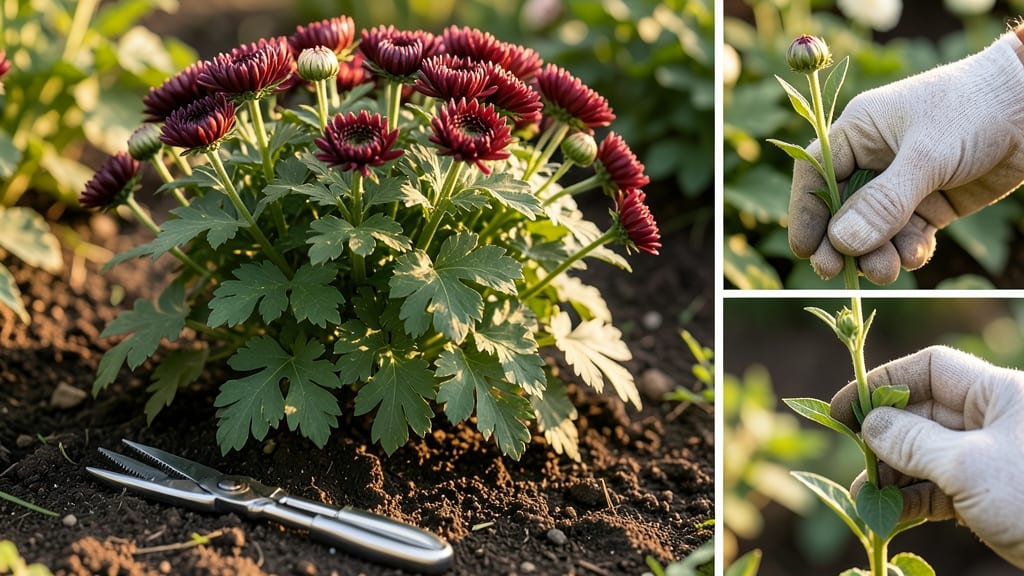
Your chrysanthemums could bloom for 8 weeks instead of 4—how to pinch back chrysanthemums is the secret. 🌸 I learned the hard way that skipping this step means leggy plants and fewer flowers, but once you master it, your mums become the showstopper of fall gardens.
The magic happens in early summer when plants have 4-6 sets of leaves. Pinch off the top growth just above a leaf node (where leaves meet the stem), and the plant responds by branching out. You’ll need clean pruners or your fingers—no fancy tools required.
What you end up with is a bushier plant that puts energy into more blooms instead of just one tall stem. My pinched-back mums produce 30-50% more flowers than unpinched plants, and they stay compact enough for containers or borders.
Works for both garden mums and potted varieties, and the technique scales from a single plant to a full border. Here’s exactly how to do it without killing your plants in the process.
📚 In This Guide
- What you need
- Instructions
- Tips and common mistakes
- Wrapping up and next steps
What you need
- ● Chrysanthemum plants – Healthy, non-flowering plants (ideally 6–12 inches tall) ready for pruning.
- ● Sharp bypass pruners – 1 pair, with clean, sharp blades (avoid dull tools to prevent crushing stems).
- ○ Clean, sharp scissors or garden shears – Optional alternative if you prefer a smaller tool for precision pinching.
- ● Gloves – 1 pair, preferably gardening gloves to protect your hands from thorns or rough stems.
- ● Disinfectant (rubbing alcohol or bleach solution) – To sterilize tools before and after use (1:9 bleach-to-water ratio).
- ○ Garden twine or plant ties – Optional but helpful for securing stems if needed after pruning.
- ● Pruning saw – Only if needed for thicker, woody stems (rare in chrysanthemums but useful for mature plants).
- ● Pruning sealant – To coat larger cuts and prevent disease (e.g., pruning wax).
- ● Plant food or fertilizer – A balanced, water-soluble fertilizer (e.g., 10-10-10) to nourish plants post-pruning.
- ● Notebook or garden journal – To track pruning dates and plant responses for future reference.
- ● Knee pad or small stool – For comfort if you’re working with larger plants or in the garden for extended periods.
- ● Spray bottle with water – To mist plants after pruning, especially in dry conditions.
Step-by-step instructions for pinching back chrysanthemums
Here's how I transform leggy chrysanthemums into full, bushy bloomers with just a few strategic cuts.
✂️ Step 1: Identify the Right Time to Pinch
Pinch back chrysanthemums when they're 6-8 inches tall and have 4-5 sets of true leaves—this is the sweet spot for branching. I always check the calendar first: late spring to early summer (around 6-8 weeks before your first frost) is ideal. If you miss this window, you'll get fewer blooms or later flowers.
Look for stems that are woody at the base—these are mature enough to handle pruning. Avoid pinching if your plants already have flower buds forming, as this will delay blooming. The goal is to encourage lateral buds to wake up and grow into new stems.
✂️ Step 2: Use the Right Technique to Pinch
Use clean, sharp pruning shears or your fingers to pinch off the top set of leaves just above a leaf node (where leaves meet the stem). This is where new branches will sprout. I like to pinch above a leaf node with at least 3 leaves—this ensures the plant has enough energy to grow new stems.
Don't cut too close to the base—leave at least 3 inches of stem to avoid damaging the plant. If you're unsure where to pinch, imagine a V-shape where the leaves meet the stem. Pinch just above that point. You'll see tiny buds forming at the leaf nodes within 1-2 weeks—that's your signal it worked.
✂️ Step 3: Repeat for Bushier Growth
After the first pinch, wait 4-6 weeks until the new stems grow another 6-8 inches tall before repeating. This second pinch encourages even more branching, creating a fuller, more compact plant. I usually do 2-3 pinches total per season, depending on how quickly my chrysanthemums grow.
Watch for new shoots emerging from the leaf nodes. These will eventually become your flower stems, so don't pinch them off. If you see yellowing leaves after pinching, it's a sign the plant is stressed—reduce watering slightly and give it a balanced fertilizer to recover.
✂️ Step 4: Deadhead for Longer Blooms
Once your chrysanthemums start flowering, deadhead spent blooms by cutting the stem just above a set of leaves (not at the base). This redirects the plant's energy from seed production to growing new flowers. I do this every 2-3 days during peak bloom time to keep my plants looking fresh.
If you notice leggy stems or fewer flowers than expected, you may have pinched too late in the season. Chrysanthemums need 6-8 weeks of warm weather after pinching to develop strong blooms. If frost threatens before flowers appear, cover plants with frost cloth to protect them.
☀️ Step 5: Maintain Light and Water for Best Results
Pinched chrysanthemums need full sun (6-8 hours daily) to recover and bloom well. If your plants are in partial shade, they'll grow leggy and produce fewer flowers. I always move mine to the sunniest spot in my garden after pinching to ensure strong growth.
Water deeply 1-2 times per week, keeping the soil moist but not soggy. Overwatering can lead to root rot, while underwatering causes wilting and stunted growth. A good rule of thumb: stick your finger 1 inch into the soil—if it feels dry, it's time to water.
Tips & tricks for perfect chrysanthemum pruning
Here's what nobody tells you about getting the most out of your pinch-back technique.
Timing is Everything: The 6-8 week window before your first frost is non-negotiable for chrysanthemums. I've learned this the hard way—pinching too late means fewer blooms and weaker stems. Check your local frost date and work backward from there. If your plants are already flowering when you pinch, you'll delay blooming by weeks, so always prioritize plant height and leaf sets over calendar dates.
Precision Pinching Technique: When you're pinching above that leaf node, aim for the spot where you can see three healthy leaves below it. This ensures the plant has enough energy reserves to grow new branches. I use my thumb and forefinger to pinch cleanly—no jagged cuts—right above that V-shape where the leaves meet the stem. The cleaner the cut, the faster those lateral buds will wake up and start growing.
Recovery Watch: After your first pinch, keep a close eye on your plants. If you notice yellowing leaves within the first week, it's a sign of stress. This usually means you pinched too aggressively or the plant needs more nutrients. Reduce watering slightly and give it a balanced fertilizer to help it recover before the next growth phase. Think of this as a wake-up call from your chrysanthemums!
Sunlight Strategy: Those 6-8 hours of full sun aren't just a suggestion—they're essential for photosynthesis after pruning. If your garden has partial shade areas, consider moving your chrysanthemums to a sunnier spot temporarily after pinching. I've seen plants that were thriving in partial shade become leggy and weak after pruning because they didn't get enough light to recover properly.
Pro Tips for Pinch Back Chrysanthemums
- Here's what nobody tells you about getting the most out of your pinch-back technique.
- Timing is Everything: The 6-8 week window before your first frost is non-negotiable for chrysanthemums.
- Precision Pinching Technique: When you're pinching above that leaf node, aim for the spot where you can see three healthy leaves below it.
Frequently asked questions
Got questions about pinching back chrysanthemums? You’re not alone! Here are answers to the most common concerns—so you can prune with confidence and watch those blooms thrive.
When is the best time to pinch back chrysanthemums?
Pinch back chrysanthemums early in their growing season—typically in late spring or early summer (around 6–8 weeks before your first frost). For most varieties, aim for the first pinch when the plant is 6–8 inches tall, then repeat every 4–6 weeks. Late bloomers (like fall varieties) may need a second pinch in mid-summer. Pro tip: Check your plant’s maturity date on the tag for precision!
How much should I pinch off each time?
Remove about 1/3 of the plant’s height in each pinch, focusing on the top set of leaves. For example, if your chrysanthemum is 8 inches tall, trim it back to ~5–6 inches. Always pinch above a leaf node (where leaves meet the stem) to encourage branching. Warning: Avoid cutting into woody stems—this can stress the plant!
What if I missed the ideal pinching window?
Don’t panic! You can still pinch back chrysanthemums up to 6–8 weeks before frost, though later pinches may reduce bloom size or delay flowering. If you’re past that point, focus on light pruning (trimming just the tips) to shape the plant and remove dead flowers. Remember: Better late than never—your mums will still benefit!
Can I use scissors or should I pinch with my fingers?
Both work, but finger pinching is gentler and promotes healthier regrowth by avoiding stem damage. Use clean, sharp scissors only for thicker stems or if your fingers struggle. Avoid dull tools—they crush stems, inviting disease. Bonus tip: Disinfect tools with rubbing alcohol between cuts to prevent bacterial spread!
Will pinching back chrysanthemums make them bloom later?
Yes! Pinching encourages lateral buds to form, which delays but extends the blooming period. Late pinches (after mid-summer) may shorten the season, but early, consistent pinching ensures bushier plants with more flowers that last well into fall. Think of it as a trade-off: fewer early blooms = more abundant, longer-lasting flowers!
What do I do if my chrysanthemums look leggy after pinching?
Leggy growth happens if you pinch too late or don’t provide enough sunlight. To fix it:
- Move the plant to a sunnier spot (chrysanthemums need 6+ hours of light daily).
- Fertilize with a balanced, low-nitrogen fertilizer (like 10-10-10) to boost bushiness.
- Water deeply but avoid overwatering—soggy soil weakens stems.
Wrapping up and next steps
Pinching back chrysanthemums is your secret weapon for bushier plants and stunning, longer-lasting blooms—and now you’ve got the know-how! With the right tools, timing, and technique, you’ll transform those leggy stems into a lush, flowering masterpiece. 🌸
Ready to see the results? Start with your first pinch this season—your chrysanthemums will thank you with vibrant color and robust growth. Happy gardening!