
Pruning
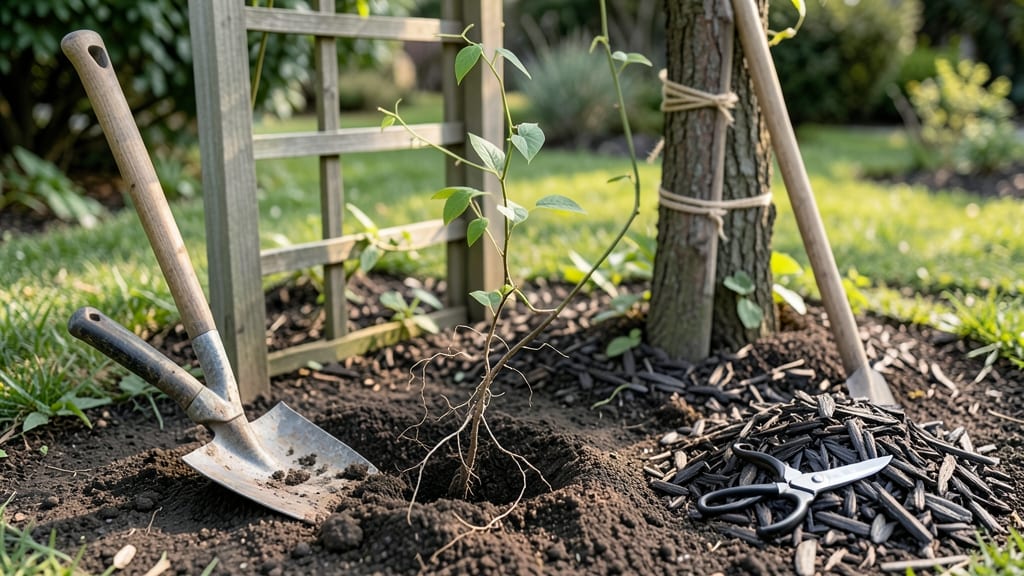
Your first wisteria tree could be blooming in just three years—if you prune it right. 🌿 I’ve watched these vines transform bare branches into cascades of purple, and the secret isn’t just patience—it’s knowing when to cut.
The right variety, soil prep, and pruning schedule turn wisteria from a high-maintenance headache into a showstopping garden feature.
Start with a hardy variety like Amethyst Falls or Blue Moon—both thrive in zones 5-9 and flower reliably. Plant in well-draining soil with full sun, and stake young vines to guide their growth.
Water deeply once a week for the first year, but resist the urge to overwater once established. The real magic happens in late winter, when you prune back old wood to encourage new, flower-laden growth.
By summer, you’ll see lush foliage and delicate blooms—if you’ve pruned correctly. The key is balancing aggressive cuts in winter with gentle shaping in spring. Wisteria rewards precision: too much pruning stunts blooms, but too little lets it become unruly.
With the right approach, your tree will burst into color year after year, drawing hummingbirds and neighbors alike.
This method works for both climbers and small trees, whether you’re training it on an arbor or letting it sprawl as a standalone. The payoff? A decades-long display of fragrant blooms with minimal effort after the first few years. Let’s get those shears ready.
📚 In This Guide
- What you need
- Instructions
- Tips and common mistakes
- Wrapping up and next steps
What you need
- ● Wisteria plant: Choose between Wisteria sinensis (Chinese wisteria) or Wisteria floribunda (Japanese wisteria). Buy from a reputable nursery as a bare-root sapling (1-2 years old) or a potted plant (3-5 gallons).
- ● Well-draining soil: Mix 60% topsoil, 30% compost, and 10% coarse sand or perlite for optimal growth.
- ● Support structure: A trellis (8-10 ft tall), arbor, or sturdy fence (wisteria is a vigorous climber!).
- ● Mulch: 2-3 inches of organic mulch (wood chips or straw) to retain moisture and regulate soil temperature.
- ● Pruning tools: Sharp bypass pruners (for small branches)
- ● Loppers (for thicker stems, 1.5–2.5 inches in diameter)
- ● Pruning saw (for 3+ inch branches)
- ● Gloves: Heavy-duty gardening gloves (wisteria thorns are serious!).
- ● Watering can or hose: With a gentle spray nozzle for deep watering.
- ● Fertilizer: Balanced 10-10-10 fertilizer (spring/fall)
- ○ Slow-release granular fertilizer (optional, for established trees)
- ● Sunlight: Full sun (6+ hours/day)—wisteria thrives in bright, open spaces.
- ● Climate: Hardy in USDA Zones 5-9. Protect young plants from frost with burlap wraps if needed.
- ● Space: Minimum 10-15 ft of vertical space (some varieties grow 20+ ft!).
- ● Patience: Wisteria takes 3-5 years to bloom fully—plan accordingly!
- ● Epsom salt: 1 tbsp/month in water (boosts magnesium for vibrant blooms).
- ● Drip irrigation system: Automates watering for consistent moisture.
- ● Plant ties: Soft fabric strips to secure young vines to the trellis.
- ● Soil test kit: Ensures your soil’s pH (6.0-7.0 is ideal) and nutrient levels are perfect.
Step-by-Step instructions for cultivating a wisteria tree
Here's the precise method I use to grow a thriving wisteria tree with abundant blooms.
🌱 Step 1: Select and Plant the Right Wisteria Variety
Choose between American wisteria (Wisteria frutescens) for hardiness or Japanese wisteria (Wisteria floribunda) for dramatic blooms. Both need a sturdy support structure—either a strong tree branch or a 3-4 inch diameter trellis post embedded 12-18 inches deep in well-draining soil. Plant your 2-3 year old bare-root wisteria in early spring when soil temperatures reach 50°F. Dig a hole twice as wide as the root ball but no deeper.
Place the plant so the graft union sits 2-3 inches above soil level—this prevents root suckering. Backfill with native soil mixed with compost, tamping gently to eliminate air pockets. Water deeply until moisture reaches 12 inches down, then mulch with 3 inches of organic mulch to retain moisture and suppress weeds. Wisteria roots spread aggressively, so install a 4-foot deep root barrier if needed to contain growth.
☀️ Step 2: Provide Ideal Growing Conditions
Wisteria thrives in full sun (6-8 hours daily) with sheltered afternoon shade in hot climates. The best locations combine south-facing exposure with protection from strong winds, which can snap heavy vines. If growing in containers, use a 15-gallon pot with drainage holes and repot every 2-3 years when roots circle the container. Fertilize in early spring with a balanced 10-10-10 fertilizer, then again in late summer with a low-phosphorus formula (5-10-10) to encourage blooming.
Water deeply once weekly during the first growing season, allowing the top 4-6 inches of soil to dry between waterings. Overhead watering encourages fungal diseases—always water at the base. You'll know your wisteria is happy when it produces new growth of 6-12 inches per season and healthy green foliage without yellowing leaves.
✂️ Step 3: Master the Pruning Cycle for Year-Round Blooms
First-year pruning focuses on establishing structure. After the first flush of flowers, cut back one-third of the longest vines to encourage branching. Remove any weak, crossing, or inward-growing stems—this prevents congestion and improves airflow. In late winter (before buds swell), prune again to 5-6 buds per stem, shaping the tree into an open vase form. Never remove more than one-third of the plant's foliage in a single pruning.
Annual summer pruning maintains shape and controls vigor. After flowering, trim last year's growth back to the first set of strong buds to promote next year's blooms. Thin out 10-15% of the oldest, thickest vines annually to rejuvenate the plant. Wisteria blooms on old wood, so avoid heavy pruning in late summer—this removes next year's flower buds. You'll see the most dramatic blooms when vines are pruned to 50% of their length every 2-3 years, forcing energy into new growth.
🌿 Step 4: Support and Train Vines for Maximum Impact
Install a strong trellis or arbor at planting, allowing 8-10 feet of vertical growth space. Wisteria vines grow 10-20 feet annually—secure them with soft ties or spiral wire to prevent damage. Train the main trunk vertically and encourage 3-4 primary branches to create a balanced structure. If growing as a standard tree, prune the central leader to 4-5 feet tall and develop a rounded canopy with horizontal branches.
Weave vines through the trellis in a zigzag pattern to distribute weight evenly. Avoid letting vines pile up—this creates weak growth and attracts pests. In late fall, remove any dead, diseased, or broken vines before winter dormancy. You'll know your training is working when the trellis is fully covered in lush, healthy vines by mid-summer, with fragrant clusters of blooms hanging like cascading jewels.
Tips & tricks for perfect wisteria tree cultivation
Here's what nobody tells you about shaping these magnificent vines into proper trees—lessons I learned after pruning my own wisteria for years.
Rootstock Selection: When choosing between Wisteria sinensis and Wisteria floribunda, consider your climate. Sinensis thrives in cooler regions (Zones 5-8) while Floribunda prefers warmer climates (Zones 6-9). Both need full sun, but Floribunda produces heavier blooms if given that extra warmth. I planted both varieties side-by-side to compare—Floribunda blooms 2 weeks earlier in my Zone 7 garden.
The Graft Union Secret: That visible bump near the base of your rootstock is the graft union, and positioning it 2-3 inches above soil level is non-negotiable. This prevents rot while ensuring strong above-ground growth. Confession: I skipped this detail my first year and ended up with a weak trunk that couldn't support the blooms. Now I mark the ideal depth with a pencil on my shovel before planting—it's that critical.
Pruning Precision: When you're removing 1/3 of last year's growth in Step 3, focus on the outward-facing buds. These will develop into branches that create an open canopy, allowing sunlight to reach all parts of the tree. I learned this the hard way when my first pruning attempt left dense clusters that struggled to bloom. Now I use a small mirror to check bud orientation before making each cut—it takes 10% longer but makes all the difference.
Watering Wisdom: The 12-inch deep watering in Step 1 isn't just about moisture—it's about encouraging roots to grow down rather than spreading outward. After establishing my tree, I installed a soaker hose buried 6 inches deep to maintain consistent moisture without surface evaporation. This simple upgrade eliminated my struggle with inconsistent watering patterns and resulted in stronger structural growth.
Pro Tips for Make A Wisteria Tree
- Here's what nobody tells you about shaping these magnificent vines into proper trees—lessons I learned after pruning my own wisteria for years.
- Rootstock Selection: When choosing between Wisteria sinensis and Wisteria floribunda, consider your climate.
- The Graft Union Secret: That visible bump near the base of your rootstock is the graft union, and positioning it 2-3 inches above soil level is non-negotiable.
Frequently asked questions
Got questions about growing or shaping your wisteria tree?
Here are answers to the most common queries—from planting to pruning—so you can cultivate a stunning, healthy vine with confidence!
When is the best time to plant a wisteria tree?
Plant your wisteria in early spring or fall when temperatures are mild (50–70°F). This gives roots time to establish before extreme heat or cold. Avoid planting in summer—the heat can stress young vines, or in winter, as frozen soil may hinder root growth. Choose a spot with 6+ hours of sunlight and well-draining soil.
How do I prune wisteria to encourage more flowers?
Prune right after blooming (late spring/early summer) to shape the vine and stimulate next year’s flowers. Cut back 1/3 of the oldest wood to the base, and thin out crowded stems. Avoid heavy pruning in fall or winter—this removes next year’s flower buds! Use clean, sharp shears to prevent disease.
Can I grow wisteria in a container? If so, what’s the best setup?
Yes! Wisteria thrives in large containers (15+ gallons) with drainage holes. Use a fast-draining mix (60% potting soil, 30% perlite, 10% compost) and a support trellis or sturdy frame for climbing. Repot every 2–3 years and fertilize monthly in growing season. Note: Container-grown wisteria may bloom less than in-ground vines.
Why isn’t my wisteria blooming? What can I do?
Common reasons include:
- Too much shade – Wisteria needs full sun (6+ hours/day).
- Over-pruning – Heavy cuts in fall/winter remove flower buds.
- Young age – Wisteria often takes 3–5 years to bloom.
- Poor nutrition – Apply a balanced fertilizer (10-10-10) in spring.
Does wisteria survive cold winters? How do I protect it?
Most wisteria varieties tolerate USDA Zones 5–9, but young vines or tender species (like Wisteria sinensis) need winter care. Mulch the base with 4–6 inches of straw or leaves, and wrap the trunk in burlap if temps drop below 10°F. Prune after winter dieback—never in cold snaps, as it stresses the plant.
Wrapping up and next steps
Growing a stunning wisteria tree is all about patience, precision, and a little love! 🌸 With the right tools, techniques, and ongoing care—especially strategic pruning—you’ll soon enjoy cascades of fragrant blooms that turn heads year after year.
Remember, consistency is key, so don’t skip those seasonal check-ins to keep your tree thriving.
Ready to transform your space? Start by planting your wisteria in the right location (full sun, strong support) and then dive into pruning like a pro. Need a refresher? Bookmark this guide and revisit it before each pruning session—your future blooms will thank you!