
How To
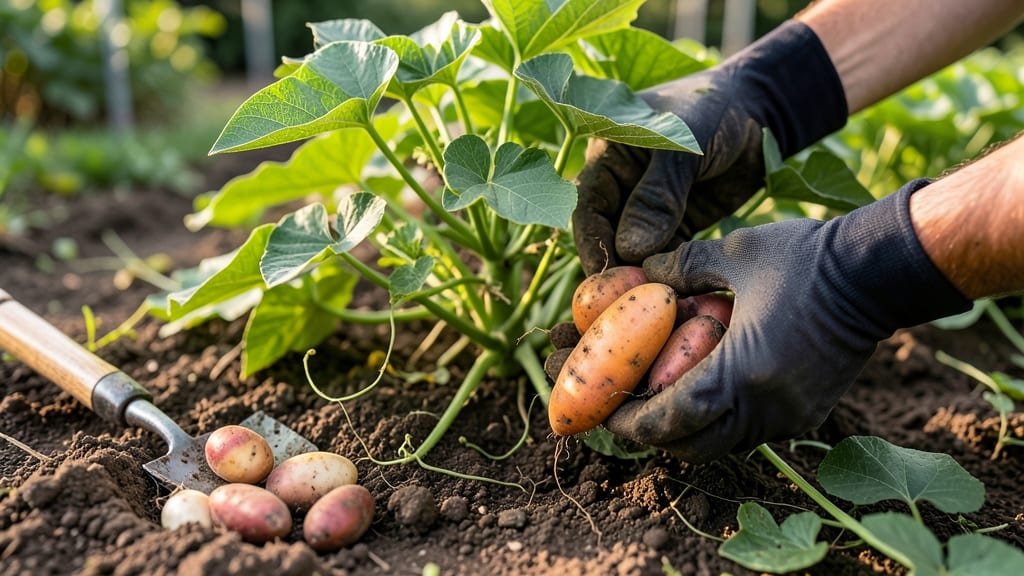
How to know when to pick sweet potatoes can make all the difference between a perfectly sweet, flavorful harvest and a bland, starchy disappointment. The right timing ensures your 🍠 tubers are fully developed but haven't overstayed their welcome in the soil.
Most gardeners wait between 90-120 days after planting, but there's more to it than just counting days. The key lies in visual cues like leaf color changes and skin toughness—signs your sweet potatoes are ready to be unearthed.
Ignore these signals, and you might end up with tubers that are either too small or woody.
In this guide, I'll walk you through the finger-press test and other foolproof methods to determine when your sweet potatoes are at their peak. You'll also learn how to avoid common mistakes that can ruin your harvest, like waiting too long before frost or harvesting too early.
Whether you're a first-time grower or a seasoned gardener, these tips will help you harvest sweet potatoes that are sweet, tender, and packed with flavor—every single time. Let's get started!


The finger-press test: how to check sweet potato ripeness
Determining the perfect moment to harvest sweet potatoes can feel like guessing—until you master the finger-press test. This simple method reveals whether your tubers are sweet, firm, and ready to pull from the soil.
Unlike regular potatoes, sweet potatoes develop their signature sweetness as they mature, but leaving them too long makes them tough and woody.
The key lies in the skin toughness and stem end color. When the plant’s vines start yellowing and dying back, it’s time to dig—but don’t rush! The finger-press test confirms ripeness by checking the tuber’s resistance. If it’s too soft, it’s not ready; if it’s too hard, it’s overripe.
Here’s how to perform the test correctly: Choose a mature-looking vine with yellowing leaves and dig up one tuber. Press your fingernail into the skin near the stem end.
If it resists slightly (like pressing a ripe avocado), it’s perfect. If it pierces easily, wait a week. If it’s rock-hard, you’ve missed the window.
Timing is everything with sweet potatoes. Harvest too early, and you’ll get small, watery tubers with little flavor. Leave them too late, and they’ll become woody and dry. The finger-press test eliminates guesswork by combining visual cues (leaf color) with tactile feedback (skin resistance).
Pro tip: Dig in the morning after a light rain when the soil is moist but not soggy. This makes it easier to spot tubers and reduces damage to the skin.
Use a garden fork to gently loosen the soil around the plant, then grasp the stem and pull upward—never twist, as this can bruise the tubers.
Once harvested, don’t wash the potatoes immediately. Instead, let them air-dry in a shady, well-ventilated area for 2-3 hours. This prevents rot and prepares them for curing. Store them in a cool, dark place (like a root cellar) where temperatures stay between 55-60°F.
If you’re growing multiple varieties, like Beauregard or Jewel, note that some mature faster than others. For example, Beauregard typically reaches harvest readiness in 90-100 days, while Purple sweet potatoes may take up to 120 days. Always check the seed packet for variety-specific guidelines.
Remember, the finger-press test is your best friend in the garden. With practice, you’ll develop an instinct for when sweet potatoes are at their peak—sweet, firm, and bursting with flavor. Happy harvesting!
The finger-press test: how to check sweet potato ripeness
Determining the perfect time to harvest sweet potatoes can feel like guessing—until you master the finger-press test. This simple method combines visual cues with tactile feedback to ensure you pick tubers at their peak sweetness and flavor.
The test works by evaluating both the skin toughness and the stem end condition, two critical indicators of maturity.
Start by examining the plant’s vines and leaves. When the foliage begins to yellow and die back naturally, it’s a strong signal that the tubers below are nearing harvest readiness.
However, relying solely on leaf color can be misleading—some varieties may show premature yellowing. That’s where the finger-press test comes in as your most reliable gauge.
Step-by-Step Finger-Press Test
- Step 1: Gently dig around the base of the plant to expose a few tubers. Avoid damaging the roots if you plan to leave the plant in the ground for a few more days.
- Step 2: Press your fingernail firmly into the skin of a tuber. If it pierces easily, the potato isn’t ready—it needs 2-3 more weeks in the ground.
- Step 3: Check the stem end (the opposite end of where the vine attaches). If it’s brown and shriveled, the tuber is mature and sweet. A green or firm stem end means it’s too early.
- Step 4: For maximum sweetness, the skin should also feel thick and leathery when pressed. Thin or soft skin indicates underdevelopment.
- Step 5: If tubers pass all tests, harvest immediately. If not, wait 5-7 more days and retest before committing to a full harvest.
Timing your harvest right also depends on your local climate. In cooler regions, sweet potatoes may need a longer growing season to reach full maturity, while warmer areas can produce harvest-ready tubers in as little as 90 days.
Always prioritize the finger-press test over calendar dates to avoid overripe or undersized tubers.
Pro tip: Harvest on a dry, sunny day to prevent soil from clinging to the tubers. Cure them immediately in a warm (80-85°F), humid space for 5-10 days to develop their signature sweetness. Skipping this step results in bland, starchy potatoes—don’t let that happen!
Remember, sweet potatoes continue to sweeten after harvest, but only if stored properly. The finger-press test ensures you’re starting with the best possible base for that post-harvest flavor development. With practice, you’ll become an expert at timing your harvests like a pro.