
Blooming
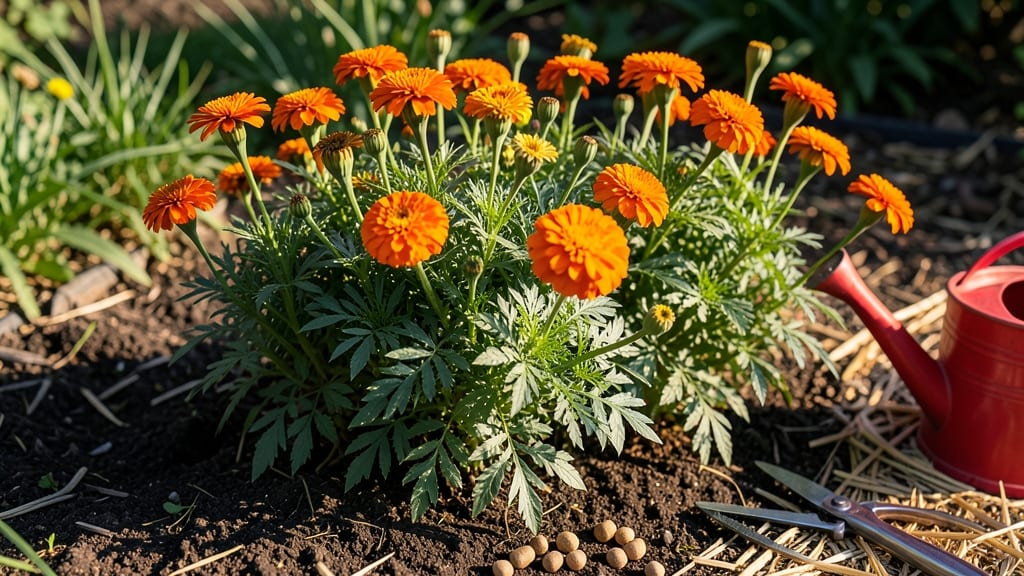
How to keep marigolds blooming takes just three simple rules: prune aggressively, feed regularly, and never skimp on sunlight. 🌼 I’ve watched my once-sparse plants explode into weeks of vibrant color by treating them like the high-energy performers they are.
The secret starts with sunlight—at least 6-8 hours daily—and deadheading spent blooms before they form seed heads. Most gardeners stop there, but the real game-changer is pruning back leggy stems by half in early summer.
This forces bushier growth and triggers a second (or even third) flush of flowers.
Feed them every 3-4 weeks with a balanced organic fertilizer, and watch the difference: deep green leaves, thicker stems, and nonstop blooms from spring until frost. The payoff? A border that stays showstopping when other annuals fade.
Leggy plants? Too much shade. Few blooms? You’re not pruning enough. But once you nail these basics, your marigolds will outperform store-bought bouquets—and cost a fraction of the price.
📚 In This Guide
- What you need
- Instructions
- Tips and common mistakes
- Wrapping up and next steps
What you need
- ● Marigold plants – Choose French, African, or Signet varieties (6–12 plants per 10 sq ft for full coverage).
- ● Well-draining potting mix – 50% garden soil + 50% compost or coconut coir (avoid heavy clay).
- ● Balanced fertilizer – 10-10-10 or 5-10-10 NPK ratio (organic options like fish emulsion or worm castings work too!).
- ● Bloom booster – Low-phosphorus fertilizer (e.g., 5-7-7) for flowering stages.
- ● Pruning shears – Sharp, clean scissors or bypass pruners (sterilize with rubbing alcohol).
- ○ Gloves – Gardening gloves (optional but helpful for thorny varieties like African marigolds).
- ● Watering can or hose – With a gentle spray nozzle (marigolds hate soggy roots!).
- ● Sunlight – 6+ hours of full sun daily (partial shade = fewer blooms).
- ● Water – 1–1.5 inches per week (drip irrigation or watering at the base is best).
- ● Temperature – Thrives in 65–85°F (18–29°C); protect from frost (<32°F/0°C kills them).
- ● Mulch – 2–3 inches of straw or shredded leaves to retain moisture and deter weeds.
- ● Epsom salt – 1 tbsp per gallon of water (monthly foliar spray for magnesium boost).
- ● Companion plants – Basil, nasturtiums, or garlic (repels pests and improves growth!).
- ● Plant supports – Stakes or cages for tall varieties (e.g., African marigolds).
Step-by-Step instructions for keeping marigolds blooming all season
Here's how I extend marigold blooms from early summer to first frost—no fancy tricks, just smart timing and care.
✂️ Step 1: Prune Dead Blooms Immediately
Snip off spent blooms right at the base where the flower meets the stem. This is called deadheading, and it tells the plant to redirect energy into new buds instead of seed production. I use clean, sharp pruners to avoid tearing stems—marigolds heal faster when cuts are precise.
Watch for first signs of wilting on individual blooms. That's your cue to remove them immediately. The more you prune, the more flowers you'll trigger. I deadhead every 2-3 days during peak bloom season, which keeps my plants producing nonstop.
💧 Step 2: Water Deeply at Soil Level
Marigolds need 1-1.5 inches of water weekly, but shallow watering encourages weak stems. Instead, water deeply at the base using a soaker hose or watering can with a narrow spout. This prevents fungal diseases that love damp foliage.
Check moisture by sticking your finger 1 inch into the soil. If it feels dry, water thoroughly until moisture reaches 4-6 inches deep. Overhead watering in late afternoon can promote mildew, so I always water in the early morning when foliage has time to dry.
☀️ Step 3: Ensure Full Sun Exposure
Marigolds thrive in 6-8 hours of direct sunlight daily. If you notice blooms fading early or stems stretching upward, your plants need more light. I rotate my containers quarter-turn weekly to prevent leaning toward the sun.
Morning sun is ideal—it warms the plants gradually without scorching. In hot climates, provide afternoon shade during peak summer heat (when temperatures exceed 90°F) to prevent stress. You'll see stronger stems and more vibrant blooms when light conditions are perfect.
🌿 Step 4: Feed with Balanced Fertilizer Monthly
Use a 10-10-10 or 20-20-20 balanced fertilizer every 4-6 weeks during the growing season. I mix the fertilizer into the soil at half-strength to avoid burning roots. Organic options like compost tea work too—just apply it every 2 weeks for steady nutrition.
Yellowing leaves or slow growth signals nutrient deficiency. If this happens, switch to a high-nitrogen fertilizer temporarily to revive foliage, then return to balanced feeding. Over-fertilizing causes weak stems and fewer blooms, so I always follow package instructions precisely.
⏰ Step 5: Monitor for Pests and Disease
Inspect leaves regularly for aphids, spider mites, or powdery mildew. I treat aphids with a strong spray of water first—it dislodges most without chemicals. For persistent pests, use neem oil spray every 5-7 days until they disappear.
Remove any yellow or spotted leaves immediately to prevent spread. Good airflow (spacing plants 12-18 inches apart) reduces humidity around foliage, which keeps fungal diseases at bay. Healthy marigolds resist pests naturally—strong stems and vibrant blooms are your best defense.
Tips & tricks for perfect marigold blooms
Took me years to perfect these simple tricks that'll transform your marigolds from occasional bloomers to nonstop flowering machines.
Pruning Precision: When deadheading in Step 1, always cut just above a leaf node or pair of leaves. This hidden growth point becomes the new bud site—cutting here gives you more flowers faster. I keep my pruners clean with rubbing alcohol between cuts to prevent disease spread. The 2-3 day pruning schedule works best during peak bloom, but you can extend to 4-5 days in cooler weather when growth slows.
Watering Wisdom: The 1-1.5 inches weekly water requirement assumes average summer conditions. In containers, you'll need to water more frequently—check soil moisture daily during heatwaves. I've found that mulching around plants helps retain moisture and keeps roots cool, reducing the need for frequent watering. Remember, the goal is consistent moisture at the roots, not soggy soil that invites fungal problems.
Sunlight Strategy: For containers, I rotate them quarter-turn weekly as mentioned, but also adjust their position as the sun's angle changes throughout the season. In Step 3, if you notice leaves turning pale yellow, it's often a sign of too much direct afternoon sun—try moving containers to a slightly shadier spot during peak heat. Morning sun is your best friend for vibrant blooms that last all season.
Fertilizer Finesse: When using organic options like compost tea, I dilute it to half-strength to avoid overfeeding. The 4-6 week schedule for balanced fertilizer works well, but I've noticed marigolds respond beautifully to a light feeding with fish emulsion every 3 weeks during peak bloom. Always water thoroughly after fertilizing to prevent root burn—this is especially important with the 10-10-10 or 20-20-20 mixes mentioned in Step 4.
Pro Tips for Keep Marigolds Blooming
- Took me years to perfect these simple tricks that'll transform your marigolds from occasional bloomers to nonstop flowering machines.
- Pruning Precision: When deadheading in Step 1, always cut just above a leaf node or pair of leaves.
- Watering Wisdom: The 1-1.5 inches weekly water requirement assumes average summer conditions.
Frequently asked questions
Got questions about keeping your marigolds in full, vibrant bloom? Here are some of the most common concerns—and their solutions!
Why are my marigolds blooming less than last year?
Over time, marigolds can become leggy or overgrown, which reduces blooms. Deadhead spent flowers regularly, prune back leggy stems, and ensure they get 6+ hours of sunlight daily. Poor soil nutrients (like low phosphorus) can also stunt blooms—try a balanced fertilizer (like 10-10-10) every 4-6 weeks.
How often should I deadhead marigolds?
Deadhead daily or every other day during peak bloom (spring/summer) to encourage non-stop flowers. Snip off only the faded blooms, not the green stem below—this signals the plant to produce more buds. In fall, reduce deadheading as daylight shortens to let energy store for next year.
Can marigolds bloom in partial shade?
While marigolds prefer full sun, they’ll still bloom in 4-6 hours of sunlight (especially French marigolds). However, expect fewer, smaller flowers and weaker stems. If shading is unavoidable (e.g., under tall plants), choose African marigolds, which tolerate shade better than others.
What should I do if my marigolds get powdery mildew?
Powdery mildew (white dust on leaves) thrives in humid, shady conditions. Improve airflow by spacing plants 12–18 inches apart, water at the base (not overhead), and remove infected leaves. Spray with a neem oil solution (1 tsp neem oil + 1 quart water) weekly until cleared. Resistant varieties like ‘Janie’ or ‘Tangerine’ marigolds are great choices.
Will marigolds keep blooming in hot summer heat?
Marigolds are heat-loving but may slow bloom production in extreme heat (above 90°F/32°C). Mulch with straw to retain moisture, water deeply in the morning, and provide afternoon shade with a lightweight shade cloth (30–50% coverage). Choose heat-tolerant varieties like ‘Bonanza’ or ‘Crackerjack’ for consistent blooms.
Can I grow marigolds in containers?
Use 5-gallon pots or larger (one plant per container) with well-draining soil. Place containers in full sun and fertilize every 2 weeks with a bloom booster. Dwarf varieties like ‘Tiny Tot’ or ‘Gold Rush’ thrive in pots. Just ensure pots have drainage holes to prevent root rot.
Wrapping up and next steps
Keeping your marigolds blooming is all about consistent care—pruning for shape, feeding with the right nutrients, and ensuring they bask in plenty of sunlight. 🌞 With these simple steps, you’ll enjoy vibrant blooms from spring to frost!
The key is observation and patience—adjust as needed, and your marigolds will reward you with months of cheerful color.
Ready to put it into action? Grab your shears, check your soil, and give those marigolds the love they deserve! 🌸 Start today—your garden will thank you.