
How To
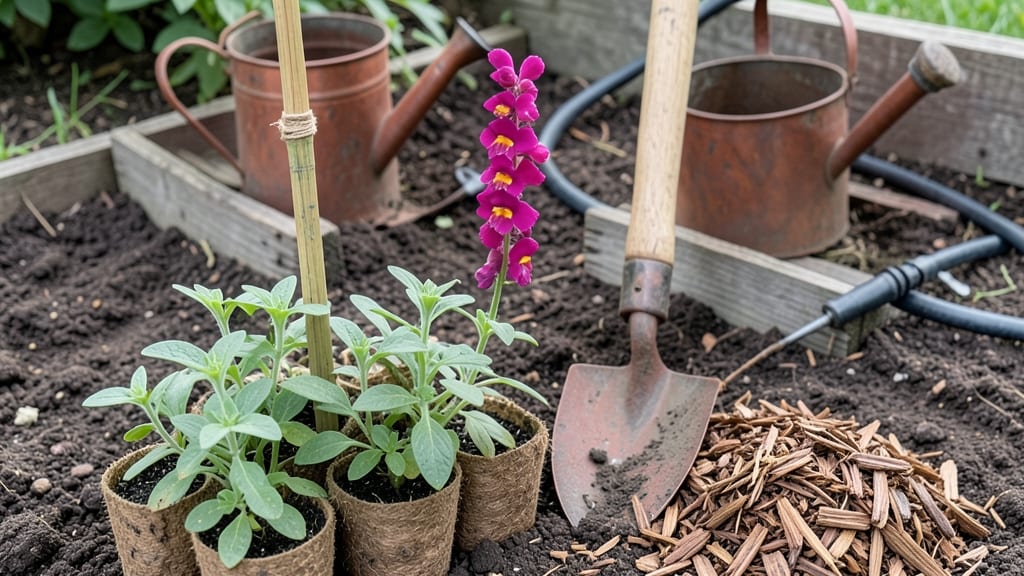
Tall snapdragons reaching for the sky? 🌻 The secret starts with sunlight—these dramatic blooms need 6+ hours of direct light daily to grow their signature towering spikes. I learned the hard way when my first batch flopped into sad, leggy shadows.
Now, I position them where morning sun warms their stems and afternoon light strengthens their structure.
Dig in loose, well-draining soil mixed with compost, then plant seeds 1/4 inch deep, spaced 12-18 inches apart—this prevents overcrowding that weakens stems. Water at the base (never overhead) to keep foliage dry, and watch as sturdy stems form within 4-6 weeks.
For extra height, add a cage or stake at planting time—trust me, your future blooms will thank you.
📚 In This Guide
- What you need
- Instructions
- Tips and common mistakes
- Wrapping up and next steps
What you need
- ● Snapdragon Seeds: Choose tall varieties like 'Black Knight' or 'Rocket' (20–50 seeds, depending on desired quantity).
- ● Well-draining potting mix: 5–10 gallons (or enough to fill containers 6+ inches deep). Pro tip: Mix in perlite or sand for aeration!
- ● Containers or garden bed: For containers: 12+ inch pots (1–2 plants per pot).
- ● For in-ground: Full sun spot (6+ hours/day) with loose, fertile soil.
- ● Fertilizer: Balanced 10-10-10 or slow-release granules (1 tbsp per plant at planting).
- ○ Optional: Liquid bloom booster (like fish emulsion) every 4–6 weeks.
- ● Garden trowel or transplant tray (for seedlings).
- ● Watering can with a gentle spray nozzle (or hose with adjustable tip).
- ● Pruning shears (for deadheading and shaping).
- ○ Garden gloves (optional but highly recommended for prickly stems!).
- ● Full sun exposure (6+ hours of direct light daily—no skimp!).
- ● Consistent moisture (keep soil evenly damp but not soggy).
- ● Patience! Snapdragons take 8–12 weeks to reach full height (24–36 inches).
Step-by-step instructions for growing towering snapdragon stems
Snapdragons reward patience with dramatic height—here’s how to coax those 3-4 foot spikes from seed.
🌱 Step 1: Start Seeds Indoors for Early Height Advantage
Plant seeds 8-10 weeks before last frost in 2-3 inch pots filled with sterile seed-starting mix. Press seeds ¼ inch deep—any deeper delays germination, and you’ll lose that critical early growth window. I always label varieties because Black Prince and Rocket grow differently in height.
Cover with a humidity dome or plastic wrap and place in a warm spot (70-75°F). Germination takes 7-14 days, but don’t be tempted to water until the surface feels dry to touch. Overwatering now causes damping-off, which kills seedlings before they reach light. Watch for tiny green cotyledons—that’s your cue to remove the dome immediately.
☀️ Step 2: Provide 14+ Hours of Light Daily
Snapdragons need bright light from day one to prevent leggy growth. A south-facing window rarely cuts it—supplement with a grow light kept 2-4 inches above seedlings. I raise it weekly as plants grow to maintain that gap. Without enough light, stems stretch weak and pale, and those 3-foot spikes become 2-foot flops.
Rotate trays quarter-turn daily so plants grow straight. You’ll notice stems leaning toward the light if you skip this. Once seedlings have 2-3 true leaves, fertilize lightly with half-strength balanced fertilizer—this jumpstarts root and stem development for that vertical growth.
🪴 Step 3: Harden Off and Transplant for Structural Support
Two weeks before transplanting, move seedlings outside for gradual acclimation. Start with 1 hour of shade on day one, then increase by 1 hour daily. Snapdragons are tough but need this slow transition—direct sun after indoor pampering causes leaf scorch and stunted growth.
Plant in full sun (6+ hours daily) with 12-18 inches between plants—crowding leads to weak stems that flop under flower weight. Bury stems deeper than the pot to encourage extra root growth, which stabilizes those towering spikes. I always add 1 inch of compost to planting holes for a nutrient boost.
✂️ Step 4: Prune Strategically for Height and Blooms
Pinch back first flower buds when plants are 12-18 inches tall. This redirecting energy to stem elongation instead of early blooms. Without pinching, snapdragons bolt to flower too soon, producing short, bushy plants instead of tall spikes. I make the cut just above a set of leaves to encourage branching.
Deadhead spent blooms regularly to prevent seed pods from forming. This extends the flowering season by 4-6 weeks and keeps plants focused on producing more vertical growth. Water at the base—not overhead—and mulch with 2 inches of organic matter to retain moisture and prevent stem rot.
💧 Step 5: Water Deeply and Mulch for Stability
Snapdragons have shallow but widespread roots, so water deeply 1-2 times weekly until the top 6 inches of soil feel moist. Shallow watering causes stems to grow weak and prone to flopping. I water in the early morning to reduce evaporation and fungal risks.
Mulch with 2-3 inches of straw or shredded leaves to keep roots cool and retain moisture. This prevents the sudden wilting that happens when stems can’t support heavy blooms on dry soil. In hot climates, add shade cloth during peak afternoon sun to protect stems from heat stress, which weakens their structural integrity.
Tips & tricks for growing towering snapdragons
Here's what nobody tells you about coaxing those dramatic 3-4 foot stems from tiny seeds.
Lighting Strategy: The 14+ hours of light requirement isn't just about quantity—it's about quality. I use LED grow lights on a timer set to 16 hours daily during seedling stages. Position them 2-4 inches above seedlings and adjust weekly as they grow. Without this consistent light, stems develop that classic "leggy" growth pattern where they stretch weak and pale, completely defeating the purpose of growing tall snapdragons.
Variety-Specific Timing: Black Prince and Rocket varieties have different growth rates, so adjust your 8-10 week indoor start time accordingly. Rocket matures faster—plant these 2 weeks earlier than Black Prince. This timing difference prevents one variety from outgrowing the other in your garden. I always label my trays with both the variety name and planting date to avoid confusion.
Transplanting Technique: When burying stems deeper than the pot during transplanting, make sure to leave the top set of leaves above soil level. This buried section encourages additional root growth without compromising the plant's ability to photosynthesize. The deeper roots provide critical structural support for those towering stems, preventing the flopping that ruins the dramatic effect we're aiming for.
Pruning Precision: The 12-18 inch height for pinching back buds might seem like a wide range, but there's a visual cue that helps: look for the point where the stem is about as thick as your pinky finger. This is typically where the first flower buds appear. Making the cut just above a set of leaves (about ¼ inch above) encourages branching while maintaining that vertical growth momentum.
Pro Tips for Grow Tall Snapdragons
- Here's what nobody tells you about coaxing those dramatic 3-4 foot stems from tiny seeds.
- Lighting Strategy: The 14+ hours of light requirement isn't just about quantity—it's about quality. I use LED grow li...
- Variety-Specific Timing: Black Prince and Rocket varieties have different growth rates, so adjust your 8-10 week indo...
Frequently asked questions
Got questions about growing tall snapdragons?
You’re not alone! Here are answers to the most common queries—from timing to troubleshooting—to help you cultivate those stunning, towering blooms with confidence.
How much sunlight do tall snapdragons really need?
Tall snapdragons thrive in full sun (6–8 hours daily), but they can tolerate partial shade (4–6 hours) in hot climates. If grown in low light, stems may stretch (etiolate) and weaken. Place them where they get morning sun and afternoon shade for balanced growth.
When is the best time to plant snapdragons for maximum height?
For tallest blooms, sow seeds 4–6 weeks before your last frost date (spring) or 6–8 weeks before fall’s first frost. Start indoors if your zone has a short growing season. Seedlings transplanted too late may bolt (flower prematurely) or stay stunted.
Can I grow tall snapdragons from cuttings instead of seeds?
While possible, it’s trickier than seeds. Take 3–4 inch cuttings from healthy stems, dip in rooting hormone, and place in moist perlite/sand. Keep humid (use a plastic bag) and warm (70°F). Success rates are lower than seeds, so beginners should stick to sowing directly.
Why are my snapdragons’ leaves turning yellow or spotted?
Yellow leaves often signal overwatering or poor drainage, while spots may mean fungal issues (like powdery mildew) or pests (aphids). Adjust watering to keep soil evenly moist but not soggy, and space plants for airflow. Treat mildew with neem oil or baking soda spray (1 tsp per quart of water).
Do tall snapdragons need special care in hot or cold weather?
- Heat: Mulch to retain moisture and provide afternoon shade if temps exceed 85°F. Wilting is normal in heat—water deeply at the base.
- Cold: Snapdragons tolerate light frost (down to 25°F), but heavy freezes may kill them. Use row covers for early/late seasons.
Pro tip: Deadhead spent blooms to encourage continuous flowering, even in less-than-ideal conditions!
Wrapping up and next steps
Growing tall, vibrant snapdragons is all about patience, sunlight, and a little TLC—and you’ve got this! 🌱 By choosing the right variety, ensuring full sun (6+ hours daily), and providing well-draining soil, you’ll soon be rewarded with towering blooms that add charm to any garden.
Don’t forget to stake them early and deadhead regularly to keep them reaching for the sky.
Now that you’re armed with the sunlight secrets, grab your gloves and get planting! Ready to transform your garden? Try experimenting with colors or even growing snapdragons in containers—your next step is just a seed away! 🌸