
How To
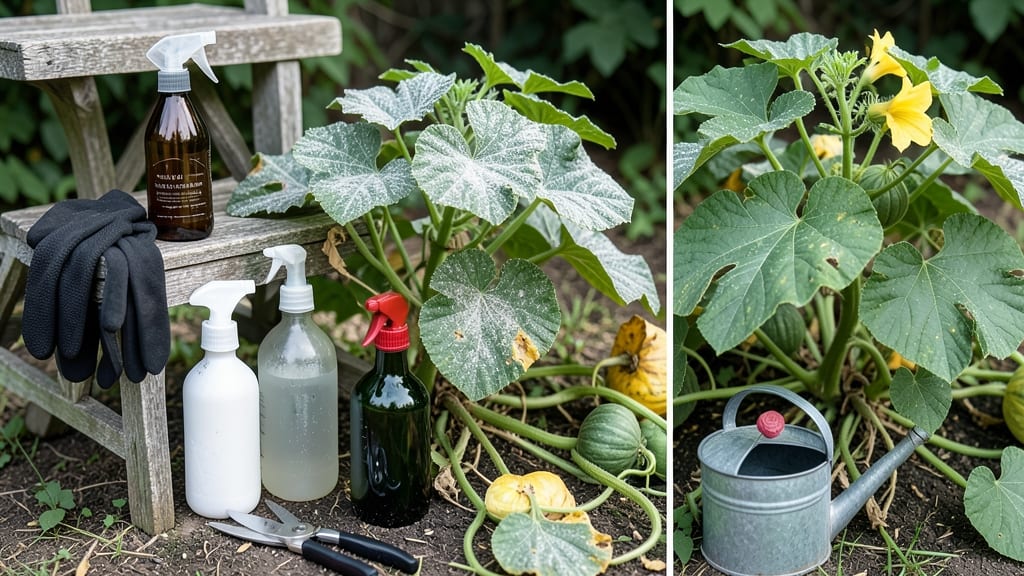
That white dust on your pumpkin leaves isn’t flour—how to get rid of powdery mildew on pumpkins starts with recognizing it early. Powdery mildew spreads fast, but neem oil spray can stop it in its tracks within 7-10 days if you act now.
I’ve battled this exact problem in my garden, and the key is catching it early before it chokes your vines.
Most gardeners make two mistakes: watering from above (which spreads spores) and crowding plants (poor airflow fuels the fungus). Instead, water at the base in the morning and space pumpkins 3-4 feet apart.
Neem oil disrupts the fungal cycle, but you’ll need to spray every 7-10 days until new growth appears free of powder.
The payoff? Healthy vines that keep producing larger, disease-free pumpkins all season. You’ll see fresh green leaves within two weeks, and the mildew won’t return if you maintain proper spacing and watering habits. This isn’t just a fix—it’s prevention wrapped in a spray bottle.
Works for squash, cucumbers, and melons too. Here’s the exact mix and schedule that saved my harvest last fall—no more sad, dusty leaves by harvest time.
Understanding Powdery Mildew Triggers
Powdery mildew isn’t just a random nuisance—it’s a fungal infection with specific causes that thrive under the right conditions.
If you’ve ever watched your pumpkin vines turn white and fuzzy overnight, you’re dealing with a fungus called Podosphaera xanthii or Erysiphe cichoracearum, which loves damp, still air and weak plant defenses. Let’s break down the real culprits behind this pesky problem so you can tackle it head-on.
---
Powdery mildew spores float in the air like tiny, invisible seeds, waiting for the perfect environment to germinate. When humidity levels stay above 70% for extended periods—especially at night—these spores land on pumpkin leaves and activate within hours.
The fungus thrives in stagnant, moist air, which is why overcrowded pumpkin patches or greenhouses are hotspots for outbreaks.
- Why it matters: High humidity creates a film of water on leaf surfaces, giving fungal spores the moisture they need to penetrate plant tissues. - Actionable insight: Aim for good airflow between plants (space them 3–4 feet apart) and avoid watering late in the day to let foliage dry quickly.
---
Unlike many garden pests, powdery mildew hates dry conditions but loves wet leaves. When you water pumpkins from above, you’re essentially spraying spores directly onto the leaves, creating a perfect breeding ground. Even dew can trigger infections if it lingers too long.
- Why it matters: Water droplets on leaves traps spores and provides the moisture the fungus needs to spread. - Actionable insight: Use drip irrigation or soaker hoses to keep leaves dry. If you must water overhead, do it early in the morning so foliage has all day to dry.
---
Pumpkins that are stressed, malnourished, or genetically susceptible are prime targets for powdery mildew. When plants lack nitrogen, phosphorus, or potassium, their cell walls weaken, making it easier for fungal hyphae (thread-like structures) to invade.
- Why it matters: Healthy plants produce waxier, thicker leaves that repel spores, while weak plants become fungal buffets. - Actionable insight: Feed pumpkins with a balanced fertilizer (10-10-10 or 5-10-10) and ensure they get 6–8 hours of sunlight daily to boost natural defenses.
--- Powdery mildew isn’t picky about heat—it loves warm weather (60–85°F) and long growing seasons that give it time to spread. In regions with mild winters or extended summers, the fungus can persist year-round on plant debris or weeds, then jump to pumpkins when conditions are right.
- Why it matters: Warmth speeds up fungal growth, allowing spores to multiply exponentially in just 7–10 days. - Actionable insight: Rotate crops annually to starve the fungus of old hosts, and remove infected plant debris in fall to break its life cycle.
--- When pumpkin vines grow too close together, shade and trapped humidity create the ideal mildew incubator. Dense foliage also blocks airflow, giving spores a cozy, damp environment to thrive.
- Why it matters: Shady spots reduce photosynthesis, weakening plants and making them more susceptible to infections. - Actionable insight: Prune vines to improve sunlight exposure and thin out crowded patches to enhance airflow.
--- Powdery mildew doesn’t discriminate—it can infect dozens of plants, including weeds like lamb’s quarters, pigweed, and even nearby squash or cucumbers. These "alternative hosts" act as reservoirs, releasing spores that then infect your pumpkins.
- Why it matters: A single infected weed can re-infect your pumpkin patch season after season. - Actionable insight: Pull weeds regularly and remove volunteer pumpkin/squash plants that might harbor spores.
--- Powdery mildew doesn’t strike randomly—it’s the result of multiple factors working together. By addressing humidity, watering habits, plant health, and crowding, you’re not just treating symptoms; you’re cutting off the fungus’s food supply.
Once you identify the triggers in your garden, you can prevent future outbreaks—and keep your pumpkins thriving!
Quick Fixes for Powdery Mildew
Powdery mildew might feel like a stubborn foe, but with the right approach, you can banish it fast and protect your pumpkins. Below, we’ve mapped out practical solutions based on the most common causes—so you can tackle the problem at its root.
Plus, we’ll share prevention tips to keep your plants thriving long-term.
---
Powdery mildew thrives in tight spaces where air can’t circulate. If your pumpkin vines are packed too closely:
- 🔪 Prune aggressively: Use clean, sharp shears to remove overlapping leaves and vines.
Aim for 3–4 inches of space between plants. - 🌱 Space new plants properly: At planting, give pumpkins 4–6 feet of clearance (check your variety’s needs). - ✨ Pro tip: If thinning feels harsh, harvest smaller pumpkins to reduce competition for air and sunlight.
---
Humidity and wet leaves create the perfect mildew party. Here’s how to dry things out:
- 🌞 Water at the base: Use a soaker hose or drip irrigation to avoid wetting foliage. Water early in the morning so leaves dry by afternoon. - 🌡️ Reduce evening watering: Nighttime moisture lingers, fueling fungal growth.
Skip watering after sunset. - 💡 Quick fix: If mildew is already spreading, skip watering for 24–48 hours to let the plant dry out.
---
Once mildew appears, neem oil spray is your best friend—but timing and technique matter.
#### 🔥 Step-by-Step Neem Oil Spray Guide 1. 🍳 Mix the solution: Combine 1 tbsp neem oil + 1 tsp mild soap (like Castile) + 1 quart water. Soap helps the oil stick to leaves.
2. 👨🍳 Shake well: Neem oil separates, so shake vigorously before and during spraying. 3. 🥘 Spray thoroughly: Coat both sides of leaves and stems. Focus on undersides (where mildew loves to hide).
4. ⏰ Apply at dawn or dusk: Avoid midday sun, which can burn leaves if oil isn’t fully absorbed. 5. 🔄 Repeat every 7–10 days: Consistency is key—stop only after new growth is mildew-free (usually 2–3 weeks).
#### ⚠️ Safety first: - Wear gloves and a mask (neem oil can irritate skin). - Don’t spray in windy conditions—drift can harm bees or nearby plants.
--- Once you’ve cleared the mildew, lock it out for good with these habits:
- 💡 Rotate crops: Avoid planting pumpkins (or other cucurbits like squash) in the same spot for 3 years to break fungal cycles. - 🌱 Boost airflow: Use trellises for vining pumpkins (like Jack Be Little) to lift foliage off the ground. - 🍂 Clean up debris: After harvest, remove all plant waste and compost it away from your garden (or solarize it—see below). - ✨ Solarize soil: For stubborn fungal soil, water the bed, cover with clear plastic for 4–6 weeks, and let the sun bake pathogens away.
--- If mildew covers more than 50% of leaves or keeps returning despite treatments: - 🗑️ Cull infected plants: Dig up and dispose of heavily mildewed pumpkins (don’t compost them near your garden). - 🧴 Try baking soda spray: Mix 1 tbsp baking soda + 1 tsp oil + 1 gallon water, spray weekly.
(Works best as a supplemental treatment.) - 🌱 Switch varieties: Some pumpkins (like ‘Howden’ or ‘Autumn Gold’) are more resistant—try them next season.
--- | Cause | Fix It Fast | Prevent Next Time | |--------------------------|------------------------------------------|----------------------------------------| | Overcrowding | Thin plants, prune vines | Space properly (4–6 ft apart) | | Wet leaves | Water at base, avoid evenings | Use drip irrigation | | Fungal spores | Neem oil spray (7–10 day intervals) | Rotate crops, clean debris | | Severe infection | Remove plants, try baking soda spray | Plant resistant varieties |
--- Remember: Powdery mildew is manageable—don’t let it stress you out. With consistent care, your pumpkins will bounce back stronger than ever. 🚀🎃
Frequently asked questions about powdery mildew on pumpkins
How soon will I see results after using neem oil spray?
With consistent application every 7-10 days, you should notice new growth appearing free of powdery mildew within 2-3 weeks. The key is treating both sides of leaves thoroughly and keeping up the schedule until all infected foliage has been replaced by healthy growth.
Can I use vinegar to treat powdery mildew on pumpkins?
While white vinegar (1 tablespoon per gallon of water) can help as a supplemental treatment, it's not as effective as neem oil for severe infections. Vinegar works best as a preventive spray when applied weekly, but it may burn leaves if overused. Always test on a small area first.
What's the best time of day to spray for powdery mildew?
Apply treatments early in the morning or late afternoon to avoid leaf burn from midday sun. This timing also gives the solution time to dry before evening humidity sets in. Never spray when leaves are wet or when rain is forecasted within 24 hours.
Will powdery mildew ruin my pumpkin harvest?
Not necessarily! While severe infections can reduce yield, pumpkins themselves rarely get infected - the fungus targets leaves first. If you catch it early and treat aggressively, your plants can recover fully and still produce healthy fruit. The key is protecting the foliage that powers photosynthesis.
How do I know if my pumpkins are getting enough airflow?
Good airflow exists when you can walk between plants without brushing against leaves. Look for 3-4 inches of space between vines and no overlapping foliage. You should also see even sunlight distribution across all leaves - shaded areas are prime mildew zones.