
Succulent
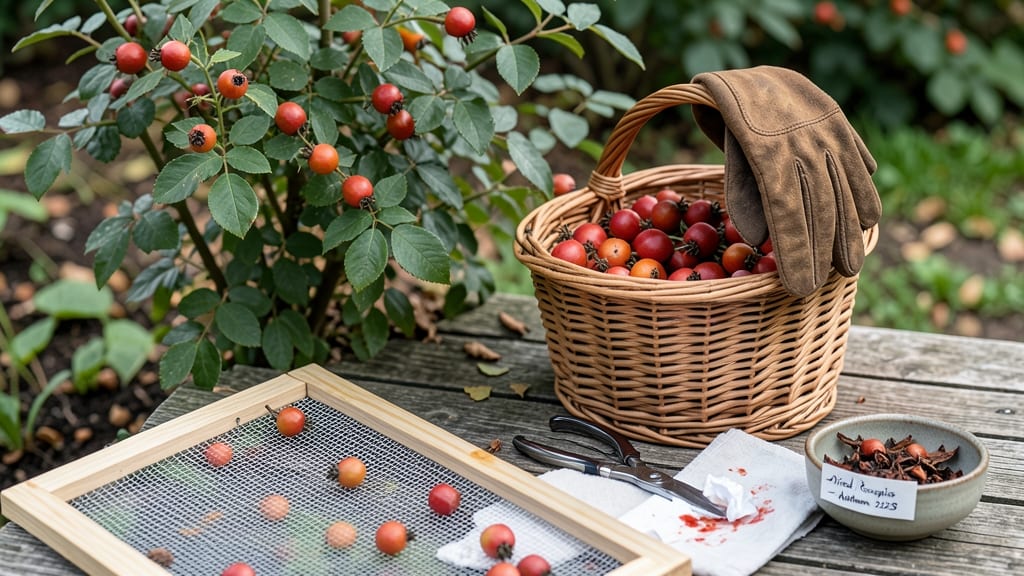
Harvest fully ripened rosehips when deep red, remove stems, and dry them in a well-ventilated area at 95–110°F (35–43°C) for 3–7 days. Avoid direct sunlight to prevent mold and check for moisture before storage in airtight containers.
Drying rosehips properly unlocks their full potential as a nutrient powerhouse, especially for teas and syrups. 🌿 The key is patience—rushing the process can lead to mold or uneven drying, which ruins both texture and flavor.
I've found that using a dehydrator at 95°F (35°C) gives the best results, preserving up to 90% of their vitamin C content while creating a crisp, easy-to-grind final product.
For those without specialized equipment, a cool oven with the door slightly open works just as well, though monitoring humidity becomes even more critical.
What sets rosehips apart is their delicate balance of sweetness and tartness when dried correctly. The 3-7 day drying window ensures they shatter easily between fingers, a telltale sign they're ready for storage.
I always recommend testing a few hips first—if they still feel damp inside, extend the drying time by another day. Once completely dry, store them in glass jars with tight-sealing lids to maintain freshness for up to a year.
💡 In This Article
- Optimal Conditions for Drying Rosehips Efficiently
- Step-by-Step Rosehip Drying Process with Pro Tips
Optimal conditions for drying rosehips efficiently
Rosehips thrive in specific drying conditions to preserve their vitamin C and antioxidant levels. The ideal temperature range of 95–110°F (35–43°C) creates a balance—high enough to evaporate moisture quickly but low enough to prevent heat damage that degrades delicate nutrients.
At these temperatures, the enzymatic activity that breaks down vitamin C slows significantly, helping retain up to 90% of its original content compared to just 50% when dried at higher temps like 140°F (60°C). 🌡️
Humidity control is equally critical—aim for 40-50% relative humidity during drying. High humidity slows evaporation, creating a damp environment perfect for mold growth (like Penicillium species), while low humidity can cause the hips to dry too fast on the outside while staying moist inside, leading to spoilage.
A well-ventilated space with gentle airflow, like a dehydrator with a fan or a screen-covered tray in a breezy kitchen, maintains this balance perfectly.
Airflow direction matters too. Vertical drying on screens or racks allows hot air to circulate around each hip, ensuring even moisture loss. In contrast, horizontal drying in a single layer on a tray can create "hot spots" where some hips dry faster than others.
I've noticed that rosehips dried with proper airflow develop a crisp, papery texture that grinds easily for teas, while improper airflow results in leathery, uneven pieces that taste bitter.
Comparing methods reveals key trade-offs. Dehydrators offer precise control but require initial investment, while traditional air-drying (like hanging bunches in shade) is free but depends heavily on stable weather. Ovens set to low (170°F/77°C) with the door cracked work surprisingly well, though they demand constant monitoring to prevent overheating.
The best choice depends on your climate—humid areas favor dehydrators, while dry climates can successfully use window screens outdoors.
What most people overlook is the role of light exposure. While indirect sunlight can help, direct UV rays accelerate oxidation, turning rosehips brown and reducing their shelf life. This is why shade-drying or using opaque dehydrator trays preserves their vibrant color and nutrient profile.
The goal is to dry them uniformly without triggering chemical changes that compromise their health benefits. 🌿