
Container Gardens
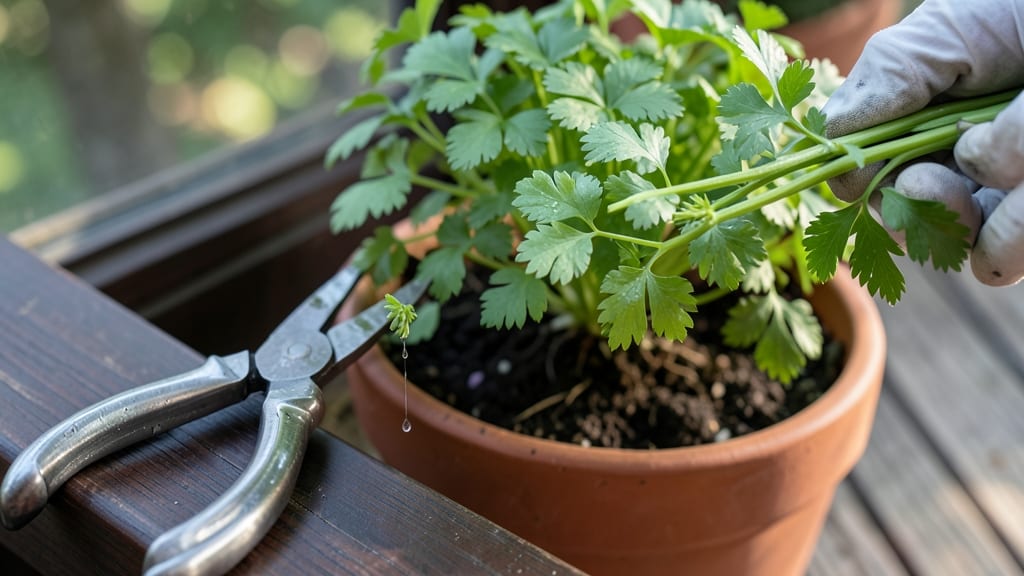
How to cut parsley so it keeps growing can be the difference between a bushy plant and a sad, leggy stub. ✂️ I’ve killed more parsley than I’d like to admit by cutting too much or at the wrong time—but this method keeps mine thriving for months with thick, flavorful stems.
The secret is simple: never take more than one-third of the plant at once, and always cut just above a leaf node (where leaves meet the stem). This encourages new growth from the base, not just the top.
For curly parsley, snip the outer stems first; for flat-leaf, focus on the outer leaves to keep the center dense.
Timing matters too—harvest in the morning after the dew dries but before the sun peaks. Avoid cutting when the plant is flowering, or you’ll sacrifice flavor and regrowth. After trimming, give it a drink of water and place it in bright, indirect light to recover quickly.
Container parsley needs extra care—water more frequently since pots dry out faster. And if your parsley bolts (sends up a flower stalk), cut it back hard to encourage a second harvest. With this method, you’ll get continuous harvests all season long.
📚 In This Guide
- What you need
- Instructions
- Tips and common mistakes
- Wrapping up and next steps
What you need
- ● Fresh parsley plant – A healthy, mature parsley plant (flat-leaf or curly) with at least 4–6 inches of growth. Pro tip: The bigger the plant, the better the regrowth!
- ● Sharp pruning shears or clean scissors – Why sharp? Dull blades crush stems, slowing healing. Small pruning shears (2–4 inches) work best for precision.
- ● Watering can or hose with a gentle spray nozzle – For post-pruning hydration. Bonus: A spray bottle helps if you’re trimming small pots!
- ○ Compost or organic fertilizer (optional but recommended) – A balanced 10-10-10 or fish emulsion to boost regrowth. 💡 Use ½ the recommended dose to avoid burning roots.
- ● Gloves – Protects hands from sap (especially if your parsley is near a busy walkway). 🌡️ Lightweight gardening gloves work great!
- ● Ruler or measuring tape – For precision trimming (aim to cut just above a leaf node, ~1–2 inches from the base).
- ● Food-safe container – A bowl or jar to collect clippings for cooking or composting.
- ● Mulch (straw or shredded leaves) – Helps retain moisture after pruning. ✨ Spread a thin layer around the base.
Step-by-Step instructions for pruning parsley to encourage regrowth
Harvesting parsley the wrong way turns it into a one-time garnish. Here's how to cut it so it grows back thicker and bushier every time.
✂️ Step 1: Wait Until the Plant Is Mature
Never cut parsley until it's at least 4-6 inches tall with 4-6 true leaves. Young plants need all their energy to establish roots. You'll know it's ready when the stems feel sturdy—just pinch one gently to test. If it bends but doesn't snap, it's not mature enough yet.
I wait until the plant has at least 3 sets of leaves before my first cut. This ensures the root system has stored enough energy to regrow. If you harvest too early, you'll end up with a leggy, weak plant that never recovers.
🌿 Step 2: Cut Just Above a Leaf Node
Use clean, sharp scissors to snip the stem about 1/4 inch above a leaf node (the spot where leaves grow out). This encourages new growth to sprout from that exact point. If you cut too close to the node, you risk damaging the bud. If you cut too far away, you leave a bare stem that looks unsightly.
I like to make my cuts at a 45-degree angle—this prevents water from pooling on the stem and causing rot. Aim for the outer leaves first, leaving the inner leaves to keep photosynthesizing and feeding the plant.
💧 Step 3: Water and Fertilize After Pruning
Give the parsley a deep watering right after cutting to help it recover. The roots will need extra moisture to support new growth. Stick your finger 1 inch into the soil—if it feels dry, water again. Overwatering is worse than underwatering here, so let the top inch dry out between waterings.
Add a balanced liquid fertilizer (like 10-10-10) at half strength to give it a nutrient boost. I use it every 4-6 weeks during the growing season. Avoid heavy-handed fertilizing—parsley prefers lean soil and grows best when slightly hungry.
☀️ Step 4: Watch for New Growth and Repeat
Within 7-10 days, you should see new shoots emerging from the node where you cut. These will be tender at first but will harden as they grow. If you don’t see new growth after two weeks, your plant might need more sunlight—parsley thrives in 4-6 hours of direct sun daily.
Once the new growth reaches 3-4 inches tall, you can repeat the cutting process. I harvest parsley every 3-4 weeks this way, and the plant keeps getting bushier with each trim. The secret? Always cut just above a leaf node and never take more than 1/3 of the plant at once.
⏰ Step 5: Adjust for Seasonal Slowdowns
In late summer or early fall, parsley growth slows as temperatures drop. That’s when I reduce cutting frequency to every 6-8 weeks and focus on keeping the soil consistently moist. Mulch with 1-2 inches of straw to retain moisture and protect roots from cold snaps.
If your parsley goes dormant in winter, don’t prune at all until spring warmth returns. You’ll know it’s ready to trim again when new leaves unfurl. A little patience here means a lush, productive plant come spring.
Tips & tricks for pruning parsley to encourage growth
Real talk: The difference between a patchy parsley plant and one that thrives is all in the cuts. Here’s what nobody tells you about keeping your parsley bushy and productive.
Timing is Everything: That 6-inch height guideline in Step 1 isn’t arbitrary—parsley stores energy in its roots when it reaches this size. If you cut too early, you’re essentially starving the plant before it’s had a chance to build reserves. I’ve learned this the hard way after watching plants wilt when I pruned too soon. Wait until you see those sturdy leaves, and you’ll notice new growth within 2-3 weeks as promised.
Cutting Technique Matters: The 2-inch cut above soil level in Step 2 is crucial because it triggers the plant’s natural response to produce side shoots. Here’s what I do: I make a clean, diagonal cut to prevent water from pooling. For individual stems, I trim back to 3-4 inches tall—but never more than one-third of the plant at once. This keeps the plant balanced and prevents shock. Confession: I skipped this rule once and ended up with a sad, leggy plant that took months to recover.
Post-Pruning Care: That deep watering in Step 3 isn’t just about hydration—it’s about giving the roots the moisture they need to push out new growth. I’ve found that adding a pinch of Epsom salt to the water (optional!) gives an extra magnesium boost that makes the leaves even greener. Just don’t overdo it—too much can burn the roots. After fertilizing, I always wait a week before pruning again to let the plant absorb those nutrients.
Seasonal Adjustments: The 4-6 week pruning schedule in Step 5 works perfectly during growing season, but here’s the real secret: In late fall, I stop pruning entirely. The plant needs to focus on storing energy for winter. In spring, when new growth appears, that’s my cue to start fresh. This seasonal rhythm has kept my parsley thriving for years—no more patchy, struggling plants here!
Pro Tips for Cut Parsley So It Keeps Growing
- Real talk: The difference between a patchy parsley plant and one that thrives is all in the cuts. Here’s what nobody ...
- Timing is Everything: That 6-inch height guideline in Step 1 isn’t arbitrary—parsley stores energy in its roots when ...
- Cutting Technique Matters: The 2-inch cut above soil level in Step 2 is crucial because it triggers the plant’s natur...
Frequently asked questions
Got questions about keeping your parsley thriving after a trim?
Here are answers to the most common ones—so you can snip with confidence and watch that herb grow back lusher than ever!
How often should I cut parsley to encourage regrowth?
For flat-leaf parsley, trim every 4–6 weeks (or when stems reach 6–8 inches). Curly parsley grows slower—cut every 6–8 weeks to avoid stressing the plant. Always leave at least 2–3 inches of growth to fuel regrowth. Over-trimming stunts growth, so consistency is key!
How long does it take for parsley to regrow after cutting?
With ideal conditions (sunlight, water, and nutrients), parsley typically regrows in 3–6 weeks. Flat-leaf varieties bounce back faster than curly types. If growth is sluggish, check for underwatering, poor soil, or pests—they’re the usual culprits!
Can I cut parsley stems too short, and will it die?
Yes! Cutting stems below 2 inches risks killing the plant, as it removes too much foliage for photosynthesis. If you’ve already over-trimmed, don’t panic—parsley is hardy. Water deeply, fertilize lightly, and avoid cutting again for 6–8 weeks to recover. Baby leaves will sprout from the base!
What if my parsley stops growing after cutting?
Stunted regrowth often signals stress from over-trimming, pests, or disease. First, inspect leaves for aphids or fungus. Then, adjust care: water at the base (not overhead), add compost or balanced fertilizer, and move to partial shade if scorched. If soil is depleted, repot or refresh it!
Can I use the same pruning method for parsley in pots vs. garden beds?
The cutting technique is identical—just adjust frequency based on container size. Potted parsley may need more frequent trims (every 3–4 weeks) because roots are confined. Ensure pots have drainage holes and 3–4 inches of soil depth to prevent root-bound stress.
Wrapping up and next steps
Cutting parsley the right way isn’t just about harvesting fresh herbs—it’s about encouraging a thriving, long-lasting plant. By trimming from the bottom up, avoiding over-pruning, and giving your parsley the care it deserves, you’ll enjoy a steady supply of lush, flavorful leaves all season long. 🌱
Now that you’re armed with the know-how, roll up your sleeves and get pruning! Start with your first harvest today, and watch your parsley bounce back stronger than ever. Happy gardening!